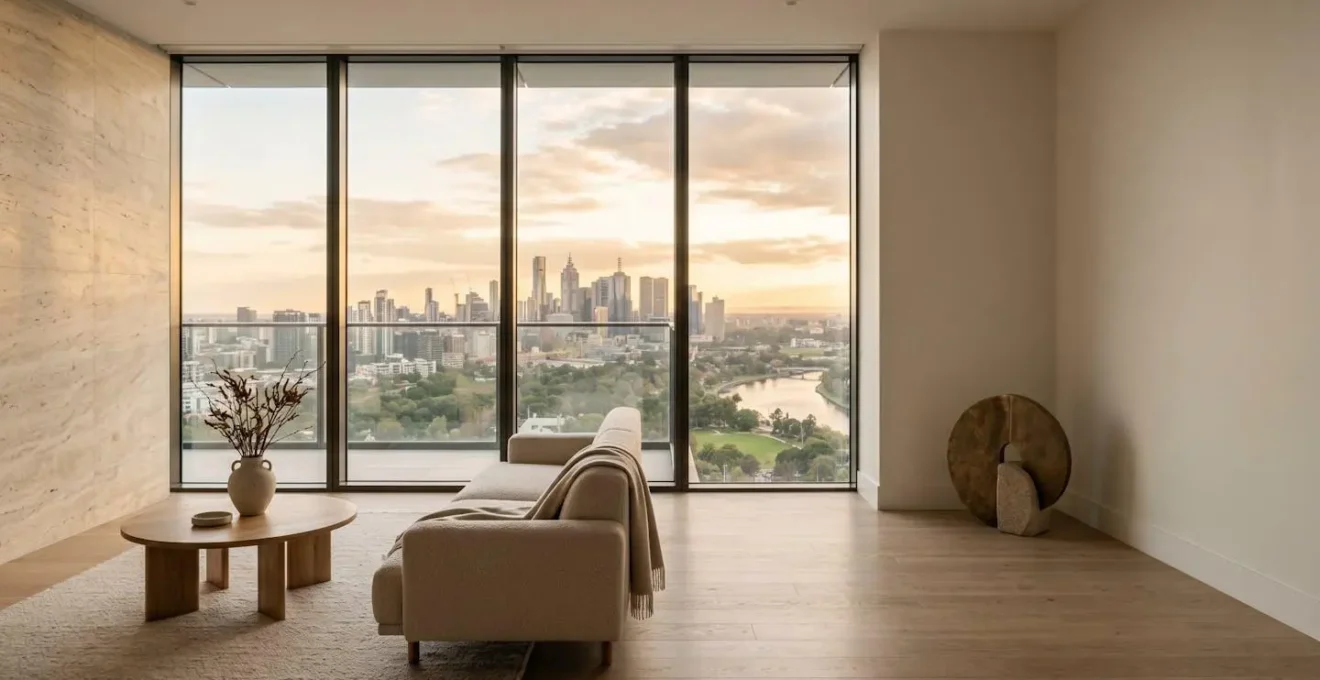
True luxury isn’t defined by the price tag; it’s proven by verifiable quality markers and an effortless guest experience that you must learn to identify.
- Genuine value is found in « invisible » amenities like acoustic soundproofing and seamless service, not just a rooftop pool.
- Listings are marketing tools; forensic verification of photos and views is non-negotiable to avoid disappointment.
Recommendation: Use our Regret Mitigation Checklist to systematically verify claims before you book, ensuring your investment delivers the fantasy you’re paying for.
The fantasy is alluring: a sprawling penthouse with panoramic city views, a state-of-the-art kitchen, and exclusive amenities, all promising an unforgettable special occasion. The luxury apartment market has capitalized on this dream, with some platforms seeing bookings for listings over $1,000 per night increasing more than 60 percent in a single year. This boom has created a landscape where high prices are common, but genuine value can be elusive. Many travelers simply check the location, scan the reviews, and hope for the best.
But if you’re investing £300, £500, or even £1,000+ per night, hope is not a strategy. The real question isn’t just about finding a beautiful space; it’s about discerning whether the property is a masterpiece of experiential design or merely an overpriced rental with a good photographer. The key is to shift your mindset from that of a hopeful guest to that of a discerning value assessor. It requires looking beyond the brochure-perfect images and learning to identify the subtle, yet crucial, markers of authentic luxury.
This guide provides a framework for that assessment. We will deconstruct what defines genuine luxury amenities, teach you to spot deceptive photo tactics, and compare the protection offered by different booking platforms. Ultimately, you will learn how to choose an accommodation that not only fulfills your fantasy but does so without the sting of financial regret, ensuring the memories created are worth every penny.
Summary: A Discerning Guide to Assessing the True Value of Luxury Apartments
- What Amenities and Features Define Genuine Luxury Apartments?
- How to Spot Photo Manipulation in Luxury Apartment Listings?
- Airbnb Luxe or Specialized Luxury Apartments Platforms: Which Offers Better Protection?
- The Location Problem That Ruins 30% of Luxury Apartment Stays
- When Should You Book Luxury Apartments for Special Occasions to Get Availability and Deals?
- View, Facilities or Design: Which Dream Accommodation Quality Matters Most for Memory Creation?
- Tourist Hotel or Residential Neighborhood: Where Should You Stay in Urban Centers?
- How to Choose Dream Accommodation That Fulfills Fantasy Without Financial Regret?
What Amenities and Features Define Genuine Luxury Apartments?
In the premium rental market, the term « luxury » is often diluted by overuse. While nearly all high-end listings will boast a pool or a gym, a true value assessor learns to differentiate between standard offerings and the features that create a genuinely elevated experience. The market has become so competitive that over 90% of new luxury buildings now include fitness centers and rooftop decks as baseline features. True value lies in the layers of thoughtfulness built upon this foundation.
To properly evaluate a property’s offerings, it’s useful to categorize amenities into a three-tier hierarchy. This framework helps you look beyond the checklist and assess the true level of investment in the guest experience.
- Table Stakes Luxury: This is the absolute minimum you should expect at a premium price point. It includes state-of-the-art fitness centers, high-speed Wi-Fi, swimming pools, and premium brand appliances. The absence of these is a major red flag, but their presence alone does not justify a top-tier price.
- Curated Luxury: This tier demonstrates a commitment to a specific lifestyle. These are features that differentiate the property, such as professionally designed coworking lounges with private nooks, golf simulators, on-site movie theaters, or dedicated bike storage with maintenance stations. They signal an understanding of the modern affluent traveler’s needs beyond the basics.
- Invisible Luxury: This is the hallmark of the most exceptional properties and often provides the greatest experiential return on investment. These are the elements you feel more than you see: seamless smart home integration, number plate recognition for secure parking, superior acoustic soundproofing that guarantees tranquility, and intuitive concierge apps for booking services. This tier is about removing friction and creating an environment of effortless comfort.
When you see a listing that focuses heavily on its « Table Stakes » amenities, be skeptical of a premium price. The properties that deliver the most value are those that have invested deeply in the « Curated » and, most importantly, the « Invisible » tiers of luxury.
How to Spot Photo Manipulation in Luxury Apartment Listings?
In the world of high-stakes rentals, a photograph is never just a photograph; it is a meticulously crafted marketing asset. Professional photographers use wide-angle lenses, HDR processing, and creative staging to present a property in its most flattering light. While this is standard practice, the line between enhancement and outright deception can be thin. The discerning assessor must learn to view listing photos with a forensic eye, looking for what is being hidden as much as what is being shown.
The most common manipulation is not adding things that aren’t there, but rather using angles and cropping to conceal negative aspects. A « view » might only be visible from a small corner window, a « spacious » room might be shot with a lens that distorts its true dimensions, and signs of wear-and-tear are almost always edited out. To pierce this veil of digital perfection, adopt a systematic verification process.
By treating the photo gallery as a set of clues rather than a statement of fact, you can build a more accurate mental model of the property before you ever step inside. Here are four advanced techniques to employ:
- Digital Walkthrough Analysis: Don’t just browse photos randomly. Review them in order, trying to mentally construct a floor plan. Look for spatial inconsistencies. Does a door or window appear in one shot but disappear in the next from a different angle? This can indicate awkward layouts that are being deliberately obscured.
- Omission Red Flags: Pay close attention to what is *not* pictured. A complete absence of photos for a bathroom, the building’s entrance, or the hallways is a significant red flag. Similarly, if you only see tightly cropped « vignette » shots of decor instead of full room views, it may be an attempt to hide a lack of space or poor condition.
- Reverse Image Search: This is a powerful tool against digital staging. If a piece of artwork or a particularly stylish piece of furniture looks too perfect, do a reverse image search on it. This can reveal if it’s a stock photo digitally inserted into the room to create a false sense of luxury.
- Street View Cross-Reference: This is non-negotiable. Use Google Maps Street View to independently verify the building’s exterior, the reality of its « private » entrance, and the surrounding neighborhood. Critically, try to match the claimed views from the listing photos to the building’s height and orientation on the map. This can quickly expose exaggerated claims about a « sea view » or « park-facing » balcony.
Airbnb Luxe or Specialized Luxury Apartments Platforms: Which Offers Better Protection?
Once you’ve identified a promising property, the platform you book through becomes a critical component of your value assessment. The level of quality control, service consistency, and accountability can vary dramatically between different business models. Choosing the right platform is as important as choosing the right apartment, as it determines your recourse if things go wrong. The main players fall into three broad categories: branded aggregators, curated collections, and traditional rental agencies.
Understanding the differences in their vetting models and service structures is key to managing your expectations and protecting your investment. This is where the concept of accountability becomes paramount—who is ultimately responsible for the quality of your stay?
| Platform Type | Vetting Model | Service Structure | Accountability |
|---|---|---|---|
| Airbnb Luxe (Branded Aggregator) | 300-point inspection, host-submitted criteria verification | Modular service – coordination between hosts, local teams, and platform | Marketplace model – properties remain independent listings within digital system |
| Curated Collections (Plum Guide, Oliver’s Travels) | Physical critic visit to vet homes, expert evaluation | Embedded service – single operator oversight of property standards and guest experience | Managed estates – accountable operator oversees end-to-end experience |
| Traditional Villa Rentals | Direct property management quality control | Concierge service with emotional continuity and invisibility for high-profile guests | Single point of contact with established service culture |
As the table illustrates, there is a fundamental difference between a marketplace like Airbnb Luxe, which vets properties but still operates as a platform connecting you to an independent host, and a « managed » service like a curated collection or traditional agency. The latter takes on a greater degree of direct responsibility for the end-to-end experience. While a platform like Airbnb Luxe offers immense choice, a curated platform often provides a higher guarantee of service consistency. The choice depends on your risk tolerance and service expectations. As one industry analysis notes, true luxury is defined by more than just aesthetics. In the words of luxury travel expert James Nightingall:
Ultra-luxury is not defined by beauty alone. It is defined by consistency, discretion and how little effort is required from the guest.
– James Nightingall, Airbnb Luxe vs Traditional Villa Rentals analysis
This « little effort » principle is often the best indicator. A platform that provides a single, accountable point of contact is inherently more aligned with this ideal than one that requires you to navigate between a host, a local manager, and the platform’s customer service.
The Location Problem That Ruins 30% of Luxury Apartment Stays
A prestigious address does not automatically guarantee a premium experience. One of the most common and costly mistakes in booking luxury apartments is assuming that a « prime » neighborhood on the map translates to a location that suits the *logistics* of a high-end lifestyle. Developers often build luxury properties in areas that are technically central but lack the nuanced infrastructure required for a truly frictionless stay. The evidence is clear: recent data from NAI Capital shows that in some markets, the vacancy rate for newly built luxury units can reach over 13%, indicating a disconnect between supply and genuine demand.
This « location problem » stems from a focus on the property’s four walls at the expense of its immediate environment. The apartment might be stunning, but if its surroundings are noisy, inconvenient, or misaligned with your trip’s purpose, its value plummets. A £500-a-night apartment that requires a 15-minute walk through a poorly lit area to find a decent coffee shop is not delivering on its promise. Therefore, a discerning traveler must conduct a « Lifestyle Logistics Audit » to vet the neighborhood with the same rigor they apply to the apartment itself.
This audit moves beyond simply checking proximity to tourist attractions and instead focuses on the fabric of daily life. It verifies that the neighborhood can support the effortless, high-quality experience you are paying for. Here are the key areas to investigate using tools like Google Maps and independent neighborhood guides:
- Proximity to Luxury Services: Go beyond « restaurants nearby. » Verify the walking distance to high-end grocers (e.g., Waitrose, Whole Foods), Michelin-starred or highly-rated independent restaurants, and prestigious spas or wellness centers. This indicates a neighborhood that caters to a discerning clientele.
- Active Lifestyle Infrastructure: If a morning run or an evening stroll is part of your routine, check for nearby parks with proper paths, safe and well-lit areas for walking after dark, and bike-friendly routes. Assess the general ambiance—is it tranquil or next to a major traffic artery?
- Essential Convenience Services: Luxury is also about convenience. Confirm the availability of reliable dry cleaners, 24-hour pharmacies, and, crucially, safe and well-lit spots for ride-share pickups and drop-offs, ideally right at the building’s entrance.
- Ambiance Character Match: The character of the area should align with the property’s aesthetic. A minimalist, modern apartment in a loud, bohemian neighborhood might create a jarring experience. Read third-party neighborhood guides and travel blogs (not the host’s description) to get an unbiased feel for the area’s true character and demographic.
This detailed vetting ensures the entire environment, not just the apartment, contributes to a seamless and luxurious stay.
When Should You Book Luxury Apartments for Special Occasions to Get Availability and Deals?
Timing is everything when securing a truly exceptional property for a special occasion. Unlike standardized hotel rooms, luxury apartments are unique assets. The one with the perfect terrace view or the architecturally significant design is a finite resource, and competition for it during peak periods is fierce. Waiting for a last-minute deal is a strategy fraught with risk; the best properties are rarely discounted and are almost always booked well in advance. Understanding the booking window is key to balancing availability with potential value.
The luxury rental market operates on a different rhythm from mass-market travel. An analysis of luxury rental booking patterns reveals that 54% of all bookings are made more than 45 days in advance. This highlights a clear trend: discerning travelers who want the best choice prioritize planning over spontaneity. For a milestone birthday, an anniversary, or a key holiday period, your planning horizon should be even longer.
To navigate this effectively, apply a tiered booking strategy based on your event’s flexibility and importance:
- For Peak Season & Major Holidays (e.g., Christmas, New Year’s Eve, August in the Mediterranean): Book 6 to 12 months in advance. This is not an exaggeration. The most desirable properties with prime locations are often booked a year ahead by repeat guests. At this stage, your goal is not to find a deal but to secure availability.
- For Special Occasions in Shoulder Seasons (e.g., Spring/Autumn): Aim to book 3 to 6 months in advance. This is the sweet spot for excellent availability across a wide range of top-tier properties, allowing you to be selective. You might find some new listings offering introductory rates to build reviews.
- For Flexible, Off-Season Trips: Booking 2 to 3 months in advance is generally sufficient. While the absolute best properties may be taken, you will still have a strong selection. This is also the only time you might find modest « deals, » though they are more likely to be in the form of a waived fee or a complimentary service rather than a significant price reduction.
Ultimately, the best « deal » in the luxury market is not a discount, but the successful booking of a property that perfectly matches your vision for a special experience. That value is secured through diligent, early planning.
View, Facilities or Design: Which Dream Accommodation Quality Matters Most for Memory Creation?
When selecting a dream accommodation, it’s easy to become fixated on a single « wow » factor—the panoramic ocean view, the private infinity pool, or the award-winning interior design. Listings often lean heavily on one of these elements to justify their price. However, the most memorable and satisfying stays are rarely the result of one standout feature, but rather the seamless integration of all three. As one design analysis astutely observes, these qualities are not independent variables.
A great view from a poorly designed room with no comfortable seating is worthless. The true value lies in how the view, facilities, and design work together to create a cohesive, immersive atmosphere.
– Luxury Real Estate Design Analysis, How is a Luxury Real Estate Property Valued – Criteria and Methods
The most effective way to make a choice is to prioritize based on the specific *memories* you want to create. This « Experiential ROI » framework shifts the focus from a checklist of features to the emotional outcome of your stay. By defining the primary goal of your trip, you can allocate your budget towards the qualities that will contribute most directly to that goal.
Consider how your priorities would shift for different types of trips:
- Romantic Getaway Priority: Here, the focus should be on ‘View’ and ‘Design’. You want to create shared moments against a stunning backdrop and an intimate ambiance. Prioritize properties with captivating architectural features like floor-to-ceiling glass walls or a perfectly positioned balcony for sunset cocktails. The facilities, beyond a comfortable bed and a good shower, are secondary.
- Family Trip Priority: For a family or group trip, the emphasis shifts dramatically to ‘Facilities’. The goal is to reduce friction and create positive shared experiences. A chef’s kitchen for communal meals, a private pool to keep children entertained, and spacious entertainment areas are far more valuable than delicate design features. A large, functional balcony for group activities will create more lasting memories than a view from a bedroom everyone is just sleeping in.
- The Peak-End Memory Rule: Psychology tells us we remember experiences based on their most intense point (the « peak ») and the end. Select qualities that will create a strong peak moment (a stunning terrace for a celebratory dinner) or a flawless end experience (seamless checkout and departure logistics). A property that delivers on this will feel more valuable than one that is merely pleasant throughout.
- Cohesion Assessment: Before booking, always evaluate how the three elements integrate. Does the stunning view have comfortable, well-placed seating to enjoy it from? Does the sleek, modern design feel cold and impractical for a family? Do the high-tech facilities support the property’s aesthetic, or do they feel like a complicated afterthought?
By consciously deciding which elements are most critical to your desired experience, you can confidently select a property that will generate the richest memories, ensuring the highest possible « Experiential ROI. »
Tourist Hotel or Residential Neighborhood: Where Should You Stay in Urban Centers?
The choice of neighborhood in a major city is a fundamental decision that shapes the entire character of your trip. It’s a strategic trade-off between the frictionless convenience of a tourist hub and the rich, immersive experience of a residential area. There is no single « best » answer; the optimal choice depends entirely on your travel persona and the primary goal of your visit. Are you an ‘Efficient Explorer’ aiming to maximize sightseeing, or a ‘Temporary Local’ seeking cultural authenticity?
Understanding this trade-off allows you to make a conscious choice that aligns with your expectations, avoiding the common disappointment of a location that is at odds with your travel style. A luxury apartment in a bustling tourist district offers unparalleled convenience, while one tucked away in a quiet residential zone provides a glimpse into the city’s true soul. The key is to understand the inherent friction points and benefits of each.
This « Friction vs. Authenticity » model provides a clear framework for making that decision:
| Location Type | Authenticity Level | Friction Points | Best For |
|---|---|---|---|
| Residential Neighborhood | High – authentic bakeries, local markets, hidden gems | Finding transport, potential language barriers, limited late-night dining options | ‘Temporary Local’ persona seeking immersive cultural experiences |
| Tourist Hotel Hub | Low – standardized tourist infrastructure, international chains | Minimal friction – everything designed for visitor convenience | ‘Efficient Explorer’ persona maximizing sightseeing time and convenience |
| Edge Location (Hybrid) | Medium-High – access to both local life and tourist amenities | Low-Medium – quiet residential nights with walking access to attractions | Sophisticated travelers wanting balance of authenticity and convenience |
As the model shows, a stay in a residential neighborhood offers high authenticity—the joy of discovering a local bakery or a hidden courtyard—but may come with logistical friction, such as navigating public transport or finding a restaurant open late. Conversely, a tourist hotel hub is designed for zero friction. Everything is convenient, easy, and catered to visitors, but this often comes at the cost of a sterilized, generic experience.
For the discerning traveler, the « sweet spot » is often the Edge Location. These are sophisticated residential neighborhoods that sit on the periphery of the main tourist zones. They offer the best of both worlds: quiet, tree-lined streets for a peaceful night’s sleep, but with major attractions, theaters, and restaurants still within a pleasant 15-20 minute walk. These areas allow you to dip into the tourist hustle on your own terms, retreating to a more authentic and tranquil home base. Choosing an Edge Location is often the hallmark of a seasoned traveler who understands how to balance authenticity with convenience.
Key takeaways
- Differentiate Amenity Tiers: Look beyond the basics for « invisible luxury » like soundproofing and seamless tech, which are the true markers of a premium property.
- Adopt a Forensic Mindset: Treat listing photos as marketing, not reality. Use digital walkthroughs and Street View to verify claims and spot omissions.
- Prioritize Based on Experience: Choose accommodation qualities (view, facilities, design) based on the specific memories you want to create—the « Experiential ROI. »
How to Choose Dream Accommodation That Fulfills Fantasy Without Financial Regret?
You’ve navigated the platforms, analyzed the neighborhood, and deconstructed the amenities. The final step before committing a significant sum of money is to conduct a last-mile verification to bridge the gap between the online fantasy and the on-the-ground reality. This is where most costly regrets occur—in the unasked questions and the assumed details. A « gorgeous view » can be obstructed by new construction, a « private pool » can be overlooked by neighbors, and « chef’s kitchen » can mean anything from a high-end range to a single blunt knife.
To mitigate these common failure points, you must move from passive browsing to active, targeted inquiry. This doesn’t mean being difficult; it means being a diligent and informed consumer protecting your investment. A professional host managing a true luxury property will welcome specific, intelligent questions as it demonstrates you are a serious and discerning guest. This final checklist is your tool for locking in value and eliminating post-booking anxiety.
Action Plan: The Regret Mitigation Checklist
- View Verification: Don’t just accept the photo. Politely request a recent, time-stamped photo or short video from the balcony or main window. Specifically ask, « Can you confirm if there is any new construction or seasonal foliage that might currently obstruct the view shown in the listing? »
- Amenity Exclusivity Confirmation: For features like pools, hot tubs, or gardens, confirm their exact status. Ask directly: « Is the pool/hot tub for our exclusive private use, or is it shared with other units? What are the hours of operation? » If privacy is key, ask for photos showing the screening or fencing.
- Appliance & Material Specification: If a specific experience is important (e.g., you’re a coffee aficionado or plan to cook a special meal), don’t be shy. Ask for the make and model of the coffee machine, oven, or sound system. Also, inquire about materials: « Can you confirm if the countertops are genuine marble and the floors are solid hardwood? » This signals you understand true luxury standards.
- Smart Home Functionality Audit: A complex smart home system can be a source of immense frustration. Ask a simple but revealing question: « How long is the house manual for operating the lights, sound, and TV? » A simple, intuitive system is indicated by a one-page guide. A 30-page binder suggests you might spend your holiday wrestling with technology.
- Service & Access Protocol Check: Clarify the process for check-in and support. Ask: « Will we be met in person for an orientation, or is it a self-check-in? Who is our dedicated 24/7 contact for any urgent issues, and what is their typical response time? » The answer reveals the level of service you can expect.
Completing this final audit transforms you from a renter into an investor in your own experience. It’s the ultimate act of ensuring the fantasy you’re paying for is the reality you will get to enjoy.
Armed with this framework, you are now equipped to assess luxury listings not by their price, but by their genuine, verifiable value. Begin your next search with the discerning eye of an expert, confident in your ability to secure an experience that is truly worth the investment.