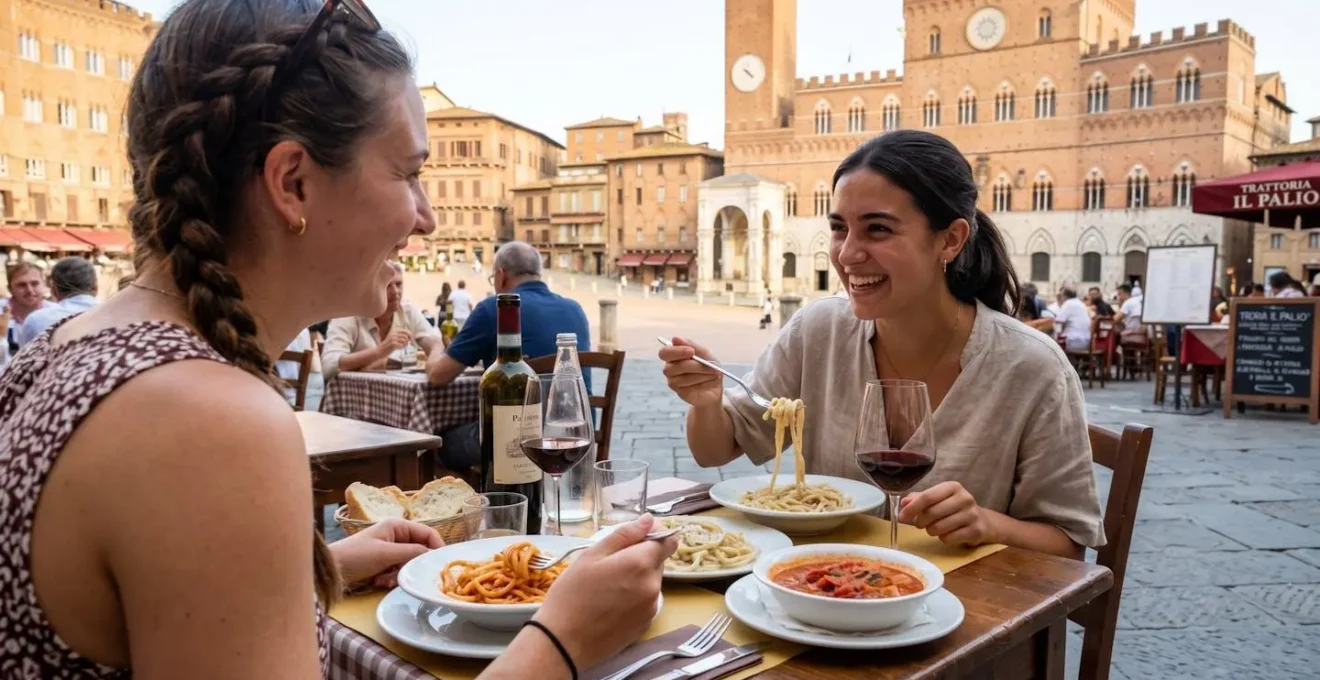
The answer increasingly points to no. A multi-city approach using dedicated public transport routes connects Florence, Pisa, Siena, Lucca, and San Gimignano without the hidden costs of fuel, parking fees, or ZTL fines. More importantly, it removes the stress that prevents you from enjoying wine with lunch or lingering over a third course when the bistecca arrives perfectly charred. Climate-controlled buses with Wi-Fi connectivity and luggage storage run daily from March through October, whilst a companion app provides multilingual planning assistance. The financial and environmental case proves compelling, but the culinary argument matters more: car-free travel forces you to slow down, align with Italian meal rhythms, and focus on tasting rather than navigating.
Your car-free Tuscan food journey in 30 seconds:
- 5 cities connected: Florence, Pisa, Siena, Lucca, San Gimignano with distinct culinary traditions
- 2 routes (Green and Terracotta) operating 18/03/2026 through 31/10/2026
- Climate-controlled buses include Wi-Fi and USB-C charging ports
- Tootie app provides multilingual AI assistance for restaurant selection and cultural context
- Typical savings: €150-200+ versus car rental redirected to higher-quality dining experiences
Why Ditching the Rental Car Unlocks Better Tuscan Food
The conventional wisdom surrounding Tuscan travel assumes mobility equals freedom, positioning car rental as essential for authentic experiences. This narrative ignores three realities that significantly impact food-focused tourism: the financial burden of hidden costs, the stress of navigating restricted traffic zones, and the environmental implications that increasingly conflict with responsible travel values. Florence alone collected €61.6 million in driving fines during 2024, as documented by The Florentine in their coverage of the city’s expanded ZTL enforcement, with 77 CCTV cameras monitoring approximately 260,000 vehicles daily across a 38 km² restricted area.
These automated systems don’t issue warnings. You drive through an archway in Florence’s centro storico at 14:30, unaware a camera has recorded your number plate, and three weeks later your rental company forwards a €100+ fine plus administrative fees. Multiply this across multiple cities — Siena, Lucca, and San Gimignano all maintain similar restrictions — and the hidden cost exceeds the base rental rate. Parking compounds the problem: historic centre lots charge €25-35 daily where spaces exist at all, whilst free parking requires a 15-20 minute walk that defeats the convenience premise.
The comprehensive cost analysis reveals why experienced food tourists increasingly abandon rental cars. This comparison accounts for realistic three-day scenarios across multiple Tuscan cities, including expenses typically omitted from travel guides that focus solely on base rental rates.
| Cost category | Car rental (3 days) | Multi-day bus pass | Difference | Impact on food budget |
|---|---|---|---|---|
| Base transport | €150-250 | Covered by pass | €200 average saved | Base investment redirectable |
| Fuel (approx 300 km) | €45-65 | €0 | €55 saved | One excellent bistecca dinner |
| Parking (3 cities × 1 day) | €60-105 | €0 | €80 average saved | Lunch at authentic trattoria |
| ZTL fine risk | €100-400 potential | €0 | €0-400 avoided | Multiple days great dining |
| Total realistic estimate | €355-820 | Transport included in pass | €250-500+ saved | 5-10 quality restaurant meals |
Cost estimates based on March 2026 market rates for standard compact car rental from major providers (Europcar, Hertz, Avis) with insurance, diesel fuel at €1.65/litre, and historic centre parking in Florence, Siena, and San Gimignano. ZTL fines reflect 2024-2026 enforcement tariffs.
- Zero parking stress or ZTL fine risk across all five cities
- €150-250 baseline saved on rental plus €100-200 on fuel and parking
- Freedom to enjoy wine tastings without designated driver constraints
- Aligns with #EnjoyRespectFirenze responsible tourism initiative
- Slower travel pace naturally matches traditional Italian meal timing culture
- Fixed departure schedules reduce spontaneous detours
- Cannot reach extremely remote agriturismi without additional local transport
- Seasonal operation (March through October only, no winter service)
- Requires coordinating luggage management between accommodation bases
The environmental dimension carries increasing weight. Florence’s official #EnjoyRespectFirenze campaign, supported by the Italian Ministry of Tourism’s « Major Italian Destinations for Sustainable Tourism » programme, explicitly encourages visitors to consider the city as a living ecosystem rather than an open-air museum. Public transport inherently reduces per-passenger carbon emissions compared to solo car travel, whilst supporting the local infrastructure that residents depend upon year-round. This isn’t performative environmentalism — it’s practical alignment with the slow food philosophy that defines authentic Tuscan gastronomy in the first place.
The 5-City Gourmet Circuit: From Florentine Bistecca to San Gimignano Saffron
The most common mistake food-focused travellers make is attempting to cover too much ground too quickly, treating Tuscan cities as checkboxes on a road trip rather than distinct culinary ecosystems worthy of sustained attention. Each destination within this five-city network maintains traditions shaped by centuries of geographic, economic, and cultural factors. Understanding these differences transforms superficial tourism into meaningful gastronomic exploration, whilst the logistical framework of connecting these cities by multi-day bus pass in Tuscany with Tootbus removes the navigation burden that typically fragments such experiences.
- Florence: Bistecca alla Fiorentina and Mercato Centrale Culture
The Renaissance capital serves as your base for understanding Tuscan meat culture through its signature T-bone steak from Chianina cattle, traditionally grilled over chestnut wood coals and served rare. The Mercato Centrale’s ground floor reveals the raw ingredients — pecorino cheese aged in various styles, fresh porcini mushrooms in autumn, local olive oils — whilst the upper floor food hall demonstrates both authentic preparation and tourist-trap warning signs worth learning early in your journey.
- Pisa: Cecina and Coastal Culinary Influences
Beyond the obvious tower, Pisa’s proximity to the Ligurian coast shaped a cuisine distinct from inland Tuscany. Cecina, a chickpea flour flatbread baked in wood ovens and sold by weight, represents fast food with centuries of tradition. The local practice of pairing it with Vermentino wine from nearby Bolgheri demonstrates how coastal access influenced drinking culture differently than Chianti-dominated Florence.
- Siena: Pici Pasta and Palio Food Traditions
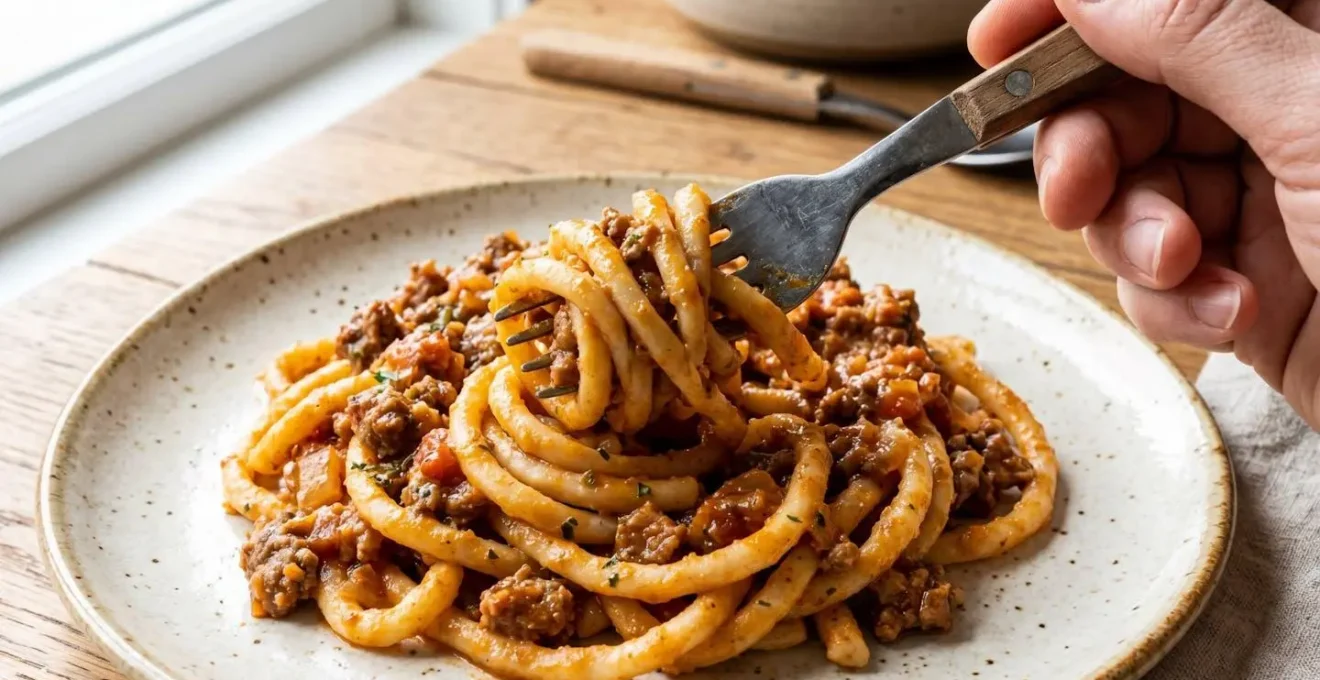
Siena’s hand-rolled pici pasta contains only flour and water, no eggs, resulting in thick irregular strands that grip sauce differently than smoother alternatives. The traditional pairing with cacio e pepe or wild boar ragu reflects the city’s historical relationship with the surrounding Crete Senesi hills. Panforte, the dense spiced fruitcake originally created for medieval travellers, still appears in bakeries using recipes that predate the Palio horse race by centuries.
- San Gimignano: Saffron Risotto and Medieval Trade Legacy
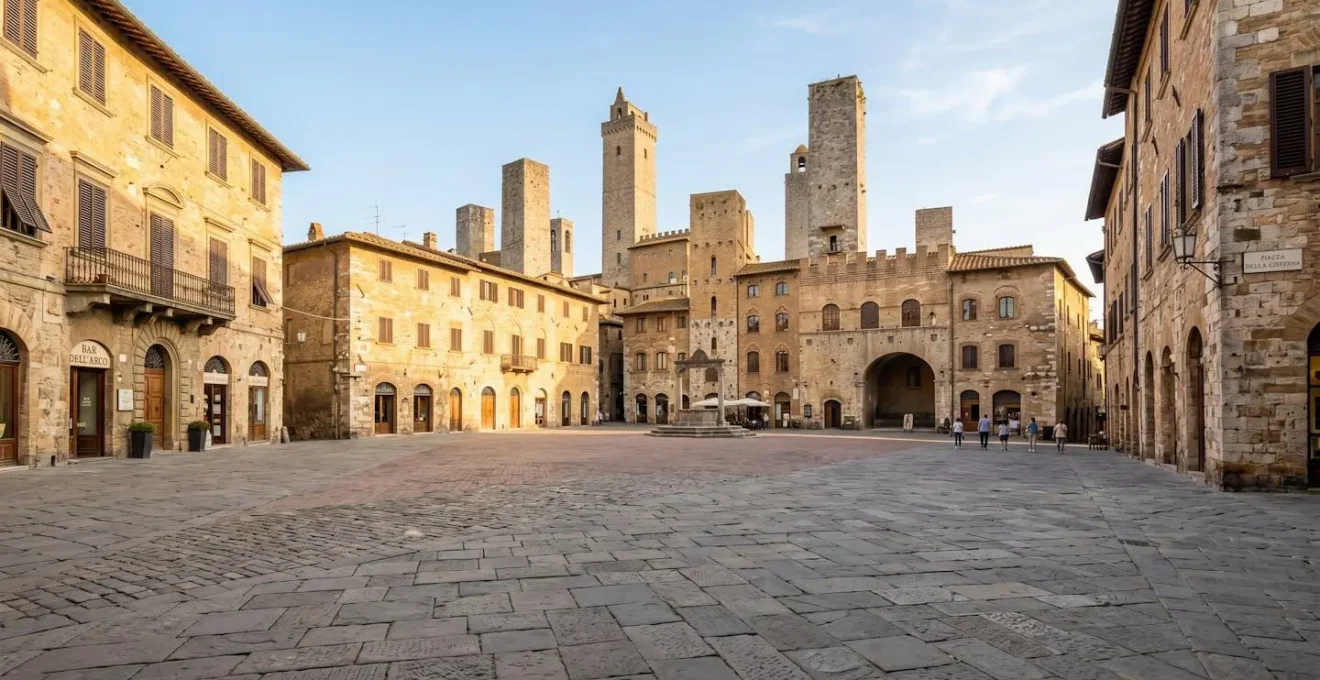
The medieval towers that define San Gimignano’s skyline grew from wealth generated partly through saffron cultivation and trade. The tradition continues in limited production, making saffron-infused risotto the signature dish rather than mere tourist performance. Vernaccia wine, produced exclusively within the comune’s boundaries since at least 1276, pairs with the saffron’s earthy notes in a combination that reflects centuries of agricultural specificity.
- Lucca: Tordelli and Renaissance Refinement
Lucca’s tordelli pasta conceals a complex meat filling traditionally reserved for Sunday meals and special occasions. The recipe varies by family but typically combines pork, beef, and mortadella with nutmeg and other spices reflecting the city’s Renaissance-era merchant wealth. Buccellato, a sweet bread flavoured with anise and raisins, appears in bakeries throughout the city and serves as the traditional gift when visiting Lucchese homes.
Learning to identify authentic gastronomic specialities proves essential when navigating these cities, particularly near major monuments where tourist-oriented restaurants display multilingual menus, pictures of dishes, and aggressive street solicitation. Genuine trattorias rarely employ hosts standing outside, typically display handwritten daily specials, and maintain pricing that locals find reasonable rather than inflated for foreign visitors. The bus pass approach naturally encourages asking residents for recommendations during the journey itself, creating informal knowledge transfer that car-based tourism misses entirely.
Green Route vs Terracotta Route: Matching Itineraries to Your Food Preferences
The two available routes reflect fundamentally different culinary philosophies and geographic realities. Understanding which aligns with your specific interests prevents the common error of trying to experience everything, which results in experiencing nothing deeply. The Green Route emphasises coastal-influenced cuisine and larger urban food markets, whilst the Terracotta Route focuses on hill town specialties and wine-producing territories.
- If you have 3-4 days and prefer coastal or urban gastronomy:
Select the Green Route connecting Florence, Pisa, and Lucca. This path emphasises seafood influences, cecina tradition, urban food markets like Mercato Centrale, and faster-paced city dining culture. Travel times average 60-90 minutes between cities, allowing morning departure and afternoon arrival that aligns with Italian aperitivo timing.
- If you have 3-4 days and prioritise hill town specialties:
Choose the Terracotta Route linking Florence, Siena, and San Gimignano. This option focuses on medieval culinary traditions, saffron cultivation, truffle-based dishes in season, and the slower pace characteristic of smaller historic centres. The route naturally connects to Chianti wine territory and pecorino cheese production areas.
- If you have 5+ days for comprehensive coverage:
Combine both routes sequentially, using Florence as your hub. Start with the Green Route to understand coastal influences and urban food culture, then transition to the Terracotta Route for hill town gastronomy and wine country access. This approach provides contrast that highlights regional diversity within Tuscany itself.
- If wine enthusiasm drives your planning:
Prioritise the Terracotta Route for superior access to Chianti Classico territory between Florence and Siena, plus Vernaccia production around San Gimignano. The car-free approach eliminates designated driver constraints, allowing you to taste freely during winery visits whilst many vineyards offer pickup services from town centres.
The seasonal operation window from 18 March through 31 October 2026 deliberately targets the period when outdoor dining becomes pleasant and local produce reaches peak availability. Spring brings artichokes, puntarelle, and fresh fava beans. Summer offers peak tomato season for panzanella and pappa al pomodoro. Autumn delivers porcini mushrooms, chestnuts, and the beginning of truffle season. This timing avoids the November-February period when many family-run trattorias reduce hours or close entirely, whilst harsh weather makes the outdoor piazza dining culture less appealing.
Practical Logistics: Bookings, Luggage, and the Tootie App
Operational questions typically prevent travellers from committing to car-free approaches, despite the financial and experiential advantages. Addressing these concerns directly removes the friction between interest and booking action. The three most common hesitations involve luggage management across multiple cities, schedule reliability when meal timing matters, and technological support for non-Italian speakers navigating unfamiliar food culture.
- Download the Tootie app and create your account before departure (available iOS and Android platforms)
- Book your multi-day pass for chosen route at least one week before travel during high season
- Reserve dinner tables in Florence and Siena for renowned restaurants (lunch remains more flexible)
- Research current ZTL zone boundaries if walking between bus stops and accommodation
- Check seasonal food specialties available during your specific travel dates
- Pack carry-on sized luggage for bus travel (dedicated storage compartments available)
- Note USB-C charging ports on buses eliminate need for heavy power adapters
Can I manage luggage comfortably on buses between cities?
Climate-controlled buses include dedicated luggage storage compartments designed for multi-day travellers. Most visitors bring carry-on sized bags for 3-5 day trips, storing larger items at a Florence accommodation base if combining both routes. The storage capacity comfortably handles standard rolling suitcases without requiring awkward overhead placement.
What happens if I miss a scheduled departure?
Daily departures throughout the operational season (18 March through 31 October) provide built-in flexibility. The Tootie app sends departure reminder notifications and displays real-time schedule updates. Unlike car rental with fixed return times generating late fees, the multi-day pass structure allows you to catch subsequent departures without financial penalty.
Do I need advance restaurant bookings when following bus schedules?
Arrival times naturally align with Italian meal culture — late breakfast, afternoon arrival allowing aperitivo and dinner. Book renowned restaurants for dinner service, but lunch remains generally flexible. The bus timing actually reduces the rushed feeling common to car-based itineraries where travellers feel pressure to maximise driving efficiency at the expense of leisurely meals.
Can I visit wineries without driving?
Many wineries near Siena and San Gimignano offer pickup services from town centre bus stops or provide easy walking access. The significant advantage: you taste freely without designated driver constraints or concerns about Italian drink-driving enforcement, whilst simultaneously supporting the sustainable tourism values these producers increasingly promote.
Does the Tootie app function in multiple languages?
The multilingual AI assistant covers major European and international languages, providing restaurant recommendations based on your stated preferences, cultural context explanations for traditional dishes, and real-time itinerary adjustment suggestions when schedules change. It functions as interpretive support beyond basic translation, explaining why certain preparations matter historically.
The broader value extends beyond logistics into how car-free travel fundamentally changes your relationship with food culture. When navigation stress disappears, you notice more: the rhythm of morning market activity in Lucca, the after-work aperitivo culture in Siena, the multi-generational family groups occupying entire restaurant sections on Sunday afternoons. These observations don’t appear in guidebooks because they emerge from sustained presence rather than rushed visits. Understanding culinary discoveries and local culture as interconnected phenomena rather than separate tourism categories requires exactly this slower approach that public transport naturally enforces.
What This Approach Changes for Your Tuscan Experience
The decision between car rental and multi-city bus passes ultimately reflects deeper questions about what you value in food tourism. Speed and comprehensive geographic coverage favour driving, assuming you accept the financial costs, environmental impact, and constant low-level stress of navigating unfamiliar roads and parking restrictions. Quality of attention, alignment with slow food philosophy, and financial resources redirected toward exceptional dining experiences favour the car-free approach, assuming you accept seasonal limitations and reduced spontaneity for remote locations.
Critical factors determining your ideal approach
- Financial transparency matters: hidden car costs often exceed the base rental rate through parking, fuel, and ZTL fine risks
- Environmental alignment supports local initiatives like #EnjoyRespectFirenze whilst reducing per-passenger carbon impact
- Route selection should match culinary interests: coastal influences versus hill town traditions determine ideal path
- Seasonal operation window (March-October) deliberately targets peak produce availability and outdoor dining weather
- Wine enthusiasts gain freedom to taste without designated driver constraints whilst supporting sustainable tourism values
Consider your priorities before dismissing car-free travel as limiting. If your goal involves photographing as many hill towns as possible in minimal time, rental cars serve that purpose efficiently. If your objective centres on understanding why Sienese pici differs from Lucchese tordelli through sustained tasting and conversation with producers, the slower multi-city bus approach proves superior. Tuscany’s gastronomic heritage developed over centuries of patient cultivation and preparation — experiencing it properly rewards the same patience rather than punishing efficiency.