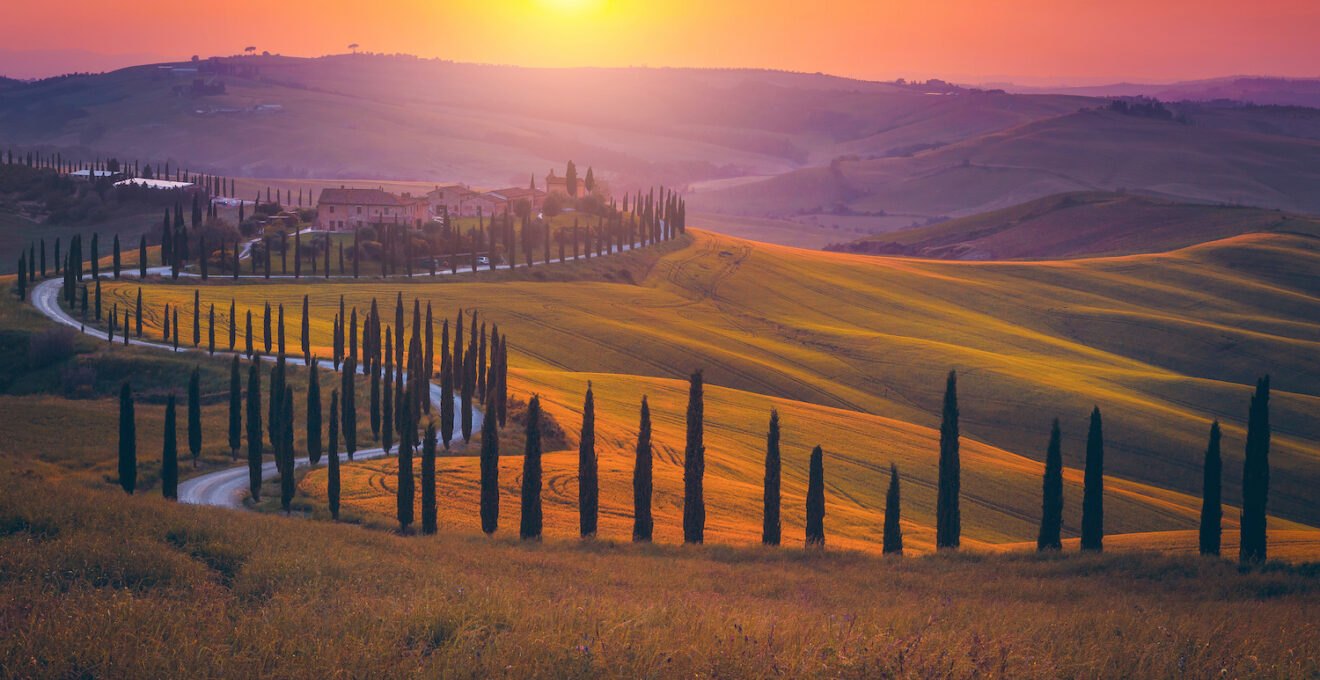
The classic Tuscany itinerary treats Florence, Siena and Pisa as boxes to tick, with the miles in between reduced to dead time behind a steering wheel. Yet the reality thousands of travellers discover each year is that Tuscany’s intercity roads—lined with cypress trees, medieval hilltop towns and UNESCO-listed landscapes—offer experiences as compelling as the museums and piazzas waiting at either end. According to the 2025 Florence tourism data published by Florence Daily News, over 50,000 tourist buses entered Florence between January and October 2025 alone, a 45% increase from the previous year, revealing a sharp rise in organised group transport as travellers seek alternatives to self-drive stress. The challenge is no longer whether to visit multiple cities, but how to turn the journey itself into discovery rather than logistics.
Why the road matters as much as the destination
Your Tuscany journey essentials in 30 seconds:
- Multi-day transport passes unlock 5 Tuscan cities from £37 with unlimited journeys between them
- Car hire hidden costs accumulate fast: fuel, daily parking fees, restricted traffic zone fines and unfamiliar road stress
- Fixed routes with hop-on flexibility transform travel time from logistical burden into guided cultural experience
- Structured transport reaches medieval towns like San Gimignano that remain challenging via standard public rail connections
Most travel content positions intercity travel as a necessary evil—something to minimise, optimise or skip entirely with direct flights. The assumption runs deep: real experiences happen once you arrive, not whilst you’re getting there. That view collapses the moment you consider Tuscany’s geography. The region contains 16 UNESCO World Heritage recognitions according to the official Tuscany Region portal, including the Historic Centre of Florence (inscribed in 1982 as “a unique artistic realization”), Siena’s medieval core, San Gimignano’s towers and the entire Val d’Orcia landscape. Many of these sites exist not as isolated points but as continuous cultural corridors connected by roads that wind through the same Renaissance and medieval contexts that shaped the cities themselves.
The prevailing car-centric narrative treats these connections as mere transit. Travellers hire vehicles, programme sat-nav coordinates and focus entirely on reaching the next parking zone, missing the reality that the 70-kilometre stretch between Florence and Siena passes through Chianti wine country, hilltop villages and viewpoints that define Tuscany as powerfully as any gallery. When the journey becomes a source of stress—navigating unfamiliar Italian road signs, calculating fuel stops, worrying about restricted traffic zones—the cultural landscape outside the windscreen turns into a blur.
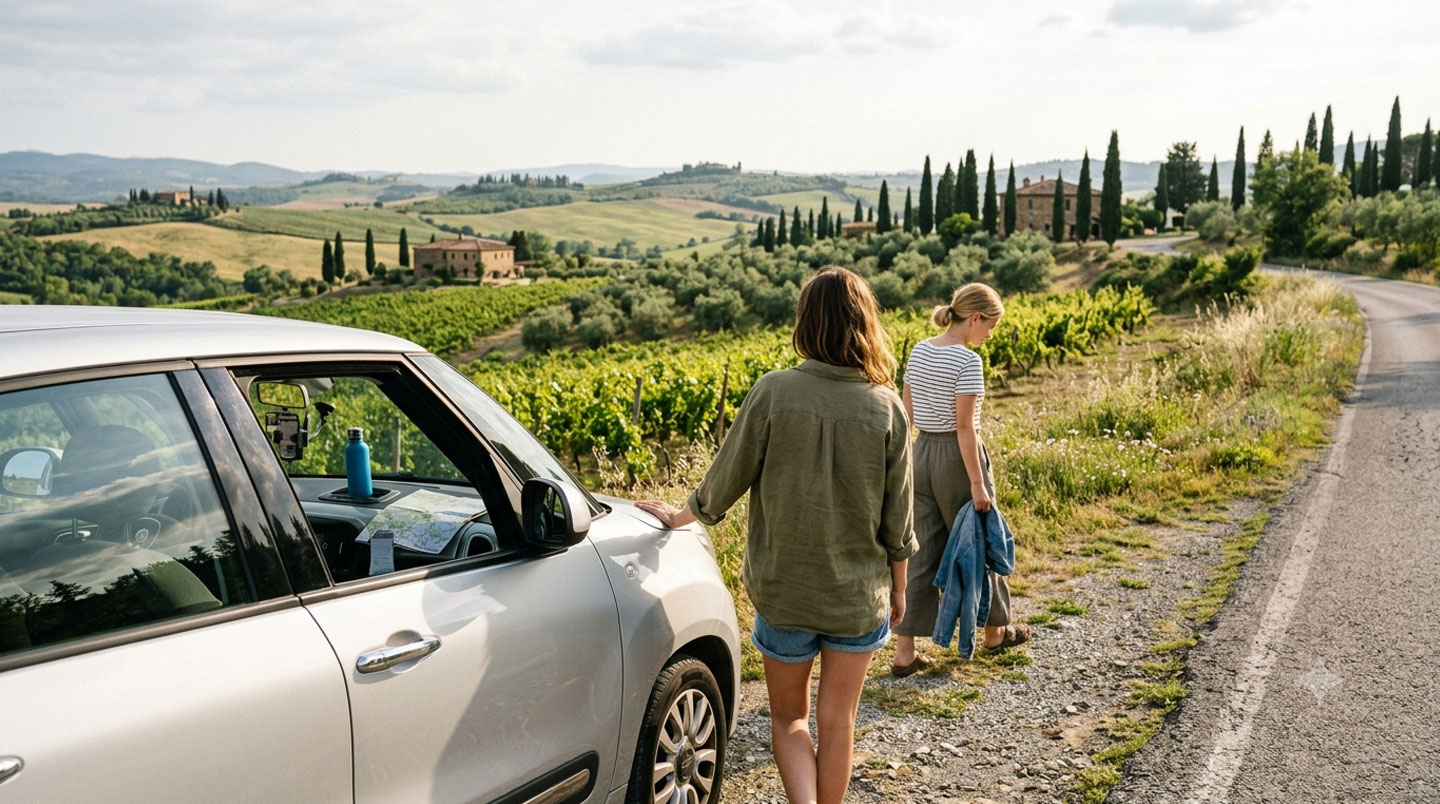
The mental shift required is simple but fundamental: treat the road as an integral part of the itinerary rather than the gap between destinations. That shift changes everything—from transport choices to daily rhythms. Rather than asking “How quickly can I get from A to B?”, the question becomes “What do I experience along the way?” For many, the answer involves rethinking whether white-knuckle driving through unfamiliar territory serves the trip better than designing freeing road trips that prioritise observation over navigation.
Common belief: Hiring a car offers maximum freedom to explore Tuscany spontaneously
The reality: Car hire delivers geographic flexibility but often at the cost of experiential quality. The driver focuses on road signs, parking apps and fuel gauges whilst passengers see scenery only through side windows. Restricted traffic zones (ZTL) in historic centres mean you park outside city walls and walk in anyway—the same endpoint as arriving by organised transport, but with added stress and expense. True spontaneity means capacity to absorb surroundings, ask questions and change plans based on what you’re discovering, not just where you can legally park.
The hidden cost of going it alone: car rental reality check
The advertised price for five-day car hire across Tuscany typically starts around £180-£220 for a compact vehicle in 2026. That figure appears straightforward until you begin adding the components most comparison sites bury in fine print. Fuel for a Florence-Siena-Pisa-Lucca-San Gimignano circuit adds approximately £60-£80 depending on vehicle efficiency and current petrol prices. Parking in historic centres runs between £20-£35 per day, with Florence and Siena offering limited spaces and enforcing strict camera-monitored ZTL fines (often £70-£100) for drivers who inadvertently enter without permits.
The total cost creeps towards £350-£450 before considering navigation stress, unfamiliar road rules and the cognitive load of driving on the right whilst reading Italian road signs. For many first-time visitors, that stress converts what should be leisurely cultural immersion into a tense logistical exercise. By contrast, multi-day transport passes offering unlimited journeys between Tuscan cities start from £34, removing the variables that transform car hire from simple expense into complex budget management.
The comparison becomes starker when you factor experiential elements that spreadsheets struggle to capture: driver fatigue, missed photographic moments whilst navigating, the inability to relax with local wine at lunch because someone needs to drive afterwards. Structured intercity services eliminate these trade-offs whilst often bundling walking tours and guided commentary that independent travellers otherwise book separately.
The breakdown below compares total costs and experiential factors across both transport options. Each row highlights a specific consideration that influences the final decision.
| Factor | Car Hire (5 days) | Multi-day Pass |
|---|---|---|
| Base cost | £180-£220 | From £37 |
| Fuel | £60-£80 | Included |
| Parking daily | £20-£35/day | Not applicable |
| ZTL fine risk | £70-£100 potential | None |
| Navigation stress | High (driver focused on roads) | Minimal (guided routes) |
| Scenic experience | Driver distracted by navigation | Immersive, guided commentary |
| Flexibility | Drive anywhere, park anywhere permitted | Unlimited journeys on fixed routes |
Cost data collected and updated January 2026 based on typical market offerings.
The hidden costs Emma discovered
A London-based marketing manager planning her first Tuscany trip initially budgeted £200 for car hire, viewing it as the obvious choice for visiting Florence, Siena and Pisa over five days. The breakdown she encountered during booking revealed a different picture: £210 base rental, £75 estimated fuel, £140 parking across five nights (£28 average per city), and a £95 ZTL fine she received three weeks after returning home for briefly entering Florence’s restricted zone whilst following sat-nav directions to her hotel. The final bill reached £520, nearly triple her initial budget, before factoring the stress of navigating one-way systems in medieval street layouts designed for horses, not hatchbacks. What she wished she’d known earlier: camera-monitored restricted traffic zones (ZTL — Zona a Traffico Limitato) enforce penalties that arrive by post weeks later, often without warning signage that non-Italian speakers recognise in time.
How fixed routes unlock spontaneous discovery
The phrase “fixed route” triggers assumptions about rigidity—pre-determined schedules that eliminate the freedom to explore at your own pace. That perception misses a crucial distinction between geographic constraints and temporal flexibility. Services operating on structured routes between Tuscany’s key cities increasingly offer unlimited journey models within multi-day validity periods. Purchase a pass valid for three or five days, and you’re free to board and re-board as many times as you choose on any covered route, effectively turning fixed paths into flexible building blocks for spontaneous itineraries.
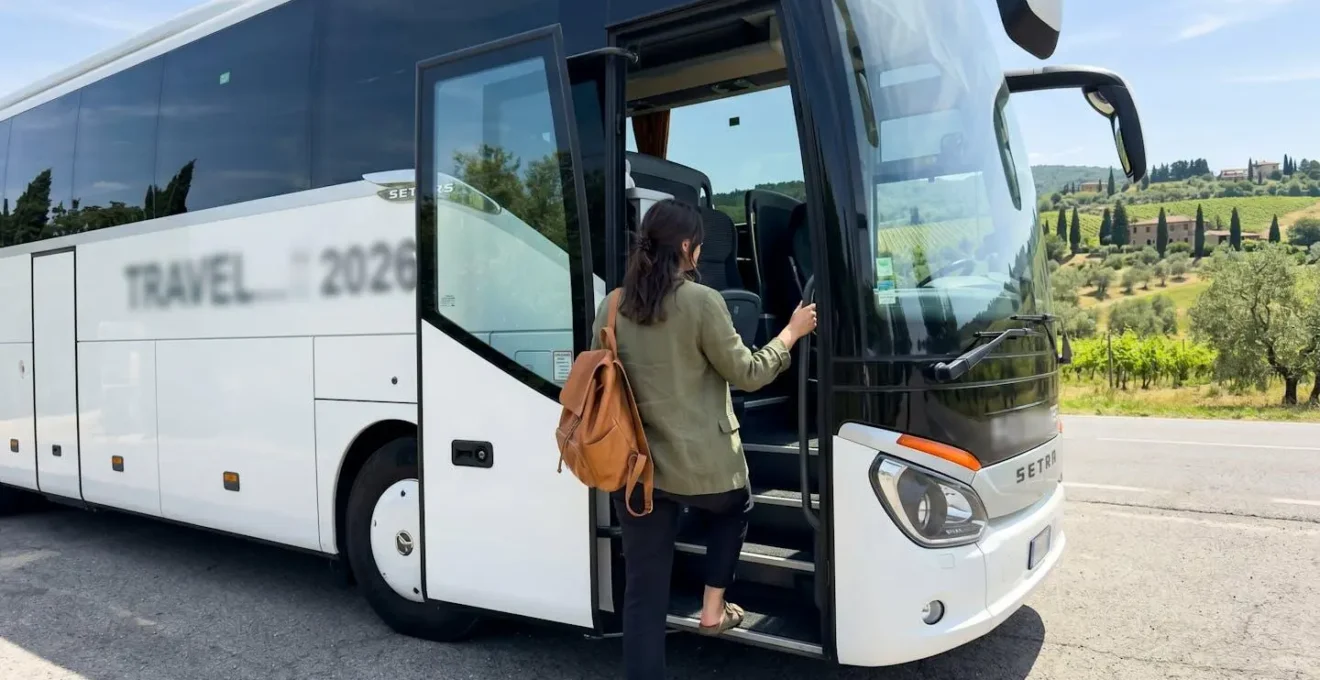
Tootbus Tuscany exemplifies this model, running two main routes—Green and Terracotta—that connect Florence, Pisa, Siena, Lucca and San Gimignano with unlimited re-boarding across pass durations ranging from one to five days. The structure means you’re not locked into “one visit per city” logic. Spot something compelling during your first pass through Lucca? Return the following day without recalculating costs or parking. Integrated walking tours at each destination add guided context that solo drivers typically miss, transforming arrival from parking challenge into curated introduction.
The service includes an AI travel assistant (Tootie) that optimises routing suggestions based on your interests, opening hours and current conditions—essentially offering the local knowledge that independent travellers spend hours researching whilst removing the navigation burden that converts drivers into stressed logistics managers. For non-drivers or groups where only one person holds a licence, structured transport eliminates the inequality where one traveller works whilst others sightsee.
- If minimising total cost is your primary concern:
Multi-day passes starting from £37 with unlimited journeys deliver the lowest per-journey cost for anyone visiting three or more cities. The saving compounds if you value re-visiting locations without additional expense.
- If cultural immersion outweighs schedule control:
Structured routes with integrated walking tours and guided commentary provide context that self-drive itineraries require significant advance research to replicate. You exchange absolute timing freedom for expertly curated experiences and local insights.
- If sustainability influences your travel choices:
Shared coach transport significantly reduces per-person carbon footprint compared to individual car hire. According to ISTAT figures on Florence tourist arrivals, over 5 million visitors reached the city in 2023 alone—consolidated transport becomes an environmental imperative at that scale.
- If you require access to locations beyond main routes:
Car hire remains the practical choice for travellers prioritising remote agriturismi, specific wineries or villages not served by structured transport. Combine approaches: use a pass for major cities, hire a car for one or two days targeting specific rural destinations.
The counterintuitive outcome is that fixed routes often enable more spontaneous discovery than self-drive freedom. When you’re not managing navigation, fuel stops, parking apps and restricted zone anxiety, attention shifts entirely to surroundings. The journey stops being a task to complete and becomes an experience to absorb—precisely the mental space where spontaneous decisions (“let’s stop here longer”, “let’s return tomorrow”) actually happen.
Your questions about intercity passes in Tuscany
Can transport passes really reach San Gimignano and smaller medieval towns?
Yes, though coverage varies by provider. Standard regional trains connect only major hubs like Florence, Pisa and Siena, leaving medieval hilltop towns like San Gimignano accessible primarily by car or infrequent local buses requiring multiple changes. Tootbus routes specifically include San Gimignano alongside Lucca, addressing the accessibility gap that frustrates travellers relying solely on rail connections. Verify exact route coverage before booking any multi-day pass—not all services reach beyond the Florence-Siena-Pisa triangle.
How does unlimited journey flexibility actually work in practice?
Multi-day passes activate on first use and remain valid for the purchased duration (one, two, three or five consecutive days). During that window, you board any scheduled departure on covered routes without additional payment or advance booking. The model suits travellers who value the option to return to locations rather than rigid one-visit itineraries. If a city merits half a day during your first visit, you simply board the next available service rather than forcing a full-day stay to justify the journey cost.
What’s included beyond just transport between cities?
Pass inclusions vary significantly. Basic intercity bus tickets cover only the journey itself. Premium multi-day services increasingly bundle walking tours at destinations, audio guides during transit, and digital assistance for itinerary optimisation. Tootbus integrates guided walks in each city plus their AI assistant (Tootie) for route planning, effectively combining transport with the curated experiences that independent travellers otherwise book separately. Always verify exactly what’s bundled—the difference between bare transport and experiential packages justifies substantial price variation.
Do you need to book journeys in advance or can you truly hop on spontaneously?
Genuine hop-on flexibility depends on service capacity and season. High season (May-September) can see popular morning departures fill quickly, particularly Florence to Siena routes. Most providers operate first-come-first-served boarding for pass holders, meaning arrival 15-20 minutes before scheduled departure secures your space during peak periods. Off-season (November-March), spontaneous boarding without queuing becomes realistic. The trade-off remains: you’re not guaranteed a specific departure time, but you’re also not tied to rigid advance bookings that penalise spontaneous itinerary changes.
Is this transport approach suitable for families with young children?
Structured intercity transport eliminates several family travel stressors: no driver fatigue, no child-seat installation complexity, no parking searches with restless children in the back seat. The predictable rhythm of scheduled stops provides natural break points. Onboard facilities (toilets, air conditioning) and guided commentary can occupy older children’s attention better than long car drives. The limitation is reduced flexibility for impromptu nappy changes or snack stops compared to private vehicle control. Families accustomed to extensive baby gear may find luggage restrictions challenging, though modern tour coaches typically accommodate prams and bags more generously than regional trains.
The question many travellers confront after visiting Tuscany isn’t whether they saw the right cities, but whether they experienced the region as a connected cultural landscape or a sequence of isolated postcards. Transport choice determines which outcome you’ll remember. If you’re weighing your next European destination beyond Tuscany’s borders, the principles explored here—treating journeys as experiences, comparing total costs honestly, embracing structure as liberation—apply across contexts. For broader destination planning guidance, choosing your next travel destination when dozens of countries appeal requires similar reframing of how you evaluate not just where you go, but how you move through the places you choose.