In summary:
- Seasickness is a treatable sensory conflict; prevention is a strategy, not luck.
- Your cabin’s location (low and midship) is the most critical non-medical factor you can control.
- Evidence favors over-the-counter medications like Meclizine or Scopolamine patches, which should be tested on land first.
- Proactive behaviors in the first 24 hours, like horizon-gazing and avoiding alcohol, are crucial for acclimatization.
- Always prepare for the worst-case scenario with adequate travel insurance that covers medical evacuation.
The dream of an ocean voyage—waking up to new horizons, the vast expanse of the sea—is a powerful one. Yet, for many first-time cruisers, this dream is shadowed by a persistent fear: seasickness. The worry of spending a much-anticipated vacation feeling nauseous and unwell can be overwhelming. Many passengers resign themselves to fate, armed with a confusing collection of tips from friends and online forums, from chewing ginger to wearing special bracelets. This approach treats seasickness like a random lottery.
But from a medical and maritime wellness perspective, this is the wrong framework. Seasickness, or « mal de mer, » is not a character flaw or bad luck; it is a predictable physiological response to a specific environmental trigger: sensory conflict. It occurs when your brain receives contradictory information from your eyes (which see a stable cabin) and your inner ear’s vestibular system (which feels the ship’s constant, subtle motion). The key to a comfortable voyage is not to hope for the best, but to implement an evidence-based strategy to manage this conflict.
This guide moves beyond generic advice to provide a specialist’s approach. We will explore how to mitigate risk by understanding the physics of your environment, how to choose the most effective medical and behavioral interventions, and how to prepare for every eventuality. By systematically addressing the root causes, you can take control of your well-being and ensure your cruise experience is memorable for all the right reasons.
This article breaks down the essential, evidence-based strategies you need to understand and implement. Follow this comprehensive guide to transform your approach from passive worry to proactive prevention.
Summary: An Evidence-Based Guide to Preventing Seasickness on Your Cruise
- Why Do Atlantic Sea Cruises Cause More Seasickness Than Mediterranean Routes?
- Which Deck and Position on Sea Cruises Experience the Least Movement?
- Pills, Ginger or Wristbands: Which Seasickness Solution Works Best for Sea Cruises?
- The Isolation Response That Worsens Seasickness on 70% of Sea Cruises
- When Should You Book Sea Cruises to Minimize Rough Weather Risk?
- The Cabin Choice That Makes 30% of First-Time Cruise Travel Passengers Regret Their Booking
- Why Are Remote Locations Life-Threatening if You’re Unprepared for Medical Emergencies?
- What Do First-Time Cruise Travel Passengers Need to Know to Avoid Rookie Mistakes?
Why Do Atlantic Sea Cruises Cause More Seasickness Than Mediterranean Routes?
Not all bodies of water are created equal when it comes to motion sickness. Passengers on transatlantic crossings often report more significant challenges than those on Mediterranean itineraries, and the reason lies in fundamental oceanography. The primary factor is the « wave period »—the time it takes for two successive wave crests to pass a single point. A longer wave period translates to a slow, sustained rolling or heaving motion that is a primary trigger for the vestibular system.
The Atlantic Ocean is a vast, deep basin with long « fetches »—uninterrupted distances over which wind can act on the water’s surface. This creates long-period swells. In contrast, the Mediterranean is a semi-enclosed sea with complex coastlines that limit the fetch. As a result, its waves are typically shorter and choppier. Scientific measurements confirm this difference; one study on coastal environments notes that due to its geography, the Mediterranean sees limited generation of large waves compared to the open ocean. Another dataset shows a significant disparity, with an Atlantic wave period of 9.5 seconds compared to just 5 seconds in the Mediterranean.
This longer, more pronounced motion in the Atlantic creates a more significant and persistent sensory conflict for passengers. The ship rises and falls over a much longer duration, giving the inner ear a strong and unavoidable signal of movement that often clashes with the visual information from inside the ship. Understanding this environmental risk is the first step in a proactive prevention strategy, informing your choice of itinerary if you are particularly susceptible to motion sickness.
Which Deck and Position on Sea Cruises Experience the Least Movement?
Once you understand the external forces acting on the ship, the next step is to understand the ship’s internal physics. A cruise ship, despite its immense size, behaves like a seesaw or a lever. It has a natural balance point, or fulcrum, around which it pivots. The key to minimizing the sensation of movement is to position yourself as close to this fulcrum as possible, both horizontally and vertically. This is the single most important non-medical decision you can make to prevent seasickness.
Horizontally, the fulcrum is located in the center of the ship, or midship. The forward (bow) and aft (stern) ends of the vessel will experience the most dramatic up-and-down pitching motion as the ship cuts through waves. Vertically, the most stable point is on the lower decks, closer to the ship’s center of gravity and the water line. The higher you go, the more exaggerated any side-to-side rolling motion will feel, like being at the top of a swaying pendulum. As one cruise stability analysis notes, « The center (midship) is the balance point. The front (forward) and back (aft) swing more dramatically. The higher you go, the more amplified that movement feels. »
Therefore, the ideal cabin location for a motion-sensitive passenger is on a low deck, in a midship position. While a high-deck balcony cabin might offer superior views, it comes at the cost of significantly increased motion. Choosing an interior cabin in this stable zone might be a far more comfortable option, proving that for a first-time cruiser, stability should be prioritized over the view.
This principle of a central fulcrum is the cornerstone of onboard stability. By strategically placing yourself near this point of least motion, you are actively reducing the intensity of the signals being sent to your vestibular system, thereby minimizing the primary trigger for sensory conflict. It is a simple application of physics that can have a profound impact on your well-being at sea.
Pills, Ginger or Wristbands: Which Seasickness Solution Works Best for Sea Cruises?
When environmental and behavioral strategies are not enough, medical intervention becomes the next line of defense. The market is flooded with options, but their effectiveness varies widely. An evidence-based approach is crucial to distinguish between clinically proven treatments and anecdotal remedies. The most effective solutions work by directly targeting the neurological pathways involved in sensory conflict.
Over-the-counter (OTC) and prescription medications remain the gold standard. The most common are antihistamines like meclizine (Bonine) and dimenhydrinate (Dramamine), which work by suppressing signals from the inner ear to the brain’s vomiting center. For more severe cases, the prescription scopolamine patch is highly effective. It works differently, by blocking acetylcholine, a neurotransmitter involved in vestibular signaling. While highly effective, these medications are not without side effects, most commonly drowsiness. Clinical comparisons suggest that while scopolamine is more effective than meclizine for many, it can also cause more pronounced side effects. This makes it essential to test any medication on land before your voyage.
What about non-pharmacological options? Acupressure wristbands, which apply pressure to the « Nei-Kuan » point, have shown mixed results in studies and may have a significant placebo effect. Ginger, often taken as a capsule or tea, has some evidence for reducing nausea but is generally considered less potent than medication for preventing the full spectrum of seasickness symptoms. A case study from a passenger on a Royal Caribbean cruise who systematically tested remedies found that while wristbands provided some initial relief, OTC medications were ultimately the most effective solution for managing their symptoms, highlighting the reliability of pharmacological intervention.
The Isolation Response That Worsens Seasickness on 70% of Sea Cruises
When the first wave of nausea hits, a common and deeply ingrained instinct is to retreat. Many passengers believe the best course of action is to lie down in the perceived stability of their cabin, close their eyes, and wait for it to pass. This is, from a physiological standpoint, one of the worst things you can do. This « isolation response » actively exacerbates the very sensory conflict that causes seasickness.
By confining yourself to an enclosed space with no visual reference to the outside world, you are creating a « sensory mismatch. » Your eyes see a perfectly stable room—the walls aren’t moving, the bed is still—but your inner ear is screaming that you are on a moving, rolling, pitching vessel. This disconnect floods the brain with contradictory data, intensifying feelings of dizziness and nausea. Lying down can feel even worse, as the horizontal position can make the vestibular system even more sensitive to the ship’s motion.
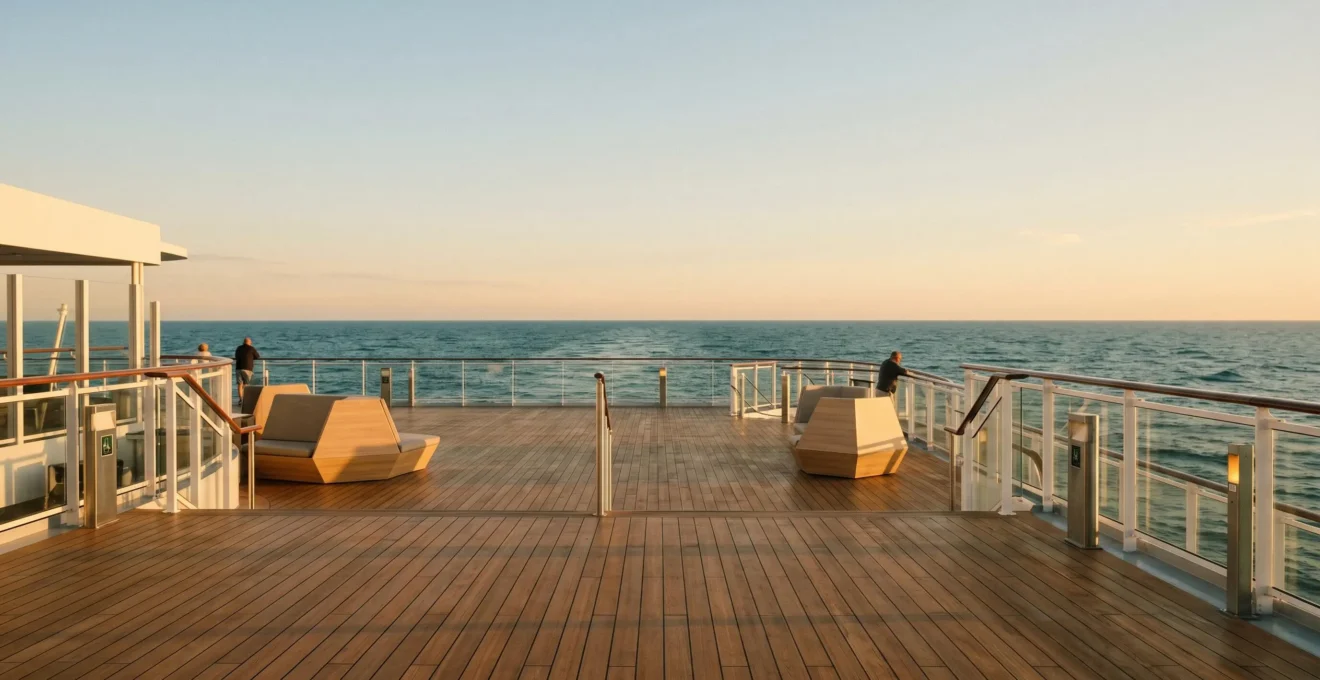
The correct, albeit counter-intuitive, response is to do the opposite: get out of your cabin. As travel health experts from InsureMyTrip advise, « Many people might feel like they want to go lay in bed when they’re feeling seasick, but it’s important to get fresh air and to stare out at the balanced horizon. » Go to an open deck, preferably in the midship area, and fix your gaze on the stable, distant horizon. This action re-synchronizes your senses. Your eyes now see the same motion that your body feels, providing your brain with a coherent set of data. This simple act is the most powerful behavioral tool for managing acute symptoms.
The fresh air also helps, but the critical element is the visual re-calibration. Resisting the urge to isolate and instead seeking the horizon is a fundamental shift in strategy from passive suffering to active management of your body’s sensory inputs.
When Should You Book Sea Cruises to Minimize Rough Weather Risk?
A significant part of a proactive seasickness prevention strategy happens long before you pack your bags: it’s in the planning. Choosing *when* to cruise is just as important as choosing where, as seasonality is directly linked to the probability of encountering rough seas. While modern cruise ships have advanced stabilizers, they can only mitigate, not eliminate, the motion from a significant storm.
Every major cruising region has its optimal « calm season » and a period where storms and high winds are more prevalent. As the editorial team at Cruise Critic points out, even typically calm seas can have rough periods, with the Mediterranean being a prime example, tending to be « roughest in the fall and winter, due to winds and storms. » Booking your voyage during the most stable weather window is a powerful risk mitigation tactic. Here are some general guidelines for major itineraries:
- Caribbean Cruises: The calmest and most popular period is from December through May. The Atlantic hurricane season, which officially runs from June 1 to November 30, brings a higher risk of itinerary changes and rougher seas, particularly in the late summer and early fall.
- Mediterranean Cruises: To avoid the winter storms and winds, the ideal time to book is during the spring (April-May) or early fall (September-October). This also helps you miss the peak summer crowds and heat.
- Alaska Cruises: The peak season of July and August generally offers the most stable weather and sea conditions. The « shoulder seasons » of May and September can offer great value but come with a higher probability of colder, rougher seas, especially on open-water segments.
- Transatlantic/Transpacific Crossings: These repositioning cruises involve many days on the open ocean. It is critical to avoid winter crossings (November through March), when the North Atlantic is notorious for powerful storms.
While no season can offer a 100% guarantee of smooth sailing, aligning your travel dates with historical weather patterns significantly tilts the odds in your favor. It’s a strategic decision that reduces the likelihood of your vestibular system being put to the ultimate test.
The Cabin Choice That Makes 30% of First-Time Cruise Travel Passengers Regret Their Booking
While seasonality sets the stage, your cabin selection is the most impactful decision you will make for your day-to-day comfort. For a first-time passenger, the allure of a balcony cabin with sweeping ocean views is powerful. However, choosing a cabin based solely on the view, without considering its location, is a classic rookie mistake that can lead to a miserable experience. The wrong cabin choice directly places you in the area of maximum motion.
Many first-timers instinctively book cabins that are high up and at the very front (forward) or back (aft) of the ship to get what they perceive as the « best » views. This is precisely where the ship’s pitching and rolling motions are most amplified. It’s crucial to remember that even with modern technology, physics is immutable. As one maritime analyst explains, « While stabilisers significantly reduce rolling, they don’t eliminate all motion. If you’re prone to seasickness, taking precautions like choosing a midship cabin on a lower deck… is still a good idea. » Stabilizers are excellent at counteracting side-to-side roll, but they are less effective against the up-and-down pitching motion felt most acutely at the bow.
Comparative Cabin Experience During a Transatlantic Crossing
The real-world impact of this choice is profound. One cruiser documented their experience on a transatlantic crossing where they had a central, low-deck cabin, while their parents were in a balcony cabin high up at the front of the ship. The difference was stark. The cruiser reported that the movement and noise from the bow crashing through waves were ‘far, far worse’ in the forward, upper-deck cabin. While they felt stable and comfortable in their midship location, their parents endured a much more turbulent ride, perfectly illustrating the critical role of cabin location over cabin type for motion-sensitive passengers.
This is not to say you can never enjoy a balcony. On a calm Mediterranean cruise in summer, it may be perfectly fine. But for a first-time cruiser, or anyone with a known sensitivity, the prudent choice is clear: prioritize location over luxury. A stable, comfortable inside cabin midship on a low deck is infinitely superior to a nauseating, high-end suite at the bow. This single decision can be the difference between a dream vacation and a week of regret.
Why Are Remote Locations Life-Threatening if You’re Unprepared for Medical Emergencies?
While seasickness is the most common health concern on a cruise, it’s crucial to have a broader medical preparedness strategy. A cruise ship, especially on remote itineraries like Alaska, transatlantic crossings, or expeditions to Antarctica, is a floating but isolated environment. In the event of a serious medical issue—whether a complication from seasickness like severe dehydration or an unrelated emergency like a cardiac event or injury—you cannot simply call an ambulance. Medical care is limited to the ship’s onboard medical center, and evacuation is a complex and extremely expensive logistical operation.
The statistics underscore this reality. While the majority of conditions can be handled onboard, a small but significant percentage require more advanced care. According to CDC data on cruise ship medical care, about 5% of medical emergencies require evacuation to a land-based hospital. The financial implications of such an event are staggering. Without adequate travel insurance, the cost of a medical evacuation can be financially devastating, with figures ranging from $15,000 to over $200,000, depending on the location and medical support needed.
This is why a comprehensive travel insurance policy with a high limit for emergency medical evacuation is not a luxury; it is an absolute necessity for cruise travel. Your standard health insurance will likely not cover these costs. Beyond insurance, personal preparedness is key. This includes packing a well-stocked first-aid kit with more than just your seasickness remedies: include pain relievers, bandages, antiseptic wipes, and any personal prescription medications with enough supply for the entire trip plus delays. You are your own first responder until you can reach the ship’s medical center. Being unprepared in a remote location is not just an inconvenience—it’s a serious risk to your health and financial stability.
Key takeaways
- Seasickness is a manageable physiological reaction (sensory conflict), not a random illness. A strategic approach is key.
- Your physical location on the ship (low and midship) is the most powerful non-medical tool for minimizing motion.
- Evidence-based medical prevention (e.g., Meclizine, Scopolamine) is more reliable than anecdotal remedies and should be tested at home first.
What Do First-Time Cruise Travel Passengers Need to Know to Avoid Rookie Mistakes?
For the first-time cruiser, navigating the complexities of a sea voyage can feel daunting. Beyond the fear of seasickness, a host of minor mistakes can detract from the experience. However, most of these errors can be avoided with a proactive, wellness-focused mindset. The prevalence of onboard medical issues is higher than many think; CLIA data indicates that roughly 1 in 14 passengers seeks medical attention during their trip. Adopting a strategic approach to your health from day one is paramount.
The most critical period for preventing seasickness is the first 24 hours. Your body needs time to adjust to the new environment—a process called physiological acclimatization. Overloading your system during this window is a recipe for disaster. This means avoiding heavy, greasy foods, and moderating alcohol intake. Alcohol, being a diuretic, can lead to dehydration, which disrupts your inner ear’s delicate equilibrium and significantly worsens seasickness symptoms. Prioritize hydration with water and treat the first day as a gentle adjustment period, not a sprint.
Another common mistake is waiting until you feel sick to take action. Most motion sickness medications are far more effective at prevention than at treatment. Start taking your chosen preventative medication 1-2 days *before* you board, allowing it to build up in your system. This proactive dosing is crucial. Furthermore, never try a new medication for the first time on the ship. You must test it at home weeks in advance to identify any potential side effects like extreme drowsiness, which could ruin your vacation just as much as the sickness itself.
Action Plan: Your Seasickness Prevention Audit
- Itinerary & Route Analysis: Review your cruise route (e.g., Atlantic vs. Mediterranean) and time of year to assess the inherent motion risk based on typical weather patterns.
- Cabin Location Vetting: Obtain the ship’s deck plan and verify your cabin’s location. Is it on a low deck (typically 4-6) and midship? If not, assess your personal tolerance or inquire about a location change.
- Medical Intervention Pre-Screening: Weeks before your cruise, consult your physician. If you plan to use medication (patch or pills), test it on a weekend to check for side effects like drowsiness or disorientation.
- Non-Pharmacological Kit Assembly: Pack a dedicated wellness kit in your carry-on, including your pre-screened medication, acupressure bands, and ginger supplements to have multiple options readily available.
- Behavioral Strategy Commitment: Pre-plan your first 24 hours onboard. Schedule time on an open deck to gaze at the horizon, make dinner reservations that feature lighter fare, and commit to hydrating with water before indulging in other beverages.
By shifting your mindset from reactive panic to proactive preparation, you transform seasickness from a dreaded possibility into a manageable variable. This strategic approach ensures you are in control of your well-being, freeing you to fully immerse yourself in the incredible experience of a sea cruise.
Ultimately, preventing seasickness is about respecting your own physiology and the powerful environment of the ocean. By applying these evidence-based strategies, you are no longer a passive passenger at the mercy of the waves, but an informed traveler equipped to ensure your journey is smooth, comfortable, and unforgettable.