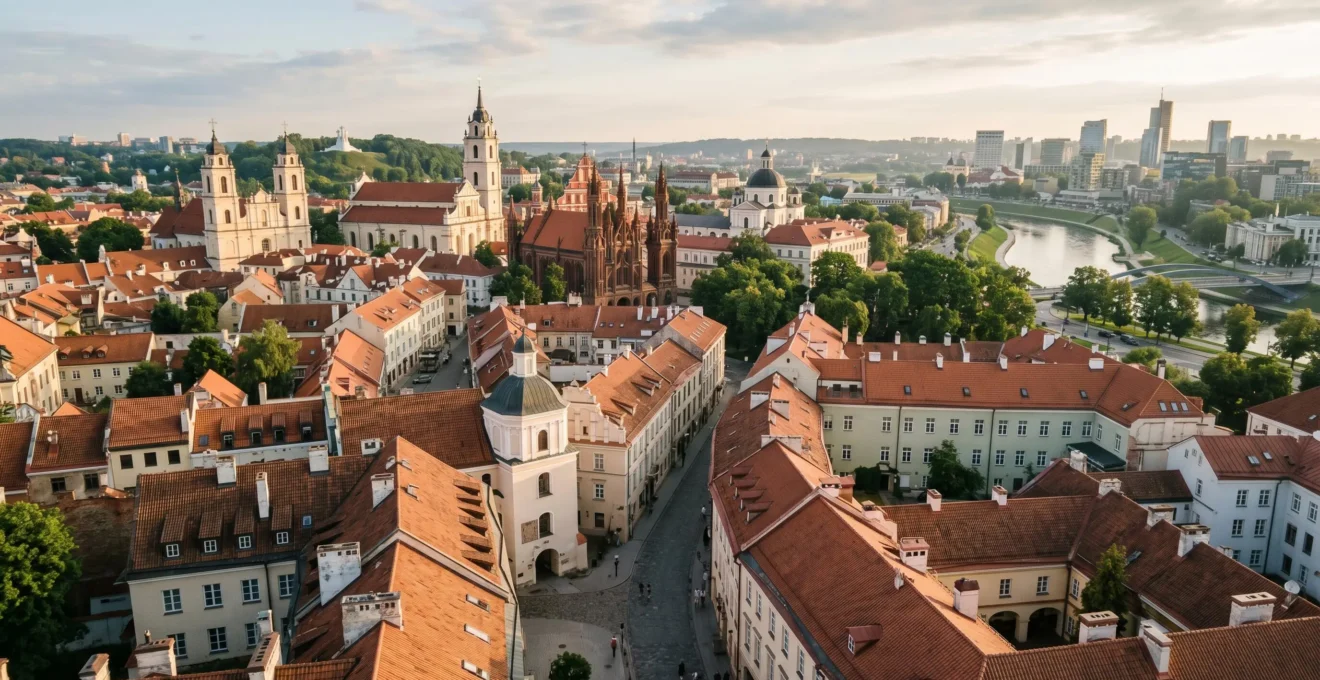
Vilnius isn’t just a budget-friendly alternative to popular European capitals; it’s a superior choice for travelers seeking profound cultural immersion without the crowds.
- It delivers world-class Baroque art and architecture with an intimate, accessible feel that has been lost in cities like Prague or Krakow.
- The city offers exceptional value, allowing for 5-star experiences at a fraction of the cost, combined with an authentic, « lived-in » culture just outside the tourist-centric Old Town.
Recommendation: Shift your focus from « where is cheapest? » to « where is the cultural density highest? » and you will find Vilnius is the undeniable answer.
For the seasoned urban explorer, a familiar sense of fatigue has set in. The great cultural capitals of Europe—Prague, Krakow, Vienna—while undeniably beautiful, often feel like victims of their own success. You navigate through a sea of selfie sticks, wait in endless queues, and find that the authentic local life has been pushed out by a polished, tourist-facing facade. The search for a genuine connection to a place, for that spark of discovery, becomes increasingly difficult. It’s common to hear Vilnius mentioned in the same breath as « budget alternative, » a comforting but ultimately misleading platitude. While its affordability is remarkable, framing it this way misses the entire point.
The real question isn’t whether Vilnius is cheaper, but whether it offers a *richer* experience. What if the key to an unforgettable city break wasn’t just seeing masterpieces, but experiencing them in an atmosphere of intimate grandeur? This guide repositions Vilnius not as a backup plan, but as the premier destination for those who crave deep cultural engagement. We will move beyond the surface-level « cheap and beautiful » narrative to explore the city’s exceptional value, its unique and theatrical Baroque soul, and the vibrant, lived-in culture that thrives just steps away from the historic core. It’s a city that rewards curiosity with authenticity at every turn, offering a safe and profoundly welcoming environment where English is widely spoken in urban areas, making independent exploration a joy.
This article provides a strategic framework for experiencing the Lithuanian capital’s true character. We will explore its unparalleled value, uncover its hidden architectural gems, and offer itineraries tailored to your travel style, ensuring you can connect with the city’s soul, whether in the crisp winter air or during its unique, low-key festivals.
Summary: A Guide to Discovering Vilnius, Europe’s Authentic Cultural Gem
- Why Does Vilnius Offer 5-Star Experiences at Half the Price of Paris?
- How to Explore Vilnius’ Hidden Baroque Churches That 80% of Tourists Miss?
- Vilnius Solo Trip or Baltic Triangle: Which Itinerary Maximizes Your Experience?
- The Cold Shock That Surprises 60% of First-Time Vilnius Winter Visitors
- When Should You Visit Vilnius to Catch Festivals Without Crowds?
- Which 7 European Cities Contain the World’s Finest Baroque Architecture Collections?
- Why Do Urban Centers Hide Their Real Culture 2 Miles From the City Centre?
- How to Recognize Authentic Baroque Architecture Versus Later Imitations?
Why Does Vilnius Offer 5-Star Experiences at Half the Price of Paris?
The conversation about Vilnius often begins and ends with one word: « cheap. » This does a profound disservice to the city. The more accurate term is « exceptional value. » It’s not about spending less; it’s about experiencing more. Imagine sipping artisanal coffee in a centuries-old courtyard, enjoying a world-class tasting menu, or staying in a stylish boutique hotel—all for a price that would barely cover a single museum ticket and a sandwich in more saturated European capitals. This isn’t an exaggeration. The economic reality is that your travel budget stretches exponentially further here, transforming a standard trip into a luxury experience.
This financial freedom fundamentally changes the way you can interact with the city. Instead of constantly calculating expenses, you are free to be spontaneous—to duck into an intriguing gallery, to say « yes » to a concert, or to take a taxi back after a long day of exploring instead of a crowded bus. Recent data starkly illustrates this gap; for instance, the overall cost of living in Paris is 83% more expensive than in Vilnius. This isn’t a minor difference; it’s a paradigm shift. It means the difference between a trip where you’re just observing the culture and one where you are actively participating in it.
This « luxury of access » allows you to engage with the city on a deeper level. You can afford to hire a private guide to explain the nuances of the Jewish Quarter’s history or take a cooking class to learn the secrets of cepelinai (potato dumplings) without a second thought. The value proposition of Vilnius is that it removes the financial barrier between you and an authentic, high-quality cultural immersion.
How to Explore Vilnius’ Hidden Baroque Churches That 80% of Tourists Miss?
Many cities have Baroque architecture, but Vilnius is a different phenomenon entirely. It is the northernmost epicentre of the style, home to a uniquely dramatic and emotional sub-genre known as Vilnian Baroque. While tourists flock to the Cathedral, the true soul of the city’s architectural heritage lies in the dozens of parish churches and monasteries that most visitors walk right past. These are not just buildings; they are theatrical stages for faith, designed by masters like Johann Christoph Glaubitz to create a sense of overwhelming movement and emotion.
To truly discover this hidden layer of the city, you need to become a « Baroque spotter. » Forget ticking off a list of famous names; instead, learn to recognize the signature elements of the style. Look for facades that are not flat but undulate like a curtain in the wind. Notice the impossibly slender twin towers that seem to reach for the heavens. The real magic often happens when you step inside. A plain, unassuming exterior can hide an explosion of Rococo stucco work, where thousands of saints, angels, and cherubs seem to writhe and dance across the ceiling and walls. This contrast between exterior restraint and interior exuberance is a hallmark of the Vilnian school.
This photograph captures the essence of that interior drama, showcasing the incredible detail and texture that defines these spaces. The play of light and shadow on the sculptural forms is a key part of the intended emotional impact.
As you can see, the craftsmanship is not just decorative; it’s narrative. To help you identify these features, use this checklist as you wander the Old Town’s cobblestone streets:
- Wavy Facades: Look for undulating, curved walls that create a sense of movement.
- Slender Twin Towers: Identify the symmetrically designed, delicate towers that are a signature of the style.
- Stucco Explosions: Note the contrast between relatively plain exteriors and interiors filled with thousands of white stucco figures.
- Broken Pediments: Spot the interrupted triangular or curved gables above windows and doors—a key Baroque detail.
- Colorful Altars: Observe the use of multi-colored marble and bright decorations inside, particularly in the altars.
- Glaubitz’s Masterpieces: Track down the work of the master architect, including St. Catherine’s Church (1743) and the Church of St. Johns.
Vilnius Solo Trip or Baltic Triangle: Which Itinerary Maximizes Your Experience?
Once you’re captivated by Vilnius, the natural question is how to best structure your trip. Is it a destination for a focused deep-dive, or is it a starting point for a wider Baltic tour? The answer depends entirely on your traveler archetype. For those jaded by whirlwind tours that leave you with a shallow impression of many places but a deep understanding of none, Vilnius offers a compelling case for staying put. The city’s cultural density is its superpower; there is more than enough art, history, and vibrant local life to fill a 4-5 day itinerary without a single moment of boredom.
However, the allure of the « Baltic Triangle »—Vilnius, Riga, and Tallinn—is strong, offering a fascinating cross-section of regional history in a short time. This route allows you to witness three distinct cultural layers: Lithuanian Baroque, Latvian Art Nouveau, and Estonian Medieval charm. The choice isn’t about which is « better, » but which aligns with your travel philosophy. Are you a purist who wants to go deep, or a sampler who enjoys comparing and contrasting distinct histories? For many, Vilnius also serves as a perfect « hub and spoke » base, allowing for easy day trips without the hassle of changing hotels.
To help you decide, this framework breaks down the options based on travel style, drawing from an analysis of different Baltic itineraries.
| Traveler Archetype | Recommended Itinerary | Key Strengths | Ideal Duration |
|---|---|---|---|
| The Culture Purist | Vilnius Deep-Dive | Profound Baroque architecture, Jewish heritage museums, world-class galleries (MO Museum), intimate cultural density | 4-5 days |
| The Historical Sampler | Baltic Triangle (Vilnius-Riga-Tallinn) | Experience three distinct historical layers: Lithuanian Baroque, Latvian Art Nouveau, Estonian Medieval | 8-10 days |
| The Art & Modernity Seeker | Vilnius + Kaunas Hub | Pair Vilnius with Kaunas (2022 European Capital of Culture), modernist architecture, contemporary art scene | 5-6 days |
| The Nature-Culture Blend | Hub and Spoke Model | Use Vilnius as affordable base for day trips: Trakai Castle (30min), Hill of Crosses (2h), Kaunas (1h), maximize without hotel changes | 6-7 days |
Ultimately, whether you’re a solo traveler seeking reflective moments in quiet courtyards or planning a multi-city adventure, Vilnius provides a robust and rewarding core for any Baltic journey. The city is exceptionally safe and easy to navigate, making it an ideal destination for independent explorers of all types.
The Cold Shock That Surprises 60% of First-Time Vilnius Winter Visitors
A winter trip to Vilnius can be magical: snow-dusted rooftops, the warm glow of cafes, and a serene atmosphere free from summer crowds. However, many first-time visitors are unprepared for the reality of a Baltic winter. It’s not just cold; it’s a damp, penetrating cold that can surprise even seasoned travelers. With an average January temperature of -3.8°C (25°F) and nights that can plummet dramatically, arriving without the right gear is a recipe for a miserable trip spent huddled indoors. The high humidity, often around 90%, makes the air feel much colder than the thermometer suggests.
But for those who come prepared, winter reveals a side of Vilnius that is completely inaccessible in the summer. The « cold shock » gives way to the discovery of a thriving « cellar culture. » As the temperatures drop, life moves underground into a network of cozy, intimate basement bars, jazz clubs, and traditional restaurants. These warm, candlelit spaces offer an authentic social experience, a world away from the open-air terraces of July. Furthermore, the low winter sun creates a unique « Winter Light Phenomenon, » casting long shadows and making the pastel-colored buildings of the Old Town glow with an incredible vibrancy—a photographer’s dream.
To embrace the winter rather than just endure it, one must adopt the local wisdom. It’s about more than just a warm coat; it’s about strategic layering, the right footwear for icy cobblestones, and participating in the rituals that make the season special, like sipping on *karštas vynas* (hot spiced wine).
Your Lithuanian Winter-Proofing Action Plan
- Assess Your Layers: Inventory your thermal wear. Prioritize wool or high-tech synthetics that retain warmth when damp, a critical feature for the humid Baltic climate.
- Inspect Footwear: Check your boots. Do they have deep, anti-slip tread and felted insulation? Standard rubber soles will not provide adequate traction or warmth on icy cobblestones.
- Plan for Indoor Culture: Research and map out underground points of interest. List at least three cellar bars, jazz clubs, or traditional restaurants to explore for an authentic winter experience.
- Embrace Hot Drink Rituals: Identify local cafes known for traditional warm drinks like *karštas vynas* or herbal *šilčių arbata*. Make this a planned part of your daily exploration.
- Prepare for the Light: If you’re a photographer, pack your camera gear specifically for low-light conditions. Plan to shoot during the « golden hour » which lasts much longer in winter.
When Should You Visit Vilnius to Catch Festivals Without Crowds?
Timing your visit to Vilnius is key to unlocking its most authentic experiences. While the peak summer months of July and August offer pleasant weather, they also bring an influx of day-trippers from Baltic sea cruises, which can crowd the main streets of the Old Town and dilute the sense of discovery. The savvy traveler looks to the « shoulder seasons » and even winter, where a rich calendar of cultural events offers a deeper, more local experience. The goal is to find the sweet spot: high cultural value with low tourist density.
Vilnius excels at festivals that are deeply embedded in the local culture rather than staged for tourists. Events like *Kino Pavasaris* (the Vilnius International Film Festival) in March attract a discerning crowd of local cinephiles, allowing you to enjoy world-class cinema in a vibrant, authentic atmosphere. Similarly, the Christopher Summer Festival fills historic churches and courtyards with intimate classical music concerts, offering a sublime way to experience the city’s Baroque architecture. For a truly unique cultural immersion, the pre-Christian pagan traditions of *Užgavėnės* (a Mardi Gras-like festival to chase away winter) or *Rasos* (the summer solstice) offer a window into Lithuania’s ancient soul.
Even for major events like the famous *Kaziuko mugė* (St. Casimir’s Fair) in early March, a strategic approach can make all the difference. Arriving a couple of days before the peak allows you to witness the festive build-up and enjoy the atmosphere with significantly fewer people. The evening hours, as captured in this photo, are when the city’s true, lived-in charm emerges, with warm light spilling from cafes and locals reclaiming the streets.
To help you plan, here is a curated calendar of high-value festivals that avoid the crush of mass tourism:
- Kino Pavasaris (March): A major international film festival beloved by locals.
- Christopher Summer Festival (July-August): Classical music in stunning, intimate historical venues.
- Užgavėnės (February/March): An ancient, theatrical festival with masked processions to « scare away » winter.
- Rasos (June 23-24): The summer solstice, celebrated with bonfires and authentic pagan folk traditions.
- Kaziuko mugė Shoulder Strategy (Early March): Arrive 2-3 days before the fair’s peak day to experience the build-up without the crowds.
Which 7 European Cities Contain the World’s Finest Baroque Architecture Collections?
To truly appreciate Vilnius’s architectural significance, it’s essential to place it in its proper European context. While cities like Rome and Paris are synonymous with the Baroque style, the movement was not monolithic. It evolved into distinct regional « flavors, » each expressing a different cultural and political identity. Placing Vilnius alongside these giants is not an overstatement; it’s a recognition of its status as a world-class architectural capital. As leading historians note, the city’s collection of Baroque masterpieces is unparalleled in this part of the world.
Baroque architecture was the visual language of the Counter-Reformation, a tool of emotional persuasion and theatrical power. In Rome, it manifested as the papal grandeur of St. Peter’s Basilica. In France, it became the absolutist splendor of Versailles. In Vienna, it took on a refined, imperial elegance. And in Vilnius, it developed its own unique dialect: a dramatic, soaring, and intensely emotional style that earned it the name « the Rome of the North. » The sheer concentration of high-quality Baroque churches in its Old Town is what sets it apart.
As Baroque Architecture Historians state in their analysis for « Vilnius Baroque: The City’s Most Magnificent Churches »:
Vilnius is considered one of the most Baroque cities in Europe north of the Alps
– Baroque Architecture Historians, Vilnius Baroque: The City’s Most Magnificent Churches
Here are seven essential Baroque capitals, each representing a unique facet of the style:
- Rome (Italy): The origin—Papal Power Baroque, defined by Bernini and Borromini.
- Versailles/Paris (France): Absolutist Grandeur, expressing royal power on a monumental scale.
- Vienna (Austria): Imperial Splendor, showcasing the refined elegance of the Habsburg Empire.
- Vilnius (Lithuania): Theatrical Northern Baroque, with the highest density of baroque churches north of the Alps.
- Dresden (Germany): Reconstructed Saxon Baroque, with masterpieces like the Zwinger Palace.
- Prague (Czech Republic): Ornate Bohemian Baroque, known for its lavish ecclesiastical interiors.
- Noto (Sicily, Italy): The Sicilian Baroque Wildcard, a lesser-known but stunning sub-style with golden limestone facades.
Why Do Urban Centers Hide Their Real Culture 2 Miles From the City Centre?
The Old Town of Vilnius is a UNESCO World Heritage site, a perfectly preserved « museum » of architectural history. But a museum, by its nature, is a curation of the past. The living, breathing, contemporary culture of Vilnius—where residents actually eat, shop, and socialize—thrives just beyond these historic walls. This is a universal truth in major cities: the divide between the curated center and the lived-in periphery. To truly understand Vilnius, you must cross this invisible border.
Districts like Naujamiestis (« New Town ») and Paupys exemplify this concept. Here, former Soviet-era factories and industrial zones have been spectacularly reborn as vibrant cultural hubs. You’ll find sprawling food halls packed with locals, independent craft breweries, and contemporary art galleries that are worlds away from the amber jewelry shops of the Old Town. This is where the city’s creative energy is most palpable, in the spaces that residents have reclaimed and reshaped for themselves. Similarly, the bustling Kalvarijų Market offers an unfiltered slice of daily life, a chaotic and wonderful experience where you’ll hear Lithuanian spoken all around you and find authentic local produce.
Case Study: Naujamiestis District, Vilnius’ Lived Culture Hub
Naujamiestis, located just west of the Old Town, perfectly illustrates the curated versus lived culture divide. This district houses former Soviet-era factories that have been transformed into contemporary food halls and craft breweries favored by locals. Vokiečių Street, for example, features independent Lithuanian designer boutiques rarely visited by tourists. The area represents authentic daily Vilnius life: where residents actually eat, shop, and socialize, as opposed to the museum-like Old Town preserved primarily for visitors.
Even the city’s Soviet legacy, often overlooked by visitors, offers a fascinating cultural layer. Exploring the Fabijoniškės micro-district, made famous by the HBO series *Chernobyl*, or visiting the iconic TV Tower, a symbol of the 1991 struggle for independence, provides a deeper understanding of the city’s modern identity. Venturing into these areas is not about abandoning the beauty of the Old Town, but about complementing it with a richer, more complete picture of what Vilnius is today.
Key takeaways
- Vilnius’s primary advantage is not being « cheap, » but offering « exceptional value » that allows for a deeper, more luxurious cultural immersion.
- The city is a world-class center for a unique and theatrical style of « Vilnian Baroque, » best experienced by looking for its signature features in less-visited churches.
- Authentic, contemporary culture thrives outside the « museum-ified » Old Town in vibrant districts like Naujamiestis and Paupys.
How to Recognize Authentic Baroque Architecture Versus Later Imitations?
Now that you are equipped with an appreciation for Vilnius’s unique cultural standing, the final step is to arm yourself with knowledge. As you explore, you will encounter buildings from many eras, including 19th-century revivals that imitate the Baroque style. Being able to distinguish the authentic 17th- and 18th-century masterpieces from their later copies will deepen your appreciation and transform your perspective from that of a tourist to that of a connoisseur. The difference lies not just in age, but in intent, materials, and a specific architectural vocabulary.
Authentic Baroque was a revolutionary and emotional style, a propaganda tool of the Counter-Reformation designed to inspire awe and devotion. Its core principles were movement, dynamism, and theatricality. Look for curved, undulating walls that make a stone building seem to flow, and for « broken » pediments above windows that create a sense of tension and energy. Later Neoclassical and revivalist styles, by contrast, were academic and rational, favoring flat surfaces, perfect symmetry, and geometric order over emotional intensity. The materials also tell a story: original Vilnius Baroque often used high-quality imported materials like Swedish sandstone, whereas 19th-century imitations frequently employed cheaper, mass-produced industrial materials.
Comparative Analysis: St. Catherine Church vs. Vilnius Cathedral
The Church of St. Catherine (1743) by Johann Christoph Glaubitz exemplifies authentic Vilnian Baroque with its dusty pink facade, undulating walls, and dynamic proportions creating a powerful upward movement. In stark contrast, the nearby Vilnius Cathedral represents Neoclassical reconstruction (1801). Its orderly white interior, rigid symmetrical columns, and static, imposing grandeur speak a different architectural language. The Cathedral’s academic proportions and rational geometry reveal a later philosophy prioritizing order and reason over the emotional intensity and theatrical curves of the Baroque era. Seeing them side-by-side makes the distinction clear.
By learning this visual language, every street corner in Vilnius becomes a lesson in art history. You are no longer just looking at « old buildings »; you are reading a story of faith, power, and artistic revolution. This knowledge is the ultimate souvenir—an enriched perspective that stays with you long after you’ve returned home.
Your journey into the heart of European culture doesn’t require a transatlantic flight or a limitless budget. It requires a change in perspective. It’s time to book your trip and discover the intimate grandeur and authentic soul of Vilnius for yourself.