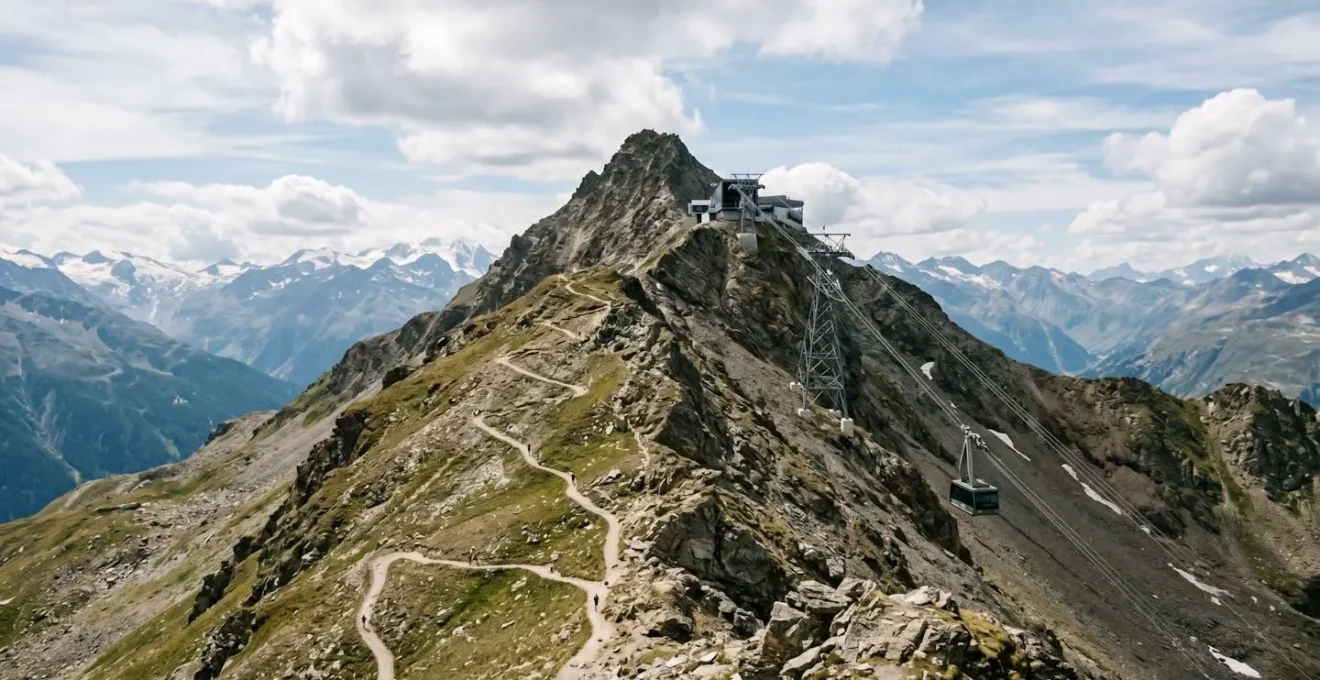
The breathtaking feeling from a panoramic view isn’t magic; it’s a predictable outcome of calculating its ‘Return on Effort’ (ROE).
- Effort, both physical and financial, psychologically enhances the perceived value of the reward.
- Timing dictates not just crowds and cost, but the actual visual quality and drama of the view itself.
Recommendation: Instead of asking ‘Is it worth it?’, start asking ‘What is its calculated value to me based on these factors?’.
The decision looms before every traveller: the arduous, multi-hour hike versus the swift, expensive cable car. Both promise the same prize—a sweeping panoramic view. Yet, the experience they deliver can be worlds apart. We often treat the value of a vista as a purely emotional, almost spiritual metric. We hope for a profound connection but risk facing a flat, crowded, or cloud-obscured scene that makes our investment of time, sweat, or money feel wasted. This common approach is flawed because it relies on hope rather than strategy.
The conventional wisdom to « just go for it » or « check the weather » is insufficient. It ignores the complex interplay of factors that determine a viewpoint’s true worth. What if the value of a view wasn’t a lottery, but a solvable equation? The key isn’t to simply choose between effort and expense, but to understand how to calculate the ‘Return on Effort’ (ROE) for any given viewpoint. This involves a shift in mindset: from a passive sightseer to an active value assessor.
This guide provides a practical framework for making that calculation. We will deconstruct the elements that make a view unforgettable, moving beyond simplistic advice. We’ll explore the psychology of ‘earned’ rewards, the technical skills to predict visibility, the economic forces driving peak-hour pricing, and the strategies to transform a simple holiday into a genuine fitness gain. By the end, you will be equipped to trade your valuable resources—time, energy, and money—for experiences that deliver a guaranteed and significant return.
To help you master this new approach, this article breaks down the essential components for calculating a viewpoint’s value. You can navigate through the key strategies and insights using the summary below.
Contents: The Viewpoint Value Calculation
- Why Do Some Panoramic Views Move You to Tears While Others Feel Forgettable?
- How to Assess if Panoramic Views Will Be Visible or Cloud-Obscured on Your Visit Day?
- Roadside Overlook or Summit Hike: Which Panoramic Views Provide Better Value?
- The Arrival Time That Puts You With 200 People at Popular Panoramic Views
- What Time of Day Makes Panoramic Views Most Dramatic for Different Orientations?
- Which Outdoor Activities Work the Most Muscle Groups for Maximum Fitness Gain?
- Why Do Sightseeing Spots Cost 3x More Between 10am and 4pm?
- How to Transform Holidays Into Fitness Progress Through Outdoor Activities?
Why Do Some Panoramic Views Move You to Tears While Others Feel Forgettable?
The difference between a profound viewpoint experience and a forgettable one is not just in the scenery, but in your brain’s reward system. The value you assign to a view is directly tied to the effort you invested to see it. This isn’t just a feeling; it’s a documented psychological principle known as effort justification. When you expend significant physical or mental energy to achieve a goal, you subconsciously rate the resulting reward as more valuable to resolve the internal conflict, or cognitive dissonance, between the effort and the outcome.
This phenomenon is observable at a neurological level. As cognitive dissonance theory researchers have long argued, « the more effort one exerts, the more valuable one perceives the reward associated with that effort. » This is borne out by modern science; neuroscience research on effort justification demonstrates that a higher subjective effort correlates with a larger neural reward response in the brain. The eight-mile hike, therefore, doesn’t just get you to the view; it primes your brain to experience it more intensely. The muscle ache and the beads of sweat are converted into a more potent dose of satisfaction and awe upon arrival.
In contrast, a view accessed with minimal effort, like a drive-up overlook or a quick cable car ride, lacks this crucial psychological component. While the scene may be identical, your brain hasn’t been pre-loaded with the same investment. The experience can feel hollow or transactional because there is no cognitive dissonance to resolve. Understanding this principle is the first step in calculating a view’s potential Return on Effort. The physical cost of the hike is not a downside to be avoided; it is an active ingredient in the very reward you are seeking.
How to Assess if Panoramic Views Will Be Visible or Cloud-Obscured on Your Visit Day?
The greatest risk to your Return on Effort is arriving at a summit only to be enveloped in a thick, grey cloud, rendering your journey pointless. A generic weather app showing a « cloudy » icon is dangerously insufficient for mountain environments. To accurately forecast your « visual payload, » you must become proficient in reading specific meteorological data relevant to elevation. The most critical factor is the cloud base altitude, which is the height of the bottom of the cloud layer.
If the cloud base is predicted to be at 1,500 metres and your viewpoint is at 2,000 metres, you have a high probability of being above the clouds with a spectacular view. If the viewpoint is at 1,200 metres, you will be in the fog. This single data point is far more powerful than a simple « cloud cover » percentage. Specialized tools are essential for this assessment.
As the image above illustrates, knowing the altitude of the cloud layer is everything. To make a reliable assessment, you need to check several key parameters beyond a simple temperature forecast:
- Cloud Base Altitude: The height where clouds begin, measured in metres or feet. Use a source like Mountain-Forecast.com that provides this for specific elevations.
- Cloud Ceiling: The height of the lowest cloud layer covering more than half the sky. Aviation forecasts (METAR) are a good source for this.
- Visibility: Measured in miles or kilometres. Instrument Flight Rules (IFR) conditions, with visibility under 3 miles, are a major red flag.
- Cloud Cover Percentage at Different Altitudes: Good mountain forecasts show cloud cover at the base, mid-mountain, and summit, which is crucial for understanding your chances.
Your Action Plan: Auditing a Viewpoint’s Viability
- Points of Contact: List all information channels for your target viewpoint: mountain-specific forecast websites (e.g., Mountain-Forecast.com), live webcams at or near the summit, and recent posts on local hiking forums or social media groups.
- Collecte: Inventory the key metrics for the exact time of your planned visit: predicted cloud base altitude, visibility distance in km/miles, wind speed at elevation, and cloud cover percentage at your target altitude.
- Cohérence: Cross-reference the collected data with your viewpoint’s facts. Is the predicted cloud base altitude safely below your summit’s elevation? Is the wind speed manageable and safe for your activity?
- Mémorabilité/Émotion: Check the sun’s position relative to your viewpoint for your planned arrival time. Will you be looking into the sun, or will it be providing dramatic side-lighting that enhances texture and depth?
- Plan d’intégration: Formulate a clear Go/No-Go decision based on the data. If visibility is forecast to be poor, what is your Plan B? (e.g., a lower-elevation hike, a different activity). Do not proceed based on hope alone.
Roadside Overlook or Summit Hike: Which Panoramic Views Provide Better Value?
The choice between an « earned » view and an « accessed » view is a fundamental trade-off in your ROE calculation. A summit hike offers high physical cost but delivers a potent psychological reward through effort justification. A cable car or roadside overlook offers convenience at a financial cost but often yields a less profound emotional impact. Neither is inherently superior; the « better value » depends entirely on your personal resources and goals for the day.
Case Study: The Romsdal Gondola in Åndalsnes, Norway
This location perfectly demonstrates the value trade-off. Hiking the steep trail to the Nesaksla summit is a challenging two-hour climb, demanding good fitness and rewarding hikers with immense satisfaction. In contrast, the Romsdal Gondola whisks visitors to the same viewpoint in minutes for a premium price. According to an analysis of the Romsdalen experience, the hike delivers « real satisfaction, » but the gondola provides the invaluable resources of time and energy. For those with limited mobility, tight schedules, or on days with unpredictable weather, the gondola guarantees access to one of Fjord Norway’s great panoramas. A hiker might arrive exhausted, while a gondola passenger arrives fresh and ready to explore the trails at the top.
This case study clarifies the calculation. If your primary goal is fitness and psychological reward, the hike provides far better value. The physical exertion is part of the product you are buying. If your goal is access and time efficiency—perhaps to see multiple sights in one day or to accommodate a multi-generational group—the cable car offers superior value despite its cost. The mistake is to judge one by the standards of the other. The £30 cable car isn’t just buying a view; it’s buying time, energy, and certainty.
The Arrival Time That Puts You With 200 People at Popular Panoramic Views
The single biggest factor that can destroy the Return on Effort of a spectacular view is crowd density. The sense of peace, awe, and connection with nature is difficult to achieve when you are jostling for a spot at the railing with hundreds of other people. At most popular sightseeing destinations, there is a clear window of peak crowding: from 10:00 AM to 4:00 PM. This is the period when tour buses arrive, families with children are most active, and casual tourists are out for the day.
This window is not arbitrary. It is driven by the logistical realities of mass tourism. Hotel check-out times, tour bus schedules, and standard meal times conspire to push the majority of visitors into this six-hour slot. This influx creates a negative feedback loop: more people lead to longer queues, fuller car parks, and a more stressful, less rewarding experience. Your ROE plummets as the number of people at the viewpoint rises.
The strategic imperative is clear: operate outside the 10-to-4 window. Arriving before 9:00 AM often means sharing the view with only a handful of dedicated photographers and fellow early risers. The light is typically better, the air is cooler, and the sense of discovery is infinitely greater. Similarly, arriving after 4:00 PM allows you to catch the beautiful « golden hour » light as the day-trippers are heading back to their hotels and dinner reservations. By simply shifting your visit by a few hours, you can dramatically increase the value of your experience without any additional financial cost.
What Time of Day Makes Panoramic Views Most Dramatic for Different Orientations?
Beyond avoiding crowds, timing your arrival is the most powerful tool for maximizing a view’s « visual payload. » A common mistake is to assume sunrise and sunset are universally the best times. The true factor is the angle of the sun relative to your viewpoint’s orientation. Flat, direct front-lighting (when the sun is behind you) can wash out a landscape, erasing texture and depth. The most dramatic views are achieved with side-lighting or back-lighting.
Side-lighting, which occurs when the sun is at roughly a 90-degree angle to your line of sight, is the secret to dramatic texture. This typically happens mid-morning and mid-afternoon. This low-angle light rakes across the landscape, casting long shadows that reveal every ridge, crevice, and contour of a mountain range. It transforms a flat-looking scene into a three-dimensional masterpiece. For a west-facing viewpoint, the best time for dramatic side-lighting is the morning. For an east-facing viewpoint, the magic happens in the afternoon.
As this image demonstrates, the low-angle light creates a powerful sense of depth and scale that is completely absent at midday, when the sun is high overhead. Before visiting any viewpoint, use a map to determine its orientation (which direction it faces). Then, use a photographer’s app (like PhotoPills or The Photographer’s Ephemeris) to see the exact direction of the sun throughout the day. This allows you to precisely time your arrival not just for the golden hour’s warm colours, but for the moment the light will best reveal the landscape’s form and texture.
Which Outdoor Activities Work the Most Muscle Groups for Maximum Fitness Gain?
When calculating your ROE, the physical effort of a hike is a key « cost. » But it’s also a significant « return » in the form of fitness. However, not all outdoor activities are created equal. For maximum fitness gain, the best activities are those that challenge your body in multiple, unpredictable ways. This is where hiking on natural trails has a distinct advantage over more controlled exercises like road running or gym workouts.
Trail-based activities like hiking or trail running force your body to constantly adapt to uneven surfaces, changing inclines, and unexpected obstacles. This process engages a wide array of stabilizer muscles in your ankles, hips, and core. These smaller muscles are critical for balance and injury prevention but are often underutilized in repetitive, single-plane movements. An integrative review of hiking benefits found that this demand for continuous balance and agility over unpredictable terrain is a key reason hiking provides such a comprehensive workout.
Furthermore, the benefits are not just physical. The same research on hiking’s integrated benefits shows that the combination of physical exertion with natural sensory stimulation (the sights, sounds, and smells of the trail) also improves cognitive functions like attention and working memory. While activities like swimming or rowing are excellent full-body workouts, hiking adds this crucial neuromuscular and cognitive dimension, engaging your brain and body as an integrated system. Choosing a challenging hike over a flat walk isn’t just about burning more calories; it’s about activating a wider range of physiological systems for a more holistic fitness gain.
Why Do Sightseeing Spots Cost 3x More Between 10am and 4pm?
The dramatic price difference for attractions like cable cars between peak and off-peak hours is not arbitrary; it’s a direct reflection of a business’s operational costs and a strategy known as dynamic pricing. Understanding the mechanics behind this can help you make more calculated decisions. The 10 AM to 4 PM window represents the period of maximum demand, which places maximum strain on the operator’s resources.
During these peak hours, operators must run their infrastructure at full capacity. This means more staff on duty, every cable car running continuously, and higher maintenance stress on the equipment. This surge in operational intensity comes with a significant increase in costs, particularly for energy consumption. As travel industry pricing analysts explain, « Peak hours require maximum staffing, full operational capacity (e.g., running every cable car), and higher energy consumption, which is factored into the ticket price. » The higher ticket price you pay during this window is directly subsidizing this peak operational cost.
By travelling outside these hours, you are not only avoiding crowds but also taking advantage of the operator’s lower cost base. An « early bird » or « sunset » ticket is cheaper because it helps the business spread demand and operate more efficiently. It’s a win-win: you get a less crowded, often more beautiful experience for a lower price, and the operator maintains a more stable revenue stream throughout the day. Seeing price as a function of operational load, rather than just « what the market will bear, » allows you to view off-peak discounts as a smart trade for helping the system run more smoothly.
Key Takeaways
- The value of a view is a calculated « Return on Effort, » not a random emotional event.
- Effort justification means a harder-won view feels psychologically more rewarding.
- Timing is everything: it dictates crowds, cost, and the quality of the light that shapes the landscape.
How to Transform Holidays Into Fitness Progress Through Outdoor Activities?
A holiday doesn’t have to mean a pause in your fitness journey. By applying the « Return on Effort » mindset, you can reframe sightseeing and travel as an opportunity for significant physical and mental progress. The key is to consciously choose the path of greater physical investment when the reward is worthwhile, and to see fitness not as a chore, but as a valuable byproduct of your adventure. The choice between an 8-mile hike and a £30 cable car becomes a choice between investing in your health or your wallet.
Integrating fitness into travel goes beyond just one big hike. It’s about a consistent mindset of « activity stacking. » This involves combining smaller physical efforts throughout the day—walking to a restaurant instead of taking a taxi, taking the stairs, or choosing a hike to a viewpoint—that accumulate into a significant caloric deficit and strength gain. It’s about seeing your travel pack not as a burden, but as a training tool for low-level resistance training during your city walks.
This approach also yields profound psychological benefits. Instead of the stress that can come from a disrupted gym routine, an active holiday provides mental restoration. In fact, recent integrative research on outdoor hiking demonstrates that it can produce psychological benefits comparable to traditional therapies. By actively seeking out physical challenges as part of your travel, you are investing in both your body and your mind, transforming what could be a passive vacation into a period of active regeneration.
Now that you have this framework, start applying it. Evaluate your next potential viewpoint not on its reputation, but on its calculated Return on Effort based on your personal goals for fitness, budget, and experience.