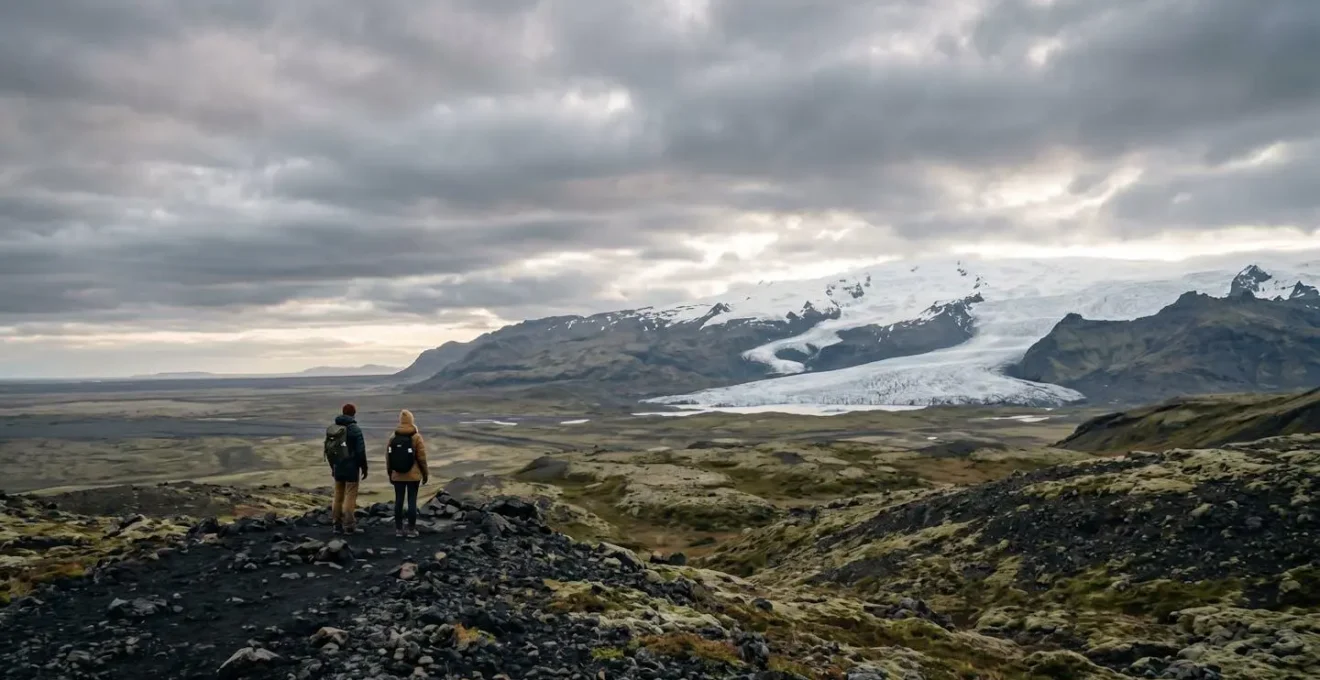
Yes, you can experience Iceland’s magic on a £3,000 budget for two, but not by simply cutting costs—by making smarter strategic trade-offs.
- Self-driving is cheaper but riskier in winter; guided tours offer safety at a premium.
- Shoulder seasons (May, Sept-Oct) offer the best balance of cost, access, and fewer crowds.
Recommendation: Create a three-tiered itinerary (Plan A, B, C) to adapt to the unpredictable weather, not fight it, saving you money and stress.
The dream of Iceland—vast glaciers, thundering waterfalls, and dancing northern lights—often collides with a harsh reality: the staggering « sticker shock » of actually planning the trip. You’ve likely seen the Instagram-perfect photos, but then you check the price of a rental car or a hotel room and the dream feels impossibly distant. Many guides offer the standard advice: cook your own meals, skip the Blue Lagoon, and travel in the dead of winter. While these are valid tactics, they aren’t a strategy.
These tips often miss the core challenge of an Iceland trip: managing the constant, expensive trade-offs between cost, comfort, and experience in one of the world’s most unpredictable environments. The true key to an affordable Iceland adventure isn’t just about penny-pinching; it’s about developing a strategic framework for your decisions. It’s about understanding the real drivers of cost and risk to maximize your « experience per pound » spent.
But what if the real secret wasn’t just *what* you spend your money on, but *how* you prepare for the things you can’t control? This guide moves beyond simple tips to provide a decision-making framework. We’ll deconstruct the essential choices you need to make, from the fundamental economics of Icelandic tourism to building a weather-proof itinerary, allowing you to craft a trip that honors both your budget and your sense of adventure.
This article provides a structured approach to planning your Icelandic journey. By breaking down the key decisions into manageable sections, you’ll gain the clarity needed to build a realistic and unforgettable trip within your budget.
Summary: A Strategic Guide to Iceland on a £3,000 Budget
- Why Did Iceland Transform From Budget Destination to Luxury-Priced in 10 Years?
- Self-Drive Ring Road or Guided Small-Group Tour: Which Works Best in Iceland?
- Summer Crowds or Winter Darkness: When Should You Visit Iceland?
- The Forecast Complacency That Endangers 100+ Iceland Visitors Annually
- Which Iceland Waterfalls and Hot Springs Are Free to Visit?
- How to Compare Travel Destinations When You Have £2,000 and 10 Days Off?
- The Weather Ignorance That Strands Hikers in Remote Locations for Days
- Sweden, Norway, Finland, Denmark or Iceland: Which Nordic Country Suits Your Travel Style?
Why Did Iceland Transform From Budget Destination to Luxury-Priced in 10 Years?
To control your budget, you first need to understand the forces working against it. Not long ago, Iceland was a quirky, off-the-beaten-path destination. The 2010 eruption of the Eyjafjallajökull volcano, ironically, put the country on the global map. This event, combined with its feature in major films and TV shows, triggered a massive tourism boom. The number of visitors exploded, rising from just under 500,000 in 2010 to over 2.2 million annually before the pandemic, and has since recovered to similar levels.
This surge created a classic economic squeeze: demand for accommodation, rental cars, and tour services dramatically outpaced the development of infrastructure. With a limited supply of hotel rooms and vehicles on an isolated island, prices naturally skyrocketed. What was once a niche market became a premium, « bucket-list » experience, with pricing to match. This rapid growth continues to fuel the economy, as evidenced by recent data showing that tourism expenditure in Iceland reached 840 billion ISK in 2024, a significant increase from the previous year.
This context is crucial for a budget traveler. It means that « last-minute deals » are virtually nonexistent. The key to managing costs is planning and booking far in advance, especially for travel during peak months. Understanding that high prices are a result of scarcity, not low value, allows you to shift your strategy from « finding cheap things » to « booking essential, high-cost items early to lock in the best possible rates. »
Self-Drive Ring Road or Guided Small-Group Tour: Which Works Best in Iceland?
One of the first and most significant decisions you’ll make is how to get around. This choice fundamentally shapes your itinerary, flexibility, and budget. The two main options, a self-drive trip or a guided tour, represent a classic trade-off between freedom and security. A self-drive tour, particularly around the iconic Ring Road, offers ultimate flexibility. You can stop wherever you want, for as long as you want, chasing the perfect photograph or lingering over a stunning view.
However, this freedom comes with responsibilities. You are in charge of navigating, monitoring weather and road conditions, and handling any issues that arise, from a flat tire to a sudden road closure. In winter, driving requires significant experience with ice and snow. Guided tours, on the other hand, remove these stressors. A professional driver handles the challenging conditions, and the itinerary is pre-planned, ensuring you see the highlights without the logistical headache. This comes at a premium cost and a loss of spontaneity, as you are tied to a group schedule.
This table breaks down the core differences to help you make a decision based on your priorities and travel style. For the budget-conscious and experienced driver, self-driving is often the clear winner, but for first-time visitors or those traveling in winter, the higher cost of a tour can be a worthwhile investment in safety and peace of mind.
| Factor | Self-Drive (2 People) | Guided Multi-Day Tour (Per Couple) |
|---|---|---|
| Daily Cost | ~$370 per day (excluding meals/activities) | ~$550 per day (all-inclusive) |
| 7-Day Total Cost Difference | Base: ~$2,590 | Base: ~$3,850 (50% more expensive) |
| Flexibility | Complete control over itinerary and stops | Fixed schedule with group |
| Winter Driving | Requires experience; challenging in snow/ice | Professional driver handles all conditions |
| Hidden Costs | Risk of tire punctures, windscreen damage, missed flights due to road closures | All-inclusive safety net; no surprise costs |
| Access to Remote Areas | Limited without 4×4 or Super Jeep | Super Jeep tours can reach Landmannalaugar, Thórsmörk |
| Best For | Experienced drivers, budget-conscious, spontaneous travelers | First-time visitors, winter travel, stress-free experience |
Summer Crowds or Winter Darkness: When Should You Visit Iceland?
Deciding when to visit Iceland involves a significant trade-off. Do you opt for the long, bright days of summer, with accessible highlands and lush green landscapes, but share them with huge crowds and pay peak prices? Or do you embrace the dramatic, dark beauty of winter, with the chance to see the Northern Lights and enjoy lower prices, but contend with limited daylight, potential storms, and inaccessible regions?
Summer (June to August) is the season of the Midnight Sun, offering almost 24 hours of daylight to explore. All roads, including the rugged F-roads of the interior highlands, are open. The downside is overwhelming popularity. Data shows that July and August can account for over 37% of Iceland’s yearly visitors, leading to crowded attractions and the highest prices for flights, cars, and accommodation. Winter (November to March) is the opposite. Daylight is scarce, shrinking to 4-5 hours in deep winter, and the weather is harsh and unpredictable. However, this is the prime time for Northern Lights viewing and ice cave exploration, and costs are significantly lower.
For the budget-maximization specialist, the answer often lies in the shoulder seasons: April-May and September-October. These months offer a strategic sweet spot. In May, you get long daylight hours and spring colours with far fewer people than in June. In September and October, you get beautiful autumn light, the possibility of seeing the first Northern Lights, and still-accessible roads, all while accommodation can be 30-40% cheaper than in summer. Your choice should be dictated by your non-negotiable activity.
- For Puffin Watching: Visit between May and early August.
- For Stable Ice Cave Exploration: Visit between November and March.
- For Hiking in the Highlands: Visit between late June and early September.
- For Northern Lights: Visit from October to March for the best chances.
- For Midnight Sun Experience: Visit from June to early August.
The Forecast Complacency That Endangers 100+ Iceland Visitors Annually
In Iceland, the weather isn’t small talk; it’s a critical safety factor that has direct financial and logistical consequences. Many visitors, accustomed to more stable climates, make the dangerous mistake of being complacent. A sunny morning can turn into a blinding blizzard by afternoon. The wind is a relentless force that can rip car doors off their hinges or make driving hazardous. Ignoring warnings doesn’t just put you in danger; it can wreck your itinerary and your budget, a phenomenon we can call the « complacency tax. »
Getting stranded by a sudden road closure means paying for an unplanned night in a hotel, losing money on non-refundable bookings for the next destination, and potentially even missing your flight home. The Icelandic search and rescue teams (ICE-SAR), who are all volunteers, perform hundreds of operations each year, many involving tourists who underestimated the conditions. Your most important travel companions in Iceland are not your guidebooks, but the websites Vedur.is (for weather) and Road.is (for road conditions). They must be checked every single morning before you get in the car.
A strategic approach is not to hope for good weather, but to plan for bad weather. Instead of a single, rigid itinerary, build a three-tiered, flexible plan. This « risk-adjusted itinerary » acknowledges that disruptions are not just possible, but likely. This proactive mindset is the single most effective tool for staying safe and protecting your budget from the costly consequences of weather-related surprises.
Your Action Plan: The Three-Tier Weather-Resilient Itinerary
- Plan A (Ideal Route): Map your primary destinations assuming good conditions. This is your dream route, like the full South Coast drive to Jökulsárlón glacier lagoon.
- Plan B (Alternative Route): Pre-plan a substitute itinerary if a specific road closes. For example, if the road east of Vík is impassable, your Plan B is to thoroughly explore the Reykjanes Peninsula or the Golden Circle area instead.
- Plan C (Shelter Day): Identify enjoyable indoor activities for severe weather days when all travel is advised against. This could be visiting Reykjavík’s museums, enjoying local geothermal swimming pools, or simply relaxing at a cozy café.
- Essential Tools Check: Before your trip, bookmark Vedur.is and Road.is on your phone. Practice navigating the sites to understand the color-coded warning systems.
- Wind Speed Audit: Internalize the meaning of wind speeds. At 15 m/s (34 mph), walking is difficult. At 20 m/s (45 mph), you risk car door damage. At 25 m/s (56 mph), driving is extremely dangerous. This knowledge informs your « go/no-go » decision each day.
Which Iceland Waterfalls and Hot Springs Are Free to Visit?
While Iceland has a reputation for being expensive, one of its greatest assets remains largely free: its breathtaking natural beauty. Unlike many countries that charge entrance fees for national parks and major landmarks, access to most of Iceland’s iconic waterfalls, canyons, and geothermal areas is completely free of charge. This is where a budget-conscious traveler can gain immense value.
Iconic sights like the powerful Gullfoss, the elegant Seljalandsfoss (which you can walk behind), and the majestic Skógafoss are all free to visit (though you may encounter small, mandatory parking fees, which are used for site maintenance). The key to maximizing your budget is to build your itinerary around these incredible, high-value, low-cost experiences. Rather than rushing from one paid tour to the next, spend your time exploring the landscapes that make Iceland unique.
The same principle applies to geothermal bathing. While the Blue Lagoon is a world-famous marketing success, it’s also an expensive one. For a fraction of the price and a more authentic local experience, you can visit one of Reykjavík’s many public geothermal pools. These « sundlaugs » are a cornerstone of Icelandic culture, featuring outdoor heated pools, steam rooms, and multiple hot tubs of varying temperatures. Furthermore, for the truly adventurous, natural hot springs like the Reykjadalur thermal river offer the chance to bathe in nature for free, after a scenic hike. Data shows that while the Blue Lagoon can cost upwards of $50-75 USD, a visit to a superb local pool costs only about $7-8 USD, representing a massive saving for a similar, if less branded, experience.
- Reykjadalur Hot Spring River: Completely free bathing after a 60-90 minute hike.
- Seljalandsfoss, Skógafoss, Gullfoss: Iconic waterfalls with free access (parking fees may apply).
- Kirkjufellsfoss: Famous waterfall on the Snæfellsnes Peninsula with free access.
- Local Geothermal Pools: A far cheaper and more authentic alternative to tourist spas.
How to Compare Travel Destinations When You Have £2,000 and 10 Days Off?
As a budget-maximizer, it’s essential to ask the tough question: is Iceland the right choice for your £3,000 budget, or could that money provide a better experience elsewhere? This isn’t about diminishing Iceland’s appeal, but about making an informed decision. Your money will stretch very differently depending on your destination. In Iceland, a significant portion of your budget will be consumed by essentials: car rental, fuel, and basic accommodation.
Current data suggests a mid-range daily budget in Iceland is around £200-320 per person, excluding flights. For two people, a 10-day trip at the lower end of this range already exceeds your £3,000 budget before you’ve even booked a flight. This means a £3,000 trip requires sticking to the absolute basics: guesthouses or hostels, self-catering all meals, and limiting paid activities. It’s achievable, but requires discipline.
Now, compare that to other destinations. The same £3,000 could fund a much more luxurious experience in a country with a lower cost of living, like Romania, where you could stay in comfortable hotels and eat out for every meal. In a destination with a moderately lower cost, like Scotland, you could afford more activities, B&B stays with breakfast included, and several pub dinners. This « Experience per Pound » analysis is crucial. Iceland offers a unique, raw, volcanic wilderness that is unparalleled. You are paying a premium for that specific experience. If your priority is simply « a beautiful European holiday, » your money will go much further elsewhere.
| Destination | What £2,000 Gets You (10 Days, 2 People) | Daily Cost per Person | Best For |
|---|---|---|---|
| Iceland | • 7 nights budget accommodation (hostels/guesthouses) • 7-day compact car rental • Self-catered meals from supermarkets • 2-3 paid activities (glacier hike, hot spring entry) • Fuel for ~1,000 km driving |
£100-140 | Raw wilderness, volcanic landscapes, unique geology, Northern Lights (winter), Midnight Sun (summer) |
| Scotland | • 10 nights B&Bs with breakfast included • 10-day car rental • Entry to 15+ castles and historic sites • Whisky distillery tours • Pub meals 3-4 times |
£80-100 | History buffs, castle enthusiasts, whisky lovers, milder weather, easier driving |
| Norway | • 8 nights mixed accommodation • 4 days fjord cruising • Train journeys (Bergen Railway) • 2 glacier hikes • Limited dining out |
£110-130 | Fjord scenery, maritime culture, train enthusiasts, similar prices to Iceland but different landscapes |
| Romania | • 10 nights comfortable hotels • 10-day car rental • All meals at restaurants • Dracula Castle, painted monasteries • Wine tours, thermal spas • Spending money remaining |
£50-70 | Budget stretchers, cultural diversity, history, excellent value for money, total trip cost 50% lower |
The Weather Ignorance That Strands Hikers in Remote Locations for Days
While weather complacency is risky for drivers, it becomes life-threatening for hikers. The Icelandic highlands and coastal trails are deceptively beautiful and incredibly dangerous. The weather can change in minutes, with fog reducing visibility to zero, or a sudden storm bringing gale-force winds and driving rain. Each year, volunteer rescue teams are dispatched to find hikers who are lost, hypothermic, or stranded, often because they were woefully unprepared.
The « it won’t happen to me » mindset is a hiker’s worst enemy in Iceland. A simple day hike requires gear and preparation suitable for an overnight emergency, because that’s exactly what it could become. Relying solely on a smartphone for navigation is a critical error; batteries die rapidly in the cold, and cell service is nonexistent in most remote areas. A waterproof map, a compass, and a dedicated GPS device are not optional extras; they are essential life-saving tools.
The cost of proper gear may seem high, but it pales in comparison to the cost of a rescue operation or a medical emergency. Investing in a layered clothing system (base, mid, and waterproof shell), sturdy waterproof boots, and an emergency kit is the most important investment you can make in your safety. For any hike venturing away from well-trodden paths, a Personal Locator Beacon (PLB) is a non-negotiable piece of equipment. It’s a small price to pay for a direct line to rescue services when all other communication fails.
Before undertaking any hike, you must file a trip plan with safetravel.is. This simple, free service lets authorities know your intended route and schedule, dramatically increasing your chances of being found quickly if something goes wrong. Here is the non-negotiable gear for any serious Icelandic hike:
- GPS Device with Offline Maps: A dedicated unit like a Garmin is preferable to a phone.
- Personal Locator Beacon (PLB): For emergency signaling in no-service areas.
- Emergency Bivvy Bag: A lightweight, waterproof shelter that can save your life if stranded overnight.
- Layered Waterproof System: Merino wool base, fleece mid-layer, and a high-quality waterproof/windproof shell jacket and pants.
- High-Energy Emergency Food: Extra calories beyond your planned meals are critical.
Key Takeaways
- Iceland’s high prices are a result of a tourism boom outstripping infrastructure; booking far in advance is the best strategy.
- The shoulder seasons (May & September-October) offer the best strategic balance of manageable weather, lower costs, and fewer crowds.
- A weather-resilient itinerary (Plan A, B, C) using Vedur.is and Road.is is non-negotiable to avoid the « complacency tax » of extra costs and danger.
Sweden, Norway, Finland, Denmark or Iceland: Which Nordic Country Suits Your Travel Style?
Finally, putting Iceland in the context of its Nordic neighbours provides the ultimate strategic perspective. All Nordic countries are known for high standards of living, beautiful nature, and high costs, but they offer vastly different travel experiences. Choosing the right one depends on aligning your « travel style » with what each country does best.
Iceland is the land of raw, geological drama. It’s for the road-tripper who wants to feel like they’re on another planet. Its primary transportation is the car, and its main attractions are volcanic landscapes, glaciers, and waterfalls. Public transport is limited, making it less ideal for those who don’t want to drive. By contrast, Denmark, with its flat terrain and extensive network of cycle paths, is a cyclist’s paradise and perfect for easy city-hopping by train. Norway is defined by its dramatic fjords and maritime culture, best experienced via a combination of car, ferry, and coastal cruise. Finland and Sweden offer a blend of vibrant cities, vast forests, and thousands of lakes, with excellent train networks connecting their southern hubs.
Cost is also a key differentiator. While none are « cheap, » Iceland and Norway consistently rank as the most expensive. A pint of beer or a restaurant meal in Reykjavík or Oslo will set you back considerably more than in Stockholm, Copenhagen, or Helsinki. This table provides a rough « cost of living » index to help you compare.
| Country | Beer (Pint) | Coffee | Mid-Range Restaurant Meal | Petrol (per Litre) | Daily Budget (Mid-Range) |
|---|---|---|---|---|---|
| Iceland | £8-12 | £4-5 | £25-40 | £1.60-1.80 | £200-320 |
| Norway | £8-11 | £4-5 | £22-35 | £1.70-1.90 | £180-280 |
| Sweden | £6-9 | £3-4 | £18-28 | £1.50-1.70 | £140-220 |
| Denmark | £5-8 | £3-4 | £16-25 | £1.60-1.75 | £130-200 |
| Finland | £6-9 | £3-4 | £17-27 | £1.55-1.75 | £135-210 |
Ultimately, a £3,000 budget will provide a constrained but achievable adventure in Iceland, while offering more comfort and variety in the other Nordic countries. The decision comes down to your primary motivation: if you crave unparalleled volcanic and glacial landscapes and are prepared to be disciplined with your budget, Iceland is the right choice. If you prefer a mix of culture, history, and nature with more financial breathing room, another Nordic country might be a better fit.
Now that you have the strategic framework to make smart, informed decisions, you are equipped to build a realistic Iceland itinerary that respects your budget and appetite for adventure. Start planning your trip today, confident that you can master the costs and embrace the wild.