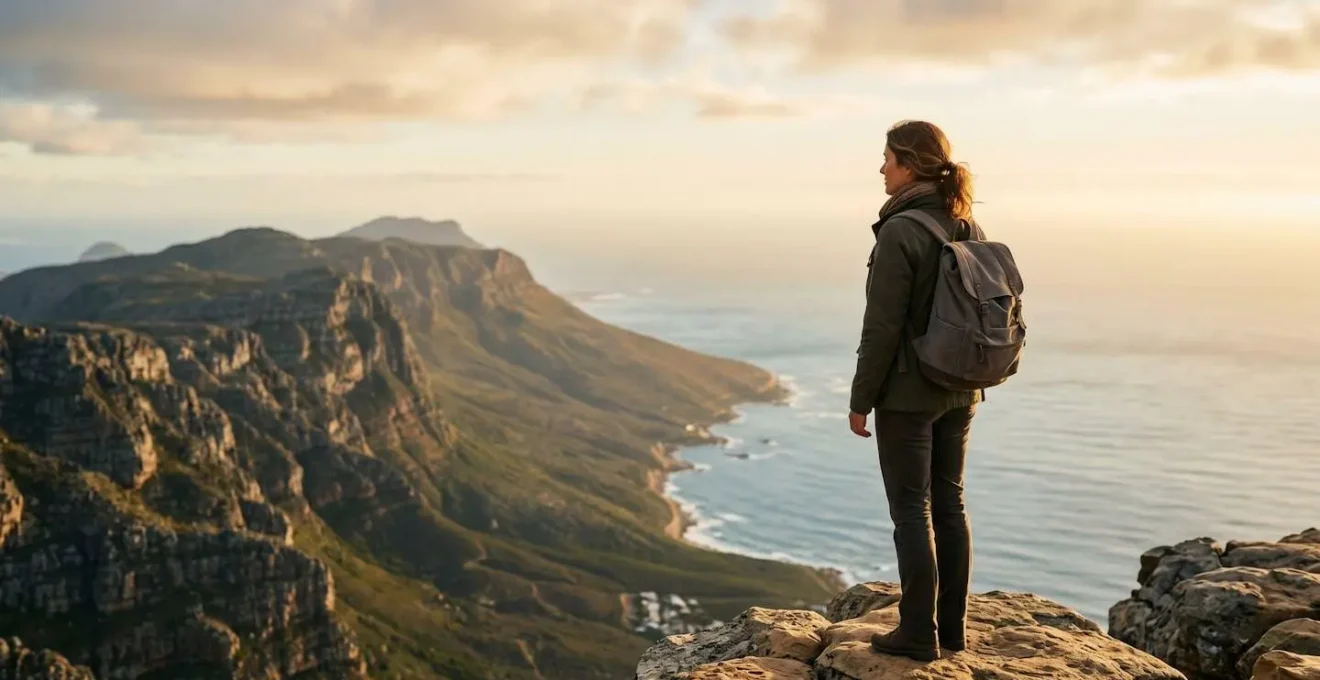
Contrary to popular belief, solo travel safety isn’t about avoiding risks; it’s about building a proactive system that replaces fear with confidence.
- True security comes from situational literacy and digital discipline, not a checklist of « don’ts ».
- Strategic planning, like balancing independence with curated tours and choosing where you stay, can mitigate most significant risks.
Recommendation: Shift your mindset from paranoia to preparation. Focus on building smart habits and frameworks that empower you to explore the world with assurance, not anxiety.
The call to explore the world on your own terms is powerful. For many, especially first-time solo adventurers, that excitement is often tangled with a nagging thread of anxiety, fueled by well-meaning but terrifying advice from friends, family, and the internet. The standard narrative of solo travel safety is a long list of prohibitions: don’t go out at night, don’t talk to strangers, don’t trust anyone. While born from a place of care, this fear-based approach can quickly curdle into paranoia, robbing you of the very independence and connection you seek. It suggests a world where every corner hides a threat, and every interaction is suspect.
But what if the key to staying safe isn’t about building higher walls, but about becoming a more intelligent architect of your own experience? The real art of solo travel safety lies in moving beyond a reactive mindset of fear and into a proactive system of empowerment. It’s about developing the skills to read your environment, the discipline to manage your digital footprint, and the wisdom to know when to be independent and when to lean on a community. This guide is built on that principle. We will dismantle the idea that you must choose between safety and adventure. Instead, we’ll equip you with the strategies to confidently have both, transforming potential paranoia into powerful preparation.
This article provides a complete framework for shifting your approach from fear to empowerment. You will discover the structural realities of solo travel, learn to build connections safely, master digital discipline, and develop the cultural literacy that is your greatest asset. Explore the sections below to build your personal safety system.
Contents: Navigating the World Safely and Confidently as a Solo Adventurer
- Why Do Solo Adventurers Subsidize Couples Through Single Supplements?
- How to Meet Quality Travel Friends as Solo Adventurers Over 30?
- Group Tour Day Trip or Full Independence: What Balance Works for Solo Adventurers?
- The Real-Time Location Sharing That Puts 60% of Solo Adventurers at Risk
- Which Countries Are Structurally Difficult for Solo Adventurers to Navigate?
- The Loneliness Trap That Hits 70% of Solo Travellers in Urban Centers
- How Can You Tell if Local Culture Communities Want You There or Just Tolerate Tourism?
- How to Live Like a Local in Urban Centers Instead of Tourist Districts?
Why Do Solo Adventurers Subsidize Couples Through Single Supplements?
Before even stepping on a plane, solo adventurers often face their first hurdle: a financial one. The « single supplement » is a frustrating reality of the travel industry, an extra charge levied on a single person occupying a room or cabin priced for two. This isn’t a penalty for being single; it’s a structural bias in an industry built around pairs. Hotels and cruise lines calculate their revenue based on double occupancy, so when a solo traveler takes a room, the company charges extra to recoup the « lost » revenue from the absent second person. This can feel deeply unfair, as if you’re being punished for your independence.
The financial impact is significant. According to recent research shows that solo travelers pay an average of 47% more than their coupled counterparts for the same trip. This economic friction is a systemic issue, a holdover from a time when solo travel was a niche market rather than the booming sector it is today. As the Solo Female Travelers Club points out in its annual report, this pricing model is deeply ingrained.
The travel industry’s historical pricing quotes trip offers, rooms and cruise ship cabins on a per person sharing basis and charges solo travelers a single supplement that is often twice the sharing rate.
– Solo Female Travelers Club, 2024 Solo Female Travel Report
Understanding this is the first step in strategic planning. It’s not a personal slight, but an economic model. This knowledge empowers you to actively seek out companies that cater to solo travelers with single-occupancy pricing, roommate matching services, or tours with no or low single supplements. It shifts the focus from frustration to action, allowing you to vote with your wallet and support the parts of the industry that value your independence.
How to Meet Quality Travel Friends as Solo Adventurers Over 30?
For many solo travelers, particularly those past the hostel-hopping stage of their twenties, the fear isn’t about safety, but about loneliness. The question becomes: how do you build genuine, meaningful connections on the road without resorting to late-night party scenes? The answer lies in shifting your strategy from random encounters to interest-first connections. Instead of hoping to meet like-minded people, you create environments where they are pre-qualified to be.
This means prioritizing activities that align with your passions and life stage. A generic city bus tour might yield fleeting conversations, but a niche photography workshop, a local cooking class, or a multi-day hike almost guarantees you’ll be surrounded by people who share at least one of your core interests. These settings provide a natural foundation for conversation that goes deeper than « where are you from? » They create a shared context that fosters authentic bonding. Similarly, using co-working spaces or joining professional or expat groups on social media before you even arrive can build a ready-made community of peers.
The goal is to cultivate a temporary community. These intentional choices filter for compatibility, making it easier to connect on a meaningful level. Here are some proven strategies for finding your tribe on the road:
- Join location-based Facebook groups before arriving (e.g., ‘Solo Female Travelers in [City]’, ‘Digital Nomads in [City]’).
- Participate in skill-based activities: cooking classes, yoga sessions, or photography workshops that pre-qualify connections.
- Use coworking spaces as social hubs to meet other professionals with similar life stages.
- Book small group tours focused on niche interests rather than generic sightseeing buses.
- Attend local meetups through platforms like Meetup.com for hobby-specific gatherings.
- Leverage travel apps designed for mature travelers like BumbleBFF (for platonic friendships) or Tourlina (for female travelers).
Group Tour Day Trip or Full Independence: What Balance Works for Solo Adventurers?
The debate between complete independence and the structure of a group tour is a false dichotomy. The smartest solo travelers don’t choose one over the other; they blend them. Absolute freedom can be exhilarating, but it can also be exhausting and, in some cases, less safe. Conversely, a fully guided tour offers security but can stifle spontaneity. The optimal approach is a hybrid model that maximizes the benefits of both. This isn’t surprising, as a 2024 reader survey showed that 90% of solo travelers prefer to take tours for some or all of their trip.
This strategic blending allows you to outsource risk and logistics for the most challenging parts of your journey while retaining full control over the rest. For instance, navigating a remote jungle, a complex archeological site, or a region with a significant language barrier on your own can be daunting. A specialized day tour or a short multi-day trek with a reputable guide handles the transportation, access, and safety, allowing you to simply immerse yourself in the experience. A powerful framework for this is the « Hub-and-Spoke » model.
Case Study: The Hub-and-Spoke Model for Balanced Travel
Experienced solo travelers often establish a secure, independent base in a well-connected city (the ‘hub’). From this home base, they strategically use small, specialized day tours (the ‘spokes’) to access logistically complex or higher-risk remote areas. This approach optimizes both safety and freedom, allowing travelers to maintain control over their schedule while accessing experiences that would be difficult or unsafe alone. It works particularly well in destinations with reliable public transport returning to the hub city, enabling adventurers to explore during the day and return to familiar, secure accommodation each evening.
Adopting this model means you are in the driver’s seat. You decide where to establish your ‘hub’—a comfortable apartment in a safe neighborhood—and you curate your ‘spoke’ adventures. This gives you a secure home base to return to, reduces decision fatigue, and provides a perfect balance of managed risk and liberating independence. It’s the ultimate expression of prepared, not paranoid, travel.
The Real-Time Location Sharing That Puts 60% of Solo Adventurers at Risk
In our hyper-connected world, the instinct to share our experiences in real-time is strong. We post an Instagram story from a beautiful viewpoint or check-in on Facebook from a remote cafe. For a solo traveler, this seemingly harmless act can be a significant security risk. Broadcasting your exact location in real-time tells the world not only where you are, but also that you are alone. This digital trail can be exploited by those with malicious intent, turning a tool for connection into a beacon for vulnerability.
The problem isn’t sharing; it’s *when* you share. A smart safety system requires a fundamental shift from real-time updates to asynchronous communication. This is a core principle of digital discipline. As one safety expert bluntly puts it, the excitement of the moment isn’t worth the risk.
Never share your location or activities on social media while you’re still there. This means no Instagram stories from your tent, no Facebook check-ins at remote campsites, and no Snapchat updates showing your exact whereabouts.
– Andy, Solo Travel Safety Expert
Instead of live-posting, you should adopt a « post-in-the-past » mentality. Enjoy the sunset, hike the trail, or savor the meal. Once you are safely back in your accommodation or have moved on to the next town, then you can share your photos and stories. This small time delay breaks the link between your digital self and your physical self, effectively making you invisible to anyone trying to track you in real-time. A robust check-in system with a trusted contact should be private and asynchronous, not public and immediate.
Your Action Plan: Asynchronous Safety Check-In Protocol
- Share After the Fact: Share your location and status with a trusted contact AFTER you have safely completed an activity or left a location, not in real-time.
- Use Check-in Taps: Implement daily check-in taps (a simple « I’m okay » message) rather than continuous GPS tracking, which only requires brief connectivity.
- Share General Itineraries: Provide trusted contacts with a general itinerary (country and city) without revealing minute-by-minute plans to the public.
- Scrub Photo Metadata: Before posting to social media, use tools to scrub location metadata from photos to prevent accidental exposure.
- Post with a Delay: Make it a rule to post all travel updates on social media with a 2-3 day delay to prevent anyone from tracking your current movements.
Which Countries Are Structurally Difficult for Solo Adventurers to Navigate?
A common question from aspiring solo travelers is, « Which countries are safe? » This question, while well-intentioned, is flawed. Safety is not a binary state, and a country is not a monolith. A more useful question is, « What are the structural challenges I might face in a given country, and how can I mitigate them? » Understanding a country’s « structural difficulty » provides a sophisticated framework for risk assessment that moves beyond simplistic « safe/unsafe » labels. These difficulties fall into several key categories, each with its own set of challenges and counter-strategies.
For example, a country might have a significant Infrastructure Gap, with unreliable public transport and poor roads. This doesn’t make it « unsafe, » but it does mean you need to budget for private drivers or pre-book transport. Another country might present a Cultural or Gender Gap, where social norms or conservative dress codes require a high degree of research and adaptation, especially for solo female travelers. By analyzing a destination through this lens, you can proactively prepare for the specific challenges you’ll face, turning potential problems into manageable logistical tasks. This approach empowers you to make informed decisions based on your own risk tolerance and preparation level.
The following table, based on an analysis of common travel challenges, breaks down these typologies of difficulty. Use it as a mental model to evaluate any potential destination.
| Difficulty Type | Key Challenges | Counter-Strategy | Risk Level |
|---|---|---|---|
| Infrastructure Gap | Lack of reliable public transport, limited accommodation options, poor road conditions | Budget for private drivers, pre-book transportation, use rideshare apps with safety features | Medium |
| Cultural/Gender Gap | Social norms making solo travel uncomfortable, harassment risks, restricted access for women, conservative dress codes | Connect with local female guides, join women-only tours, research cultural expectations, dress appropriately | High |
| Economic Gap | Economy priced for couples/groups, high single supplements (50-100% premium), minimum group sizes for tours | Seek solo-friendly tour operators with low/no supplements, use pairing services, negotiate directly with hotels | Low-Medium |
| Language Barrier | Limited English proficiency, difficulty accessing help, reading signs, or navigating emergencies | Learn basic phrases, download offline translation apps, carry hotel address cards, use translation devices | Medium |
By using this framework, you transform from a passive tourist into a strategic traveler. You’re no longer asking if a country is safe; you’re determining what it takes to navigate it safely and deciding if you’re prepared to meet the challenge.
The Loneliness Trap That Hits 70% of Solo Travellers in Urban Centers
Cities are paradoxes: they are home to millions, yet can be the loneliest places on earth for a solo traveler. Surrounded by crowds, it’s easy to feel invisible and disconnected. This isn’t just a feeling; it’s a documented phenomenon. Research shows that urban living raises the risk of mood disorders by 39%, partly due to social isolation. For a traveler, this « loneliness trap » can quickly overshadow the joys of exploration. The key to escaping it is to consciously reframe your relationship with being alone and to proactively create pockets of community.
First, it’s vital to distinguish between loneliness (a negative, painful state of isolation) and solitude (a positive, chosen state of being alone). Solo travel offers a unique opportunity for solitude—for introspection, reflection, and self-reliance. By journaling, meditating, or simply being present with your thoughts, you can transform what could be a negative experience into a period of profound personal growth. This mindset shift is your first line of defense.
The second strategy is to actively create « temporary third places »—a concept from urban sociology referring to spaces outside of home and work where community life unfolds. For a traveler, this means building a micro-routine. By becoming a ‘regular’ at the same local coffee shop, park bench, or bookstore for a few days, you create familiarity. The barista starts to recognize you, you see the same faces, and the environment transforms from anonymous to familiar. This simple act creates a sense of belonging and opens the door for low-stakes, natural interactions that can powerfully combat feelings of isolation.
- Establish a micro-routine by becoming a ‘regular’ at a specific local coffee shop or park for a few days.
- Distinguish between loneliness (negative) and solitude (positive) to reframe solo time as powerful self-reflection.
- Apply the ‘Rule of One’ strategy: commit to only one key activity per day to increase presence and reduce decision fatigue.
- Seek out communal dining tables at restaurants to facilitate natural conversations.
- Use green spaces intentionally; studies show access to nature helps people feel less lonely in cities.
Key takeaways
- True safety is a proactive system of awareness and preparation, not a reactive list of fears.
- Balancing total independence with strategic, curated tours (the « Hub-and-Spoke » model) optimizes both freedom and security.
- Digital discipline, like posting on a time delay and using private check-ins, is a non-negotiable part of modern solo travel safety.
How Can You Tell if Local Culture Communities Want You There or Just Tolerate Tourism?
One of the most rewarding aspects of solo travel is the potential for genuine cultural exchange. But this requires a high degree of situational literacy—the ability to read subtle social cues and understand your impact. It’s crucial to distinguish between a « transactional welcome » and a « social welcome. » In any tourist area, you will be welcomed for your economic contribution; vendors want to sell you things, and restaurants want your business. This is a transactional welcome. It’s polite but not personal. A social welcome is different. It’s driven by genuine curiosity, non-transactional conversations, and invitations that build rapport.
Learning to see the difference is a skill. It starts with observation and respect. Before entering a clearly local, non-touristic space—a neighborhood bar, a small community gathering—pause and assess. Is your presence as a tourist going to alter the dynamic of the room? Are people’s guards up? A key indicator of a genuine social welcome is reciprocity. When you make an effort with the language, show genuine interest in someone’s craft before asking for a photo, and follow local customs, you signal that you are a contributor, not just a taker. This respect is often returned with warmth and openness.
Reading body language is also essential. Open, relaxed postures and eye contact suggest comfort and willingness to engage. Closed, guarded stances or people turning away are clear signals to give space. Developing this observational etiquette allows you to navigate cultural spaces with grace, ensuring your presence is a positive addition rather than an intrusion. Here are some key points for your framework:
- Economic vs. Social Welcome: Distinguish transactional interactions from genuine curiosity and non-transactional conversations.
- Pre-Entry Assessment: Before entering a local space, observe if your presence might alter the room’s dynamic.
- Signal-Based Reciprocity: Make genuine efforts with language, buy directly from artisans you’ve spoken with, and always ask permission before photographing people.
- Read Body Language: Look for open, relaxed postures versus closed, guarded stances when locals interact with you.
- Follow the Lead: Observe and adopt local customs regarding clothing, behavior, and social etiquette to demonstrate respect.
How to Live Like a Local in Urban Centers Instead of Tourist Districts?
The ultimate goal for many discerning travelers is to shed the tourist label and experience a place from the inside out. This requires a deliberate spatial and temporal shift away from the tourist bubble. The most effective way to achieve this is to avoid staying in central tourist districts altogether. While convenient, these areas are often sanitized, overpriced, and disconnected from the city’s true rhythm. A much more immersive experience can be found by implementing a « Reverse Commute » strategy.
Case Study: The Reverse Commute Strategy for Cultural Immersion
Seasoned solo travelers implement this strategy by staying in quiet, residential neighborhoods and traveling *into* the tourist center only for specific sights. This approach forces daily immersion in authentic local life—visiting the neighborhood bakery for morning pastries, shopping at the local grocer, and frequenting the corner bar where regulars gather. The strategy transforms travel from passive observation to active participation. It aligns your schedule with the local pace: visiting markets when locals shop, eating lunch at culturally appropriate times (like 2 PM in Spain), and respecting siesta hours. This temporal shift, combined with spatial positioning away from tourist centers, creates constant opportunities for genuine interactions and deeper cultural understanding.
This strategy fundamentally changes your perspective. Your « home » is in a real neighborhood. You learn its streets, its sounds, and its people. The daily commute into the center becomes a journey from your local reality to the shared tourist reality, rather than the other way around. This also means embracing local infrastructure. As the experts at Solo Traveler World note, simple choices can have a big impact on connection.
Use local, public transportation to connect with more people than taxis or Ubers offer. On a local bus, you can strike up a conversation with someone who will help you find your next stop.
– Solo Traveler World
By living where locals live and moving how locals move, you create an authentic travel experience by design. You’re no longer just visiting a city; you’re temporarily inhabiting it. This is the pinnacle of confident, independent travel—a state achieved not by luck, but by a deliberate and intelligent strategy.
Now that you have this framework, the next logical step is to start applying these principles to your own travel planning. Begin by evaluating your next dream destination not just for its sights, but for its structural realities and opportunities for authentic connection.