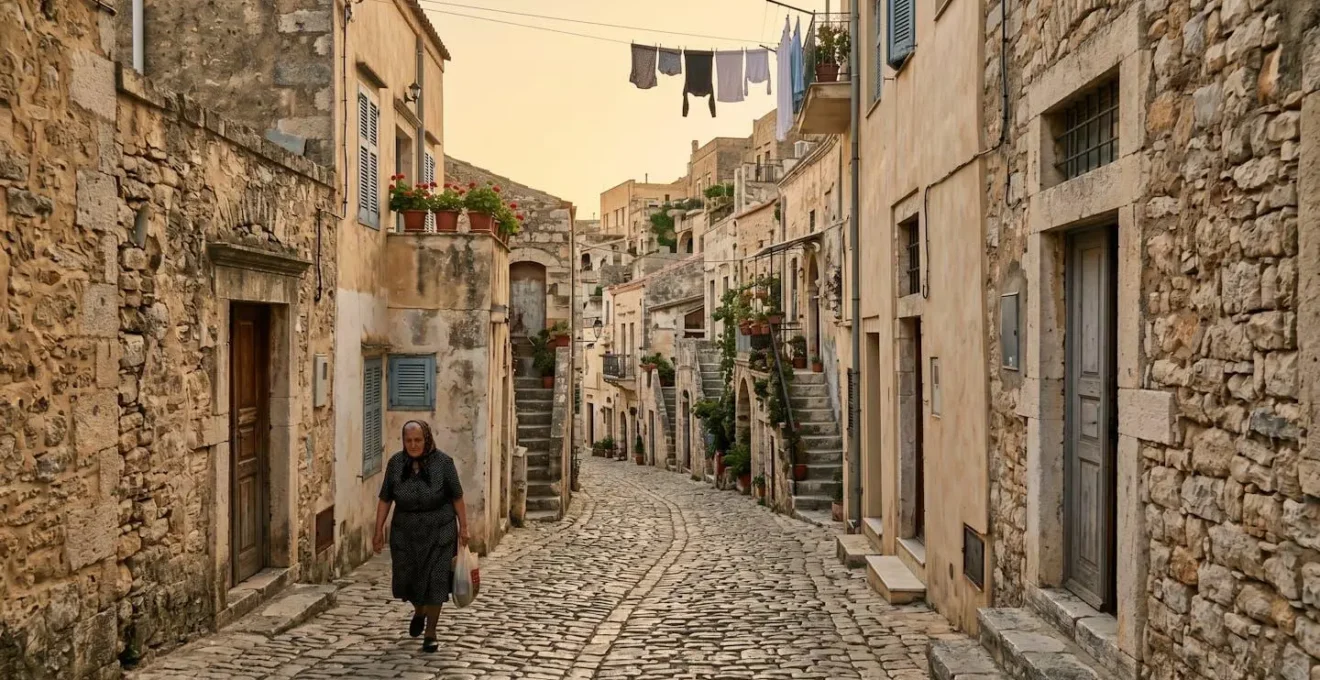
The key to transforming an ancient city from a crowded museum into a living narrative is to learn how to read its physical and social fabric like a primary source.
- Decode architectural layers to understand the succession of power and priorities over centuries.
- Use strategic timing and destination choice to trade overwhelming crowds for contemplative depth.
- Recognize that the city’s present-day challenges, like tourism gentrification, are part of its ongoing history.
Recommendation: Shift your mindset from a visitor who consumes sights to an interpreter who deciphers the urban text, connecting the past you see with the invisible forces that shaped it.
There is a specific kind of disappointment familiar to the thoughtful traveler: standing in the heart of a city that once commanded the world, only to find it feels less like a vibrant historical nexus and more like a crowded, open-air museum. You’ve read the books and you know the significance, yet the reality is a crush of tour groups, souvenir stands, and a profound sense of disconnection from the past. The conventional advice—to go early, read a guidebook, or hire a guide—often falls short of bridging this gap between the monumental stones and the living, breathing history they represent.
But what if the problem isn’t the city, but the way we’ve been taught to look at it? What if, instead of just seeing the sights, you could learn to read the city itself? An ancient metropolis is a palimpsest, a manuscript written and rewritten over centuries, where the architectural DNA of different eras coexists. The real story isn’t just in the famous monuments, but in the subtle clues: the way a medieval wall incorporates a Roman column, the location of a customs house, or even the modern-day struggle of residents against tourism’s relentless pressure.
This guide moves beyond surface-level sightseeing. It offers a public historian’s toolkit to decode the invisible history etched into the urban landscape. We will explore how to identify the layers of different historical epochs in the architecture, make strategic choices to find depth over density, understand the precise moments when an expert guide becomes indispensable, and see how even a city’s modern struggles are a continuation of its long, complex story. The goal is to transform you from a passive tourist into an active interpreter, capable of experiencing ancient cities not as static relics, but as the dynamic, living histories they truly are.
To help you navigate this new approach to historical travel, this article is structured to build your skills as an urban interpreter. The following sections will guide you through the key concepts and practical techniques for reading a city’s past and present.
Summary: A Historian’s Method for Experiencing Ancient Cities
- Why Are Ancient Cities Losing Residents to Tourism Gentrification?
- How to Decode the 5 Historical Eras Visible in Ancient Cities’ Architecture?
- Rome or Ravenna: Which Ancient City Offers Deeper Experience With Fewer Tourists?
- The Timing Error That Puts You in 10,000-Person Crowds at Ancient Cities
- When Do Ancient Cities Need a Specialist Guide to Unlock Their Secrets?
- How to Identify Which Century a Historic Harbour Was Most Active by Its Buildings?
- Why Is Baroque Architecture So Emotionally Dramatic Compared to Renaissance Restraint?
- How to Recognize Authentic Baroque Architecture Versus Later Imitations?
Why Are Ancient Cities Losing Residents to Tourism Gentrification?
An ancient city is not a ruin; it is an ecosystem. Its « living history » credential depends on it being a viable home for a resident population. However, the very tourism that seeks this authenticity often erodes it through a process known as tourism gentrification. This phenomenon transforms historic neighborhoods from residential communities into transient zones, hollowing out the very soul travelers come to see. Venice is the quintessential example, where the resident population has plummeted from over 150,000 in the 1970s to around 50,000 today. This isn’t a natural decline; it’s a displacement driven by a tourist-centric economy.
The mechanisms of this displacement are clear. As demand for short-term rentals soars, long-term housing vanishes, and residential buildings are converted into hotels and Airbnbs. This housing pressure makes cities unlivable for ordinary citizens. In 2024, Florence became the third most expensive city in Italy to rent or buy a home, a status directly linked to tourism pressures on its housing market. To understand an ancient city today, one must recognize this tension between its role as a global destination and its function as a local home.
Case Study: The Disappearance of Local Shops in Reykjavík
A 2024 study on tourism gentrification in Reykjavík’s city center highlights a key part of the process: commercial displacement. Researchers documented how the influx of tourism-related businesses (e.g., souvenir shops, tour operators) systematically replaces essential local services like bakeries, butchers, and repair shops. This disappearance of non-tourist services creates a « food desert » for amenities, making daily life untenable for remaining residents and accelerating their exodus. The study shows that observing the type of shops in a historic district is a direct indicator of its health as a living community versus its status as a tourism-focused zone.
Observing this dynamic is the first step in reading a city as a historian. When you walk through a historic center, look past the beautiful facades. Are the sounds you hear a dozen different languages from tour groups, or do you hear local children playing? Are the storefronts filled with « I ♥ City » t-shirts, or do they serve the daily needs of a community? Recognizing this conflict is to engage with the city’s most urgent, contemporary layer of history.
How to Decode the 5 Historical Eras Visible in Ancient Cities’ Architecture?
Architecture is the city’s most durable form of memory. To a historian, a streetscape is not a single composition but a palimpsest, where distinct historical layers are visible side-by-side. Learning to distinguish these layers is like learning the grammar of the city. The most revealing clues often lie in the practice of spolia—the reuse of older building materials in new construction. This was not recycling as we know it, but a statement of continuity, conquest, or pragmatism.
A Roman column capital embedded in the wall of a medieval church is not a mistake; it’s a sentence. It tells a story of the fall of one empire and the rise of another, which built its new identity literally from the fragments of the old. By looking for these juxtapositions, you begin to read the architectural DNA of the city. You see the story of succession, power, and the changing values of a civilization over time.
As this image of architectural spolia demonstrates, the texture, material, and style of stone tell a tale of different eras meeting in a single structure. The smooth, classically carved marble of the Roman era contrasts sharply with the rougher, more functional masonry of the early medieval period. This is not just an aesthetic choice; it’s a physical record of cultural and technological shifts. The five key eras to look for are Roman foundations (logic and scale), Medieval additions (defensive and spiritual), Renaissance reimaginings (harmony and humanism), Baroque drama (emotion and power), and finally, 19th-century and modern interventions (industrial materials and functionalism).
Rome or Ravenna: Which Ancient City Offers Deeper Experience With Fewer Tourists?
The history enthusiast often faces a difficult choice: visit the world-famous epicentre of an empire or a lesser-known site that may offer a different kind of depth. This is a form of experiential triage. Rome, the eternal city, is a bucket-list destination for a reason, but its very fame can be its biggest drawback. With visitor numbers to the Colosseum and Roman Forum projected to hit almost 15 million visitors in 2024, the experience can be one of overwhelming scale and crushing crowds, making quiet contemplation nearly impossible.
This is where a « second city » like Ravenna comes into focus. While Rome tells the story of an empire at its public, monumental zenith, Ravenna tells the intimate, spiritual story of its afterlife—the transition from the Western Roman Empire to the Byzantine and Ostrogothic kingdoms. The choice between them is not about which is « better, » but about what kind of historical narrative you wish to experience. Do you want the loud, sprawling, multi-layered epic of Rome, or the coherent, focused, and deeply personal testament of Ravenna’s mosaics?
The following table, based on tourism data and historical analysis, breaks down the critical differences in the visitor experience between these two iconic Italian cities. It illustrates how a shift in destination can lead to a more profound and less crowded encounter with the past.
| Aspect | Rome | Ravenna |
|---|---|---|
| Annual Visitors | 35 million+ citywide (2024) | Under 1 million estimated |
| Primary Historical Narrative | Empire at zenith – public spectacle | Empire’s afterlife – medieval transition |
| Architectural Focus | Monumental (Colosseum, Forum) – extroverted | Intimate mosaics – introverted spiritual |
| Crowd Experience | High density, especially 10 AM-3 PM | Contemplative silence, manageable flow |
| Depth of Experience | Overwhelming scale and layers | Coherent single narrative, deeper focus |
Choosing Ravenna over Rome during a peak season isn’t a compromise; it’s a strategic decision for a historian-minded traveler. It is a choice for contemplative silence over chaotic spectacle, for a single, luminous story told with breathtaking artistry over a thousand competing histories. It is about prioritizing the quality of the historical encounter over the quantity of sights ticked off a list.
The Timing Error That Puts You in 10,000-Person Crowds at Ancient Cities
Even in a city as popular as Rome, a profound experience is possible. The difference between historical immersion and frustrating chaos is often a matter of hours, or even minutes. The most common mistake travelers make is adhering to a « normal » tourist schedule: starting after breakfast and heading to the main attraction first. This predictable pattern is precisely what creates the 10 AM to 3 PM human tidal wave, especially on days when cruise ships are in port.
A historian, however, thinks strategically about time and movement. They understand that crowds are a system with predictable flows. By reversing the expected chronology or embracing non-traditional visiting hours, one can find moments of solitude in the most visited places on earth. This isn’t about simply « going early »; it’s about understanding the specific dynamics of a site’s visitor traffic and using that knowledge to your advantage. It’s about visiting the Forum when the tour groups are at the Colosseum, or exploring a major museum in the last two hours before closing rather than the first two.
The key is to treat the timing of your visit with the same intellectual rigor as you treat your historical research. By planning ahead and thinking counter-intuitively, you can sidestep the masses and create the space needed for a meaningful connection with the past. The following checklist provides a framework for this strategic approach.
Action Plan: Strategic Timing to Avoid Tourist Surges
- Check local port schedules in advance: Identify days when cruise ships dock, as shore excursions typically flood sites between 10 AM and 3 PM.
- Apply reverse chronology visiting: Start at secondary sites when crowds rush to main attractions at opening, then visit headline monuments mid-afternoon after cruise groups depart.
- Embrace atmospheric weather: Visit during light rain or fog when most tourists stay away, creating moody, historically evocative experiences with dramatically reduced crowds.
- Target shoulder season months: Visit Mediterranean sites in April-May or September-October to avoid summer peak crowds while maintaining favorable weather conditions.
- Book earliest or latest entry slots: Many major sites offer discounts for pre-9 AM entry or have extended evening hours, guaranteeing quieter experiences.
Ultimately, mastering the timing of a visit is about reclaiming your agency. Instead of being swept along by the current of mass tourism, you chart your own course, finding the quiet eddies and calm pools where history’s voice can actually be heard.
When Do Ancient Cities Need a Specialist Guide to Unlock Their Secrets?
The question of whether to hire a guide is a common one. For a historian-minded traveler, the answer depends on the nature of the site and the type of guide. A guide who simply reads the plaque aloud is redundant. A true specialist, however, can be the key that unlocks a site’s « invisible history »—the complex web of politics, rivalries, and ideas that physical ruins alone cannot communicate. The distinction is crucial, as the Cruise Critic Editorial Team notes in their analysis of historical tours:
You don’t need a guide to tell you what something is (a plaque can do that). You need one when you want to know why it’s there, why it looks that way, and why it matters—the context, the politics, the rivalries.
– Cruise Critic Editorial Team, History on Cruises: Best Options for History Buffs
A specialist guide is necessary when a site is either too complex or too subtle. In a sprawling, multi-layered site like the Roman Forum, a guide can provide a coherent narrative thread, connecting seemingly disparate ruins into a story of urban development and political power. Conversely, in a site that appears simple, a guide can reveal hidden complexities. They can explain why one mosaic floor is a masterpiece of Roman art while another is a provincial copy, or why the orientation of a temple was a deliberate political statement.
Case Study: The Resident Historian Model
Viking Ocean Cruises’ resident historian program exemplifies the ideal role of an expert guide. A historian is employed on every ship, providing a multi-layered educational experience. This includes formal lectures that explain the broad historical context of upcoming ports, roundtable discussions for deeper dives into specific topics, and even « office hours » for personalized conversations. This model illustrates when guides become essential: not for identifying what is visible, but for resurrecting the invisible forces—the political motivations, economic drivers, and cultural shifts—that shaped the world the traveler is about to enter.
Therefore, the decision to hire a guide should be a strategic one. Before you book, ask yourself: What is the invisible history of this place that I might miss on my own? If the answer involves complex political history, subtle artistic distinctions, or a confusing archaeological layout, investing in a qualified specialist—often a Ph.D. in history or archaeology—is not a luxury, but an essential tool for deeper understanding.
How to Identify Which Century a Historic Harbour Was Most Active by Its Buildings?
A historic harbour is a time capsule of a city’s economic ambition and geopolitical importance. The buildings that line its waterfront are a ledger, recording the eras of peak commercial activity. By learning to read their architectural language, you can determine when the port was at the height of its power. This isn’t about memorizing dates, but about understanding how function, technology, and state power shaped the built environment. You must look at fortifications, warehouses, and administrative buildings as a unified system.
For instance, the evolution of fortifications tells a clear story. Harbours defended by towers integrated into the city walls speak of a pre-cannon era. The appearance of large, detached star forts is a definitive marker of the 16th and 17th centuries, when artillery power made older defenses obsolete. Similarly, warehouse architecture reveals the scale of trade. Small stone structures near the water suggest medieval or early modern commerce, while vast, multi-story brick warehouses with wide arches for cranes signal the industrial-era boom of the 18th and 19th centuries.
The most telling structure, however, is often the customs house. Its size, grandeur, and location are direct reflections of the state’s interest in controlling and taxing trade. A large, opulent, and centrally located customs house, often built in a powerful Neoclassical style, is a sure sign of a 17th or 18th-century mercantilist peak. By piecing together these architectural clues, you can construct a timeline of the harbour’s prosperity and pinpoint its golden age.
- Examine fortification evolution: Integrated tower defenses suggest pre-16th century importance, while detached star forts point to a 16th-17th century peak. Minimal or distant defenses indicate post-18th century decline or shift.
- Analyze warehouse architecture: Small stone warehouses are medieval/early modern; large brick structures with cranes signal an 18th-19th century industrial peak.
- Locate the customs house position: A grand, prominently placed customs house is the hallmark of a 17th-18th century mercantilist boom.
- Study building material transitions: The shift from flagstone and timber to brick and iron, and later to concrete, maps the technological evolution of the port.
- Map commercial district density: A high concentration of warehouses, merchant houses, and maritime insurance offices near the wharves reveals the century of maximum economic activity.
Reading a harbour is a specific application of the broader skill of reading the urban landscape. It requires you to see buildings not as isolated objects, but as evidence in a larger economic and historical argument about the city’s place in the world.
Why Is Baroque Architecture So Emotionally Dramatic Compared to Renaissance Restraint?
Walking from a Renaissance piazza into a Baroque church is like switching from a calm, rational debate to a passionate, operatic performance. The shift is intentional. While Renaissance architecture, with its perfect symmetry, clear geometry, and serene harmony, sought to express a divinely ordered and human-centric universe, Baroque architecture had a very different agenda. It was an architecture of persuasion, designed to overwhelm the senses and stir the soul. As one analysis of the period notes, it was a direct political tool:
Baroque was the Catholic Church’s response to the austerity of Protestantism, designed to awe, inspire, and overwhelm the senses to bring people back to the faith.
– Historical Architecture Analysis, Understanding Counter-Reformation Architecture
This « invisible history » of the Counter-Reformation is the key to understanding the Baroque style. Faced with the intellectual and aesthetic austerity of the Protestant Reformation, the Catholic Church weaponized art and architecture. The goal was no longer just to represent divine order, but to create a direct, emotional, and theatrical experience of the divine. This explains the core elements of the Baroque: the dramatic use of light and shadow (chiaroscuro), the dynamic curves and spirals that create a sense of movement, the opulent materials, and the fusion of painting, sculpture, and architecture into a single, overwhelming whole (the ‘bel composto’ or « beautiful whole »).
This image of a Baroque interior captures the essence of this emotional drama. The twisted columns seem to writhe with energy, light from an unseen source cuts through the darkness to illuminate a key sculpture, and the entire space feels like it is in motion, drawing the eye and the spirit upward. It is not an architecture to be passively observed and intellectually understood like the Renaissance; it is an environment designed to be felt, to provoke awe, and to create a sense of miraculous presence. It is propaganda in stone and gold, and it is one of the most powerful examples of how architecture can serve an explicit ideological purpose.
Key takeaways
- An ancient city is a living text: Your goal is to read its layers, not just view its monuments.
- Strategic choices are paramount: Opting for a less-famous city like Ravenna over Rome, or visiting a major site during off-peak hours, yields a deeper experience.
- Look for the « why »: The most important history is often invisible—the political reasons for Baroque drama, the economic forces behind harbour design, and the social impact of modern tourism.
How to Recognize Authentic Baroque Architecture Versus Later Imitations?
As you train your eye, you’ll begin to notice that not all that glitters with Baroque curves is from the 17th or 18th century. The style was so effective and prestigious that it was widely imitated in later periods, particularly during the 19th century in the form of Neo-Baroque or Second Empire styles. Distinguishing the authentic from the revival is a master-level skill in reading the city, requiring an eye for material honesty, structural integrity, and original purpose.
Authentic Baroque architecture possesses a certain gravitas. Its drama is backed by rich, genuine materials—solid marble, gilded bronze, and heavy stone. There is a weight and muscularity to its forms that reflects its serious ideological purpose in palaces and Jesuit churches. Later imitations, built to convey prestige for 19th-century opera houses, department stores, or train stations, often substitute this material honesty with less expensive simulations. Plaster and stucco are used to mimic stone, and trompe-l’œil painting replaces genuine architectural relief. The emotional weight gives way to a lighter, more purely decorative sensibility.
The crucial difference often lies in the integration of elements. In authentic Baroque, architecture, sculpture, and painting are seamlessly unified into the ‘bel composto’. A sculpture is not just placed in a niche; it seems to emerge from the wall itself. In revival styles, the decoration often feels applied rather than integral. The underlying structure is more conventional, and the Baroque elements are a flamboyant skin rather than the building’s very bones.
This table outlines the key characteristics to look for when trying to differentiate between an original Baroque masterpiece and its later admirers. It provides a practical checklist for authenticating the architectural DNA of a building.
| Characteristic | Authentic Baroque (17th-18th C.) | Later Imitations/Revival |
|---|---|---|
| Material Honesty | Rich genuine materials: marble, gilded bronze, solid stone | Plaster, stucco, trompe-l’œil simulating richness at lower cost |
| Emotional Weight | Dramatic, muscular forms with theological gravitas | Lighter, more decorative sensibility (especially Rococo) |
| Original Purpose | Papal palaces, Jesuit churches, royal residences—ideological power | 19th-century opera houses, train stations—prestige borrowing |
| Structural Integration | Architecture, sculpture, painting unified as ‘bel composto’ | Applied decoration over structure, less integrated |
| Spatial Dynamics | Ovals, spirals creating true dynamic energy and movement | Decorative curves without underlying tension |
By applying this framework, you move beyond simply identifying a style to understanding its authenticity, context, and intent. This is the ultimate goal of the historian-traveler: to not just see the past, but to understand precisely how and why it is being presented to you in the present.
Armed with this new framework for seeing, your next journey to an ancient city can be a profoundly different experience. Instead of being a passive spectator, you are now equipped to be an active interpreter. Apply these principles of decoding architecture, strategic timing, and contextual awareness on your next trip. Begin your transformation from tourist to historian today.