The secret to living like a local isn’t finding a hidden gem; it’s mastering a strategy to decode a city’s neighborhood DNA and integrate into its daily rhythm.
- Tourist zones are predictable products of economic pressure that push authentic culture outwards.
- True immersion comes from systematically building personal routines in a residential area, not from a checklist of sights.
Recommendation: Stop wandering aimlessly. Instead, learn to analyze a neighborhood’s « service-to-souvenir ratio » to find a genuine community to call your temporary home.
You’ve been in the city for a week, but something feels off. The cafes are filled with other backpackers, every menu is in English, and the streets are a sea of selfie sticks. You’re physically there, but you’re trapped in the tourist bubble—a curated, frictionless version of a place that lacks a soul. The common advice is to « get off the beaten path » or « eat where the locals eat, » but this advice is useless without a strategy. It treats authentic living as a matter of luck, a happy accident waiting to happen.
The truth is, genuine urban immersion isn’t an accident. It’s a skill. It’s about understanding the invisible forces that create these tourist districts and learning the repeatable strategies to sidestep them. It requires shifting your mindset from a consumer of experiences to an observer and participant in daily life. This isn’t about learning a few phrases in the local language; it’s about learning to read the city itself—its transport networks, its commercial fabrics, and its community rhythms.
But what if the key wasn’t about where you go, but *how* you choose where to be? This guide is your coaching manual. We won’t give you a list of « secret spots. » Instead, we’ll equip you with a street-smart framework to decode any urban center, find a neighborhood with a real heartbeat, and build a temporary life that feels genuine. We’ll explore why authentic culture is often displaced, how to master the city’s circulatory system, and what it truly takes to cross the threshold from visitor to temporary resident.
This guide provides a complete framework for deep urban immersion. Follow along as we break down the strategies needed to bypass tourist traps and build a genuine connection with the city you’re in.
Summary: How to Live Like a Local in Urban Centers Instead of Tourist Districts
- Why Do Urban Centers Hide Their Real Culture 2 Miles From the City Centre?
- How to Master Public Transport in Urban Centers Within Your First 48 Hours?
- Tourist Hotel or Residential Neighborhood: Where Should You Stay in Urban Centers?
- The Loneliness Trap That Hits 70% of Solo Travellers in Urban Centers
- How Many Days Do You Need in Major Urban Centers to Go Beyond Surface Tourism?
- Which Neighborhoods Offer Authentic Stays in Real Communities, Not Tourist Bubbles?
- How to Build Unique Routes Using Local Train Networks That Tourists Never Use?
- How to Identify Genuinely Authentic Stays Versus Marketing Gimmicks?
Why Do Urban Centers Hide Their Real Culture 2 Miles From the City Centre?
The authentic, beating heart of a city rarely resides in its picture-perfect historic center. This isn’t an accident; it’s a predictable outcome of powerful economic forces. The phenomenon known as « tourist gravity » pulls investment, infrastructure, and commercial activity toward a central point, creating a high-density zone optimized for visitor spending. As this happens, the very fabric of the neighborhood changes. Land values skyrocket, and the pressure to maximize profit per square foot becomes immense. This is a process often referred to as tourism-led gentrification.
Data clearly shows this transformation. For instance, research on tourism gentrification reveals that land development intensity in these areas can increase by over 400%, shifting from low-density residential use to high-density commercial and tourist functions. Local-serving businesses—the bakeries, hardware stores, and tailors that form the backbone of a community—are replaced by souvenir shops, chain restaurants, and short-term rental hubs. This creates what experts call a « city of tourists » rather than a « city with tourists. »
The case of Porto’s city center is a classic example. As tourism boomed, real estate prices soared, and land-use patterns shifted dramatically away from residential functions. While it brought a « new life » in terms of economic activity, it simultaneously displaced residents and the traditional shops that served them. The authentic culture didn’t disappear; it was pushed outwards, to peripheral neighborhoods where rent was affordable and the community’s needs still held sway over tourist demands. Understanding this dynamic is the first step to escaping the bubble: you must actively look beyond the polished facade of the city center.
How to Master Public Transport in Urban Centers Within Your First 48 Hours?
Public transport is more than a way to get from A to B; it’s the city’s circulatory system and your best tool for observation and discovery. Mastering it quickly is non-negotiable for anyone wanting to break out of the tourist core. Forget expensive taxis or confusing ride-share apps. Your goal is to move with the city’s rhythm, and that happens on its buses, trams, and local trains. Within 48 hours, you can go from confused tourist to confident navigator by focusing on a few key strategies.
Your first move should happen before you even arrive. Forget relying on a single global map app. Instead, do your homework and find out what the locals use. Often, city-specific transit apps offer far more accurate real-time data. Once you have the right tools, focus on building practical habits:
- Download Local Transit Apps: Search for the official city transit app or highly-rated local alternatives like Citymapper or Moovit, which often have superior real-time data on departures and route changes.
- Enable Offline Maps: Download a map of the city on Google Maps or a similar service. This is a lifesaver in subway systems with no signal or when trying to conserve international data.
- Avoid Peak Rush Hours: Plan your major transfers outside of the typical 7-9 AM and 4-6 PM rush hours. You’ll avoid the crowds and get a better sense of the system without the stress.
- Learn the Unspoken Etiquette: Every city has its rules. In London, you stand on the right on escalators; in Tokyo, silence on the train is golden. Watch, listen, and adapt before you jump in.
- Ask for Help: If you’re lost, don’t be afraid to ask transit staff or even a friendly-looking local. It’s the quickest way to get an answer and can often lead to unexpected, helpful tips.
Riding the commuter lines during off-peak hours offers a moving window into the city’s soul. It’s where you’ll see daily life unfold, far from the curated experiences of the tourist center. This is your first real step into the authentic city.
As you can see, the real culture of a city is found in these mundane moments. Observing the interactions and daily routines on a local train provides more insight than a dozen guided tours. This practice of « transit webbing »—using the transport map to explore—is a foundational skill for any urban explorer.
Tourist Hotel or Residential Neighborhood: Where Should You Stay in Urban Centers?
The single most important decision that will define your experience is where you sleep. It’s a choice between two fundamentally different worlds: the isolated comfort of a hotel in a tourist district or the immersive reality of an apartment in a residential neighborhood. Hotels are designed for transient visitors, offering convenience and standardized services within a bubble. A stay in a residential area, however, forces you to engage with the local ecosystem—the corner store, the neighborhood bakery, the local park. This choice dictates whether you observe the city from a distance or participate in its daily life.
The impact of these accommodation types on a city is starkly different. As a comparative analysis of tourism pressure shows, hotels and peer-to-peer lodging like Airbnb affect neighborhoods in vastly different ways. Hotel districts create a clear, concentrated zone of tourism, often leaving adjacent residential areas relatively untouched. In contrast, the rise of short-term rentals in residential areas creates a more gradual, pervasive pressure that can extend deep into a community, slowly displacing residents and altering the commercial fabric.
| Indicator | Hotel-Concentrated Tourist Districts | Residential Neighborhoods with Peer-to-Peer Lodging |
|---|---|---|
| Tourism Pressure on Residents | Abrupt drop-off between main hotel axis and residential periphery | Much more gradual pressure extending deep into residential areas |
| Accommodation Density (per 1,000 inhabitants) | Exceeds 500 accommodations in several census sections along main axis | Distributed across center residential areas with no traditional hotels |
| Spatial Pattern | Concentrated along specific axes protecting residential quality of life | Extends over residential areas in the center where no accommodations formerly existed |
| Impact on Local Community Life | Clear buffer zone maintains neighborhood authenticity | Residential displacement and commercial fabric mutation affecting local services |
For the long-term traveler seeking authenticity, the choice is clear. While a hotel provides a buffer from the complexities of local life, that buffer is precisely what you want to break through. Choosing a stay in a real residential neighborhood is the first and most critical step towards integration. It may require more effort—navigating a new grocery store, figuring out the local trash collection schedule—but this friction is where true immersion begins. You’re no longer just a visitor; you’re a temporary participant in the neighborhood’s ecosystem.
The Loneliness Trap That Hits 70% of Solo Travellers in Urban Centers
For all its liberating glory, solo travel has a well-known shadow: loneliness. The freedom to do whatever you want, whenever you want, can quickly curdle into a sense of isolation, especially in a bustling, anonymous city. You’re surrounded by millions of people, yet feel completely alone. This isn’t a personal failing; it’s a structural challenge of modern travel. In fact, loneliness ranks as the number one concern among solo travelers of all ages, from Gen Z to Baby Boomers. Staying in a sterile tourist district only amplifies this feeling, as you’re surrounded by other transient people, making genuine connection nearly impossible.
The experience is often one of « fleeting loneliness, » a term that captures the temporary but acute pangs of isolation that can hit when you’re dining alone again or have no one to share a beautiful sunset with. As one expert notes, this has been a consistent theme for decades.
When we first started our solo women research back in the late 1990s, there weren’t widespread mobile phones. And so, one of the things that many of the women spoke to us about was fleeting loneliness.
– Heather Gibson, University of Florida tourism professor interviewed by PBS
The antidote to loneliness isn’t just « meeting people. » It’s connection, and connection is a byproduct of community and routine. By choosing to stay in a residential neighborhood, you’re not just changing your location; you’re changing your social opportunities. You start to see the same faces: the barista at the corner cafe, the owner of the local fruit stand, the neighbors walking their dogs. These small, repeated, low-stakes interactions are the building blocks of community. They transform you from an anonymous tourist into a familiar presence, creating the foundation for a sense of belonging that can effectively push back against the loneliness trap.
How Many Days Do You Need in Major Urban Centers to Go Beyond Surface Tourism?
Travelers often ask, « How many days do I need for Berlin? » or « Is a week enough for Tokyo? » This question fundamentally misunderstands the nature of deep travel. True immersion isn’t measured in days counted, but in routines established. You can spend a month in a city and remain a surface-level tourist if you just tick off a list of sights. Conversely, you can start to feel like a local in a week if you focus on building a daily rhythm. The goal is to reach the « Routine Threshold »—the point where you have a « go-to » coffee spot, a familiar grocery run, and a regular park bench.
This shift in perspective from « seeing » to « living » requires intentional planning. It’s no surprise that seasoned travelers understand this; research shows that over 32% of solo travelers start planning their immersive trips a full six months in advance. They aren’t just booking flights; they’re researching neighborhoods and thinking about how they will integrate. Instead of asking « how many days, » the better question is, « how quickly can I establish a routine? » For a long-term traveler, the first week should be dedicated to this task.
Building a routine doesn’t have to be complicated. It’s about creating small, repeatable patterns that plug you into the local flow of life. This process anchors you to a place and transforms it from a foreign city into a temporary home. Here is a simple plan to get you started.
Your Action Plan: Establishing Local Routines
- Join the Morning Rhythm: Wake up early and walk the streets before the city is fully awake. Join the queue at a local bakery and observe the morning commute to understand the daily pulse.
- Find Your Neighborhood Park: Skip the famous central park and find the closest green space where locals go. This is where you’ll discover the community’s character and maybe even free local events.
- Shop Where Locals Shop: Spend time in a neighborhood grocery store or daily market. Observing what people buy and how they interact is a masterclass in everyday culture.
- Establish Three Simple Routines: Intentionally create a go-to coffee spot, a regular grocery run, and a familiar park bench. These three points of contact form the foundation of your new temporary life.
- Time Your Neighborhood Scout: Before committing to a stay, visit your target neighborhood at three different times: a weekday morning, a weeknight, and a weekend afternoon. This reveals its true rhythm, noise levels, and character.
Once you’ve established these simple routines, the number of days you stay becomes less important. You’ve successfully crossed the line from visitor to participant. Your experience is no longer about a countdown of days left, but about the quality of the daily life you’ve built.
Which Neighborhoods Offer Authentic Stays in Real Communities, Not Tourist Bubbles?
So, how do you find these authentic neighborhoods? The key is to train your eye to spot the markers of a living, breathing community. Academic research confirms what savvy travelers have long known: there’s a growing trend in « new urban tourism » where visitors actively seek out the true identity of cities in mundane, everyday places. This trend represents a decentralisation of tourists away from crowded centers toward more peripheral, residential sites. Your job is to learn how to identify these sites before you even book your stay.
The most powerful tool in your arsenal is a concept I call the « Service-to-Souvenir Ratio. » When you’re scouting a potential neighborhood (either online through street-view maps or in person), pay close attention to the types of businesses at street level. A neighborhood with a high ratio of services for locals (bakeries, hardware stores, laundromats, butchers, small law offices) to businesses for tourists (souvenir shops, currency exchanges, international chain restaurants) is a neighborhood where real people live and work. A high density of essential, « boring » businesses is the strongest indicator of an authentic community.
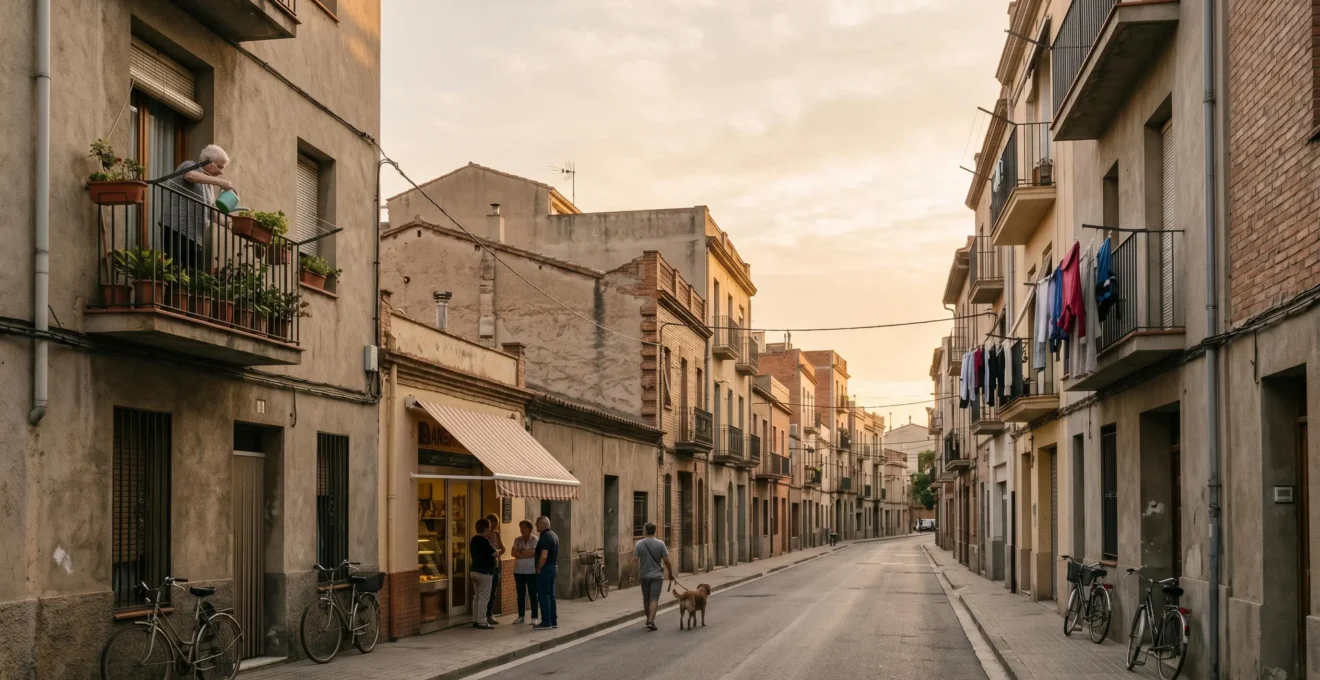
Look for signs of life that can’t be faked: a community bulletin board covered in local flyers (even if you can’t read them), children’s bikes left by a doorway, people tending to plants on their stoops. These are the visual cues of a stable, residential population. These neighborhoods are often located just beyond the main tourist core, frequently a short bus or local train ride away. They may not have famous monuments, but they have something far more valuable: a genuine sense of place and an active community you can temporarily become a part of.
How to Build Unique Routes Using Local Train Networks That Tourists Never Use?
Once you’ve chosen your residential base, your next mission is to use the public transport network not just for commuting, but for systematic discovery. This is the concept of « Transit Webbing »: using the lines on a transit map as threads to pull, leading you to unexplored pockets of the city. Tourists stick to the few central subway stops that serve major attractions. You will do the opposite. Look at the full map and identify the local train lines or bus routes that snake through residential areas, far from the city center.
Each line is a potential discovery route. Pick a line that travels through an area you know nothing about, get on, and simply ride it for a few stops. Look out the window. When a neighborhood looks interesting—maybe it has a bustling market near the station, a unique architectural style, or a lively-looking main street—get off and explore. This method is systematic yet allows for serendipity, giving you a structured way to « get lost » productively. It’s how you stumble upon the neighborhoods that never make it into the guidebooks.
You can make this process even more targeted by creating thematic routes based on your interests. This turns a random journey into a curated expedition:
- Build a Culinary Route: Use transit to connect a series of off-the-beaten-path restaurants or food markets that locals have recommended.
- Explore via Historic Lines: Many cities have old tram or bus lines that pass through historic neighborhoods. Riding them is like taking a tour through the city’s architectural evolution.
- Discover Art Scenes: Use transit to reach lesser-known galleries, street art hubs, or artists’ studio districts that are often located in more industrial or peripheral neighborhoods.
- Connect Green Spaces: Create a route that links several of the city’s smaller, local parks and green spaces, offering a different perspective on its natural landscape.
By treating the transit map as your treasure map, you transform a mundane commute into an engine for discovery. You are no longer following a pre-determined path but creating your own unique narrative of the city, one train stop at a time.
Key takeaways
- Authenticity is a strategy, not an accident. It requires actively resisting the pull of tourist-centric city centers.
- Your choice of a residential neighborhood over a tourist hotel is the single most impactful decision for genuine immersion.
- True integration is measured by routines established, not days counted. Focus on building a daily rhythm.
How to Identify Genuinely Authentic Stays Versus Marketing Gimmicks?
In the age of savvy marketing, the word « authentic » has become a commodity. Listings for short-term rentals are often filled with carefully staged photos and descriptions promising a « true local experience, » even when the property is a soulless investment unit in a tourist-heavy block. As a final skill, you must learn to read between the lines and distinguish a genuine stay from a clever gimmick. It’s about developing an eye for details that can’t be faked.
Forget the wide-angle shots of a perfectly clean, minimalist apartment. Look closer. Zoom in on the photos and search for signs of real life and history. An authentic local apartment will often show its age and character in the small details. This is where the real story of the place is told.
Pay attention to the micro-details: a weathered wooden window frame with layers of old paint, a vintage door handle with a natural patina, or a slightly uneven plaster wall. These imperfections are signs of history and care, not of neglect. Look for personal touches that feel lived-in, not staged—a collection of mismatched coffee mugs, a well-worn armchair, or shelves filled with actual books, not just decorative objects. Conversely, be wary of places filled with generic, mass-produced « travel-themed » art and brand-new, matching furniture. These are often hallmarks of a property managed purely for profit, with no connection to the local culture.
We’re here to help you travel deeper and escape your comfort zone. You’re out to see a destination’s must see spots, but also to sneak off the tourist path to find the spots that only locals go.
– Juliana and Martín, Tourist to Local YouTube channel founders
Ultimately, living like a local is a mindset. It’s an active choice to trade frictionless convenience for meaningful connection. It means embracing the small challenges and rewards of daily life in a new place. By learning to decode a city’s DNA, you’re not just finding a better place to stay; you’re gaining a deeper understanding of the world and your place in it.
Your journey to authentic urban living starts now. Begin by applying these strategic filters to your next destination and commit to choosing a neighborhood, not just a city. This is your first step to truly traveling deeper.